Car EGR Valve Problems in Bangladesh: Complete Cleaning & Replacement Guide
Is your car's check engine light illuminated? Does the engine idle roughly, hesitate during acceleration, or occasionally stall? Carbon buildup or a malfunctioning Exhaust Gas Recirculation (EGR) system could be one possible cause.
The EGR system is an important emissions-control feature used in many petrol and diesel engines. It redirects a controlled amount of exhaust gas back into the engine's intake system under appropriate operating conditions.
This helps reduce combustion temperatures and the formation of harmful nitrogen oxides, commonly called NOx.
Over time, carbon deposits, mechanical wear, electrical faults, and problems in related EGR passages can interfere with normal operation.
For drivers in Bangladesh, understanding EGR-related problems is particularly useful when diagnosing engine warnings, inspecting certain Japanese hybrid vehicles, or maintaining engines that have accumulated significant mileage.
Whether you drive a Toyota Prius, Corolla, Axio, Honda, Nissan, or another EGR-equipped vehicle, this guide explains the warning signs, causes, diagnostic fault codes, cleaning procedures, replacement considerations, and maintenance recommendations.
Important: Not every car uses a separate external EGR valve. Some engines achieve exhaust gas recirculation effects through valve timing, while others use different emissions-control systems. Always confirm the exact engine configuration before arranging EGR service.
What Is an EGR Valve?
EGR stands for Exhaust Gas Recirculation.
An EGR valve regulates the movement of a controlled amount of exhaust gas from the exhaust system toward the intake system.
The recirculated gas contains less oxygen than fresh intake air and helps dilute the incoming charge.
Under appropriate engine operating conditions, this can lower peak combustion temperatures and reduce the formation of nitrogen oxides.
Main Functions of an EGR System
Reduce NOx emissions.
Help control peak combustion temperatures.
Manage exhaust gas recirculation under specified engine conditions.
Support combustion efficiency in certain petrol-engine designs.
Help reduce engine knocking tendencies in some applications.
Work with the engine control system to meet emissions requirements.
The benefits and operating strategy vary by petrol, diesel, and hybrid engine design.
How Does an EGR Valve Work?
The engine control system determines when exhaust gas recirculation is needed.
Depending on the design, an electronically controlled or vacuum-operated valve opens to allow a measured amount of exhaust gas to flow back toward the intake.
When EGR is not required, the valve closes or reduces the flow.
The precise operating conditions depend on engine load, speed, temperature, and manufacturer strategy.
Main Components of an EGR System
An EGR-equipped engine may contain:
EGR Valve: Regulates exhaust gas recirculation.
EGR Passages: Carry exhaust gas between relevant engine components.
EGR Pipe: Transfers gas between the exhaust and intake sides.
EGR Cooler: Reduces recirculated exhaust gas temperature in applicable systems.
EGR Actuator: Controls valve movement.
EGR Position Sensor: Reports valve position in applicable designs.
Vacuum Control Components: Operate certain older or vacuum-controlled systems.
Engine Control Unit: Commands and monitors EGR operation.
Relevant Pressure, Temperature, or Airflow Sensors: Help evaluate system performance.
Not every vehicle uses every component listed above.
Types of EGR Systems
Different engines use different exhaust gas recirculation technologies.
1. Vacuum-Operated EGR Valve
Certain older systems use engine vacuum and control components to operate the EGR valve.
Potential problems include:
Damaged vacuum hoses.
Failed diaphragms.
Faulty vacuum control solenoids.
Carbon deposits.
Mechanical sticking.
2. Electronic EGR Valve
Many modern EGR-equipped vehicles use electronically controlled valves.
The engine control unit commands valve movement through an electrical actuator.
Possible problems include:
Actuator failure.
Damaged electrical connections.
Position sensor faults.
Mechanical sticking.
Carbon restrictions.
3. Cooled EGR System
Some vehicles use an EGR cooler to lower the temperature of exhaust gas before recirculation.
The cooler may use the engine's coolant circuit to remove heat.
Possible faults include carbon restrictions, coolant-related problems, and cooler damage.
4. High-Pressure and Low-Pressure EGR
Some diesel engines use different recirculation paths.
High-pressure EGR typically takes exhaust gas from an earlier point in the exhaust system.
Low-pressure EGR may draw gas farther downstream, depending on the exhaust aftertreatment design.
The correct diagnostic procedure depends on the actual system.
8 Warning Signs of a Bad EGR Valve
EGR problems can cause several symptoms, but none confirms EGR failure without proper testing.
1. Check Engine Light Appears
An EGR system malfunction may cause the engine control unit to store a diagnostic fault code.
Possible problems include:
Insufficient EGR flow.
Excessive EGR flow.
Incorrect valve response.
Electrical control faults.
Sensor signal problems.
An OBD-II scan is useful, but the fault code alone does not prove the valve must be replaced.
2. Rough Engine Idle
An EGR valve stuck open when exhaust gas recirculation is not appropriate can disrupt combustion stability.
The engine may shake or run unevenly while idling.
Possible symptoms include:
Unstable RPM.
Engine vibration.
Uneven combustion.
Engine hesitation.
Occasional stalling.
However, spark plugs, ignition coils, fuel injectors, throttle body faults, and intake leaks can produce similar symptoms.
3. Engine Stalling
Excessive exhaust gas recirculation under certain operating conditions can cause poor combustion stability.
In some engines, this may contribute to stalling at low speed or while coming to a stop.
Engine stalling can also result from fuel delivery or electrical problems.
The actual cause should be identified before EGR components are replaced.
4. Poor Acceleration
An EGR valve that remains open or operates incorrectly may affect engine response.
Drivers may notice sluggish acceleration or hesitation.
However, reduced acceleration can also result from:
Fuel pump problems.
Injector faults.
Ignition problems.
Airflow sensor issues.
Throttle body faults.
Turbocharger-related faults in applicable engines.
A complete diagnostic inspection is necessary.
5. Reduced Fuel Economy
Certain EGR system faults can affect combustion efficiency and engine management.
This may contribute to increased fuel consumption under some conditions.
However, fuel economy is also influenced by traffic, driving habits, tyre condition, vehicle load, and numerous other factors.
Poor mileage alone is not proof of a clogged EGR valve.
6. Engine Knocking or Abnormal Combustion
EGR can help reduce peak combustion temperatures and knocking tendencies in certain petrol engines.
If EGR flow becomes insufficient under operating conditions that require it, combustion characteristics may change.
However, knocking sounds can also result from incorrect fuel quality, ignition-related issues, mechanical faults, and other causes.
A technician must determine the actual source.
7. Increased Exhaust Emissions
A malfunctioning EGR system may increase NOx emissions under certain operating conditions.
This can occur when insufficient recirculation allows higher combustion temperatures.
However, increased emissions may also result from other engine or emissions-control system problems.
8. Repeated EGR Diagnostic Trouble Codes
A recurring EGR-related fault code may indicate a persistent system issue.
Clearing a warning without correcting the cause generally does not provide a lasting solution.
The valve, actuator, passages, cooler, wiring, and relevant sensors may need inspection.
Common EGR Valve Fault Codes
A professional diagnostic scanner can help identify EGR-related problems.
However, a code indicates a monitored system fault, not necessarily a defective valve.
P0400 — EGR Flow Malfunction
This code generally indicates an exhaust gas recirculation flow or system performance problem.
Possible causes depend on the engine and may include restricted passages, valve problems, or control-system faults.
P0401 — EGR Insufficient Flow Detected
P0401 indicates that the engine control system has detected less EGR flow than expected under the monitored conditions.
Potential causes include:
Restricted EGR passages.
Carbon buildup.
EGR cooler blockage.
EGR valve sticking closed.
Vacuum or actuator problems.
Relevant sensor or control faults.
A P0401 code does not automatically mean the valve itself is defective.
P0402 — EGR Excessive Flow Detected
P0402 indicates excessive recirculation under the relevant monitoring conditions.
Potential causes may include:
An EGR valve stuck open.
Incorrect valve control.
Mechanical or actuator problems.
Other system faults.
Excessive EGR flow may contribute to rough idling or engine stalling.
P0403 — EGR Control Circuit Malfunction
P0403 generally relates to the electrical EGR control circuit.
Possible causes include:
Damaged wiring.
Loose connectors.
Actuator circuit faults.
Electrical supply problems.
Engine control system faults.
Replacing a mechanically functional valve will not necessarily correct an external wiring problem.
P0404 — EGR Control Circuit Range/Performance
This code may indicate that EGR control behavior or feedback is outside the expected range.
The valve, actuator, sensor feedback, and related electrical system may require examination.
P0405 and P0406 — EGR Sensor Circuit Faults
These codes commonly indicate low or high sensor circuit signals for the specified EGR sensor.
They may involve wiring, sensor, reference voltage, or other control-system problems.
Important: Trouble code meanings and diagnostic procedures should always be confirmed using the exact manufacturer's service information.
Why Do EGR Valves Become Clogged?
EGR components are exposed to exhaust gas and combustion-related deposits.
Over time, restrictions may develop.
1. Carbon Deposits
Soot and other combustion deposits can accumulate inside EGR passages.
Heavy deposits may interfere with gas flow or valve movement.
2. Oily Residue
Oil vapour from crankcase ventilation can contribute to sticky deposits, particularly where exhaust gas contamination and intake-system residue combine.
3. Repeated Low-Speed Operation
Certain engines may develop EGR deposits more readily under operating conditions involving frequent stop-and-go driving.
However, deposit formation depends on engine design, operating conditions, and other factors.
4. Engine Combustion Problems
Abnormal combustion, excessive oil consumption, or other underlying engine conditions may contribute to contamination.
5. Age and Normal Use
Repeated heating and cooling, exhaust exposure, and long-term operation can affect EGR components.
6. Related System Problems
Faults elsewhere in the engine or emissions-control system may contribute to abnormal EGR operation or contamination.
If deposits return unusually quickly, the underlying cause should be investigated.
EGR Valve Stuck Open vs Stuck Closed
The symptoms can differ depending on the valve's failure position.
EGR Valve Stuck Open
If exhaust gas continues entering the intake when it should not, the engine may experience:
Rough idle.
Unstable combustion.
Engine hesitation.
Stalling.
Reduced performance.
EGR-related warning codes.
EGR Valve Stuck Closed
If the valve cannot open when commanded, the engine may experience:
Insufficient EGR flow.
Increased NOx emissions.
Possible combustion temperature changes.
Certain performance or efficiency effects.
EGR-related diagnostic codes.
Why the Difference Matters
Cleaning or replacing a valve without checking whether it is stuck, electrically defective, or being commanded incorrectly may not solve the problem.
EGR Valve vs Throttle Body: What's the Difference?
The EGR valve and throttle body are separate engine components.
EGR Valve
The EGR valve regulates the flow of recirculated exhaust gas in engines equipped with external EGR.
Throttle Body
In many petrol engines, the throttle body controls the amount of fresh intake air entering the engine.
Can Both Cause Rough Idle?
Yes.
Certain EGR and throttle body problems can cause overlapping symptoms, including:
Rough idling.
Unstable RPM.
Hesitation.
Stalling.
Engine warning lights.
However, they require different diagnostic procedures.
Cleaning the throttle body will not automatically correct a clogged EGR cooler.
Similarly, replacing an EGR valve will not repair a defective throttle actuator.
EGR Valve vs Catalytic Converter
The EGR system and catalytic converter both support emissions control, but they perform different functions.
EGR System
The EGR system helps reduce the formation of NOx during combustion by controlling exhaust gas recirculation.
Catalytic Converter
The catalytic converter uses chemical reactions to reduce certain harmful pollutants in the exhaust after they leave the engine.
Why Accurate Diagnosis Matters
An emissions-related fault can involve several components.
The EGR valve, catalytic converter, oxygen sensors, and engine management system should not be treated as interchangeable.
Each component must be tested according to its function.
EGR Valve vs DPF in Diesel Engines
Diesel vehicles may use both an EGR system and a Diesel Particulate Filter (DPF).
These components perform different tasks.
EGR Valve
The EGR system helps reduce NOx formation by recirculating exhaust gas under appropriate conditions.
Diesel Particulate Filter
The DPF captures particulate matter from exhaust gases.
The filter may require a controlled regeneration process to remove accumulated soot.
Can EGR and DPF Problems Be Related?
Yes, certain engine operating problems can affect multiple emissions components.
However, an EGR valve fault does not automatically mean the DPF requires replacement.
Both systems should be evaluated separately using the appropriate diagnostic procedures.
What Is an EGR Cooler?
An EGR cooler is used in certain engines to reduce the temperature of recirculated exhaust gases.
It commonly transfers heat from exhaust gas into the engine cooling system.
Not every EGR-equipped vehicle has a separate cooler.
Common EGR Cooler Problems
Carbon restrictions.
Reduced exhaust gas flow.
Internal cooler damage.
External coolant leakage.
Internal coolant leakage in some failure conditions.
Damaged cooler connections.
Can a Clogged EGR Cooler Cause P0401?
Yes, in certain engines.
A restricted cooler can reduce the quantity of exhaust gas reaching the intake system.
The engine control unit may then detect insufficient EGR flow.
Does Every EGR Cooler Need Cleaning?
No.
Cleaning should be based on inspection findings, manufacturer instructions, and the actual condition of the component.
A cooler with structural damage or internal coolant leakage may require replacement rather than cleaning.
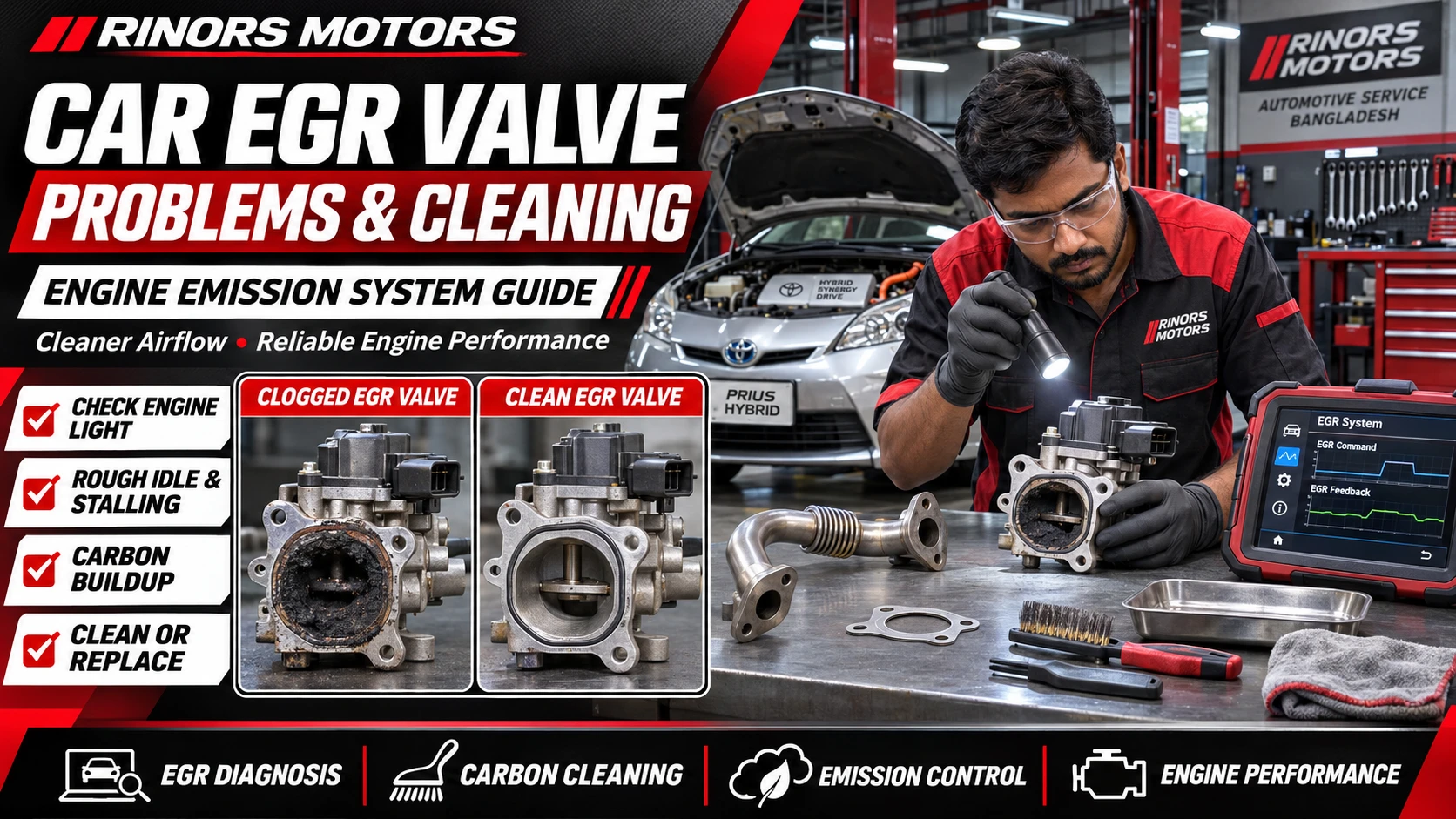
Can an EGR Valve Be Cleaned Instead of Replaced?
Yes, certain EGR-related problems can be corrected through professional cleaning.
However, cleaning is not appropriate for every failure.
When EGR Cleaning May Help
Cleaning may be suitable when:
Carbon deposits restrict valve movement.
EGR passages are partially blocked.
A serviceable valve is contaminated.
The EGR pipe contains removable deposits.
A compatible EGR cooler has serviceable carbon restrictions.
The manufacturer permits the cleaning procedure.
When Replacement May Be Necessary
Replacement may be appropriate when:
The EGR actuator has failed internally.
A position sensor is defective and not separately serviceable.
The valve has significant mechanical damage.
The housing is cracked.
Internal components are excessively worn.
The cooler has a confirmed leak or non-serviceable damage.
Cleaning fails to restore the required operation.
A valve that is mechanically damaged cannot be restored merely by removing carbon deposits.
How Is Professional EGR Valve Cleaning Performed?
EGR cleaning procedures vary by engine and component design.
A professional service may include the following steps.
Step 1: Confirm the Symptoms
The technician reviews the engine warning, rough idle, hesitation, or other reported problems.
Step 2: Perform Computerized Diagnosis
An appropriate diagnostic scanner is used to identify fault codes and relevant engine operating data.
Step 3: Verify the EGR System Configuration
The technician identifies the valve, actuator, pipe, cooler, sensors, and relevant electrical or vacuum components.
Step 4: Test EGR Operation
Where manufacturer procedures allow, the technician may evaluate commanded valve position, actual feedback, or relevant changes in engine sensor readings.
Step 5: Inspect for Carbon Restrictions
The valve and accessible passages are checked for deposits.
Step 6: Remove Components When Required
Certain engines require removal of the EGR valve, pipe, cooler, or related parts for proper inspection and cleaning.
Step 7: Clean Approved Components
Suitable cleaning materials and methods are used according to the component manufacturer's instructions.
The technician must avoid damaging valve mechanisms, seals, coatings, sensors, or electronics.
Step 8: Inspect Gaskets and Seals
Required gaskets and seals are replaced according to manufacturer procedures.
Step 9: Reinstall the Components
The assembly is installed using the specified alignment and fastener torque.
If coolant lines were disconnected, the cooling system must be serviced and checked according to the appropriate procedure.
Step 10: Perform Adaptation and Verification
Some electronically controlled EGR systems require an initialization or adaptation procedure.
The technician then checks for correct operation, leaks, and recurring fault codes.
Safety Warning: EGR components can become extremely hot and may be connected to exhaust gases and pressurized engine coolant. Cleaning chemicals and carbon deposits can also present exposure hazards. The system should be serviced by trained technicians using suitable equipment and protective procedures.
Can You Clean an EGR Valve Without Removing It?
Some cleaning products are marketed for use without removing the EGR valve.
However, their suitability depends on the engine and the exact problem.
Limitations of Cleaning Without Removal
Severe carbon restrictions may remain.
Internal passages may not be accessible.
Electrical faults cannot be corrected.
Mechanical damage cannot be repaired.
Certain cleaners may damage incompatible components.
Loosened deposits can create additional problems if not managed correctly.
For significant restrictions, removal and direct inspection may be more appropriate.
Do not spray chemicals into the intake or EGR system unless the exact procedure is approved for the vehicle.
How Are EGR Problems Diagnosed?
A complete diagnosis should determine whether the actual problem involves airflow, mechanical movement, electrical control, or another engine component.
Step 1: Identify the Vehicle
Confirm the manufacturer, model, production year, and engine code.
Step 2: Read Diagnostic Trouble Codes
Use a suitable scanner to retrieve stored codes and available diagnostic information.
Step 3: Inspect Relevant Wiring and Connections
Check for damaged connectors, loose wiring, corrosion, and other electrical problems.
Step 4: Inspect Vacuum Components
For vacuum-controlled systems, the technician evaluates the relevant hoses, solenoids, and vacuum supply.
Step 5: Test EGR Valve Command and Response
Where supported, compare the commanded EGR operation with actual position feedback or relevant engine response.
Step 6: Check Flow Restrictions
Inspect EGR passages, pipes, and coolers for blockage when indicated by diagnostic findings.
Step 7: Evaluate Related Sensors
Depending on the system, airflow, manifold pressure, temperature, and other sensor information may be required.
Step 8: Check Underlying Engine Problems
Combustion-related faults, intake leaks, and other engine conditions may contribute to abnormal EGR performance.
Step 9: Select the Correct Repair
Determine whether the problem requires cleaning, wiring repair, component replacement, or correction of another engine fault.
Step 10: Confirm Successful Operation
The technician verifies the repaired system using the manufacturer's recommended tests.
Important: A P0401 code can result from a clogged EGR passage even when the EGR valve actuator itself works correctly. Diagnosis should verify actual exhaust gas flow, not only whether the actuator moves.
Toyota EGR Valve Problems in Bangladesh
Toyota vehicles are widely used in Bangladesh, but different Toyota engines have different EGR systems.
Toyota Prius
Certain Toyota Prius generations use external EGR systems with electronically controlled valves, EGR pipes, and coolers.
Carbon restrictions can affect EGR flow in applicable engines.
If an EGR-related trouble code appears, a technician should examine the valve and the complete relevant flow path rather than replacing the valve immediately.
Toyota Corolla and Axio
Different Corolla and Axio variants use different petrol engines.
Some engines use external EGR components, while others rely on different combustion and emissions-control strategies.
Therefore, EGR servicing requirements must be confirmed by engine code and production year.
Toyota Premio and Allion
Premio and Allion vehicles have used various engine designs across generations.
Not every configuration has a separately serviceable external EGR valve.
A technician should check the exact engine specifications before recommending EGR cleaning.
Toyota Aqua Hybrid
The Toyota Aqua uses a petrol-electric hybrid powertrain.
Its exhaust gas recirculation arrangement depends on the specific engine generation and configuration.
Do not assume the Aqua uses the same external EGR valve and cooler arrangement as a particular Toyota Prius.
Toyota Corolla Axio Hybrid
The Corolla Axio Hybrid also requires model-specific engine and emissions-system diagnosis.
The correct service should be based on the installed engine and the actual diagnostic findings.
Hybrid Vehicle Safety
A hybrid petrol engine can start automatically while the vehicle is in READY mode.
Before EGR or engine-compartment work, the vehicle must be powered down and made safe according to manufacturer procedures.
High-voltage components should only be handled by appropriately trained personnel.
Honda and Nissan EGR Valve Problems
Some Honda and Nissan engines use external EGR valves or related recirculation systems.
However, the configuration varies by engine and production year.
For vehicles such as the Honda Civic, Honda Accord, Nissan X-Trail, and other models, technicians should confirm:
Whether an external EGR valve is installed.
The valve's position.
The actuator design.
Relevant sensors.
EGR pipe or cooler configuration.
Correct diagnostic procedures.
Required replacement part number.
An EGR component from one engine should not be assumed to fit another vehicle.
How Much Does EGR Valve Cleaning Cost in Bangladesh?
EGR cleaning costs depend on the vehicle and the extent of contamination.
Main Pricing Factors
Vehicle brand and model.
Engine design.
EGR valve accessibility.
Carbon buildup severity.
Whether the valve must be removed.
Whether EGR pipes require cleaning.
Whether an EGR cooler is installed.
Required gaskets and seals.
Diagnostic testing.
Labor and specialist equipment.
A simple accessible valve cleaning service may require less labor than removing and servicing an EGR cooler and multiple passages.
However, the exact cost should be determined only after identifying the vehicle and repair requirements.
EGR Valve Replacement Cost in Bangladesh
Replacement costs vary depending on the component design and vehicle.
Main Cost Factors
Original-equipment or compatible aftermarket component.
Electronic or vacuum-operated valve.
Integrated actuator and sensor arrangement.
Vehicle model and engine code.
Availability of the correct replacement.
Installation complexity.
Gasket and seal requirements.
Cooler or pipe replacement needs.
Electrical testing.
Adaptation or initialization requirements.
Warranty.
A complete EGR assembly may cost more than cleaning a serviceable valve.
However, cleaning a confirmed electrically defective valve is unlikely to provide a lasting repair.
How to Choose the Correct EGR Valve
Before buying an EGR valve, confirm the exact vehicle specifications.
Vehicle Details to Verify
Manufacturer.
Model.
Production year.
Engine code.
Chassis or VIN.
Original EGR part number.
Relevant emissions-system configuration.
Component Compatibility
Important characteristics may include:
Valve design.
Actuator type.
Electrical connector.
Mounting arrangement.
Gasket configuration.
Integrated sensor specifications.
Compatibility with the engine control unit.
Original vs Aftermarket EGR Valves
Original-equipment and compatible aftermarket valves may be available.
However, the replacement must meet the vehicle's mechanical, electrical, and emissions-control requirements.
A visually similar valve may not operate correctly with the engine management system.
Can You Drive With a Faulty EGR Valve?
The risk depends on the nature of the fault and the engine's operating condition.
A minor EGR flow warning may not immediately prevent the vehicle from running.
However, serious faults can contribute to:
Rough idling.
Engine hesitation.
Unexpected stalling.
Reduced power.
Increased emissions.
Additional drivability problems.
When Should You Stop Driving?
Stop safely and arrange assistance if the vehicle experiences:
Repeated engine stalling.
Severe hesitation.
Major loss of power.
Significant overheating.
Serious abnormal engine noise.
An unsafe or unpredictable engine response.
Continued driving with severe engine problems may increase the risk of additional damage or an accident.
Is EGR Valve Deletion or Blanking a Good Solution?
Some vehicle owners consider permanently blocking or removing the EGR system to avoid carbon buildup.
However, the EGR system is part of the engine's designed emissions-control strategy.
Removing or disabling it can:
Increase NOx emissions.
Affect engine management behavior.
Trigger diagnostic trouble codes.
Change combustion characteristics.
Create inspection or legal compliance problems depending on the jurisdiction.
The appropriate approach is to diagnose and repair the original system according to manufacturer requirements.
EGR deletion should not be treated as a substitute for proper maintenance.
How Often Should an EGR Valve Be Cleaned?
There is no universal EGR cleaning interval suitable for all vehicles.
Some EGR-equipped engines may require attention after significant mileage or when symptoms appear.
Others may operate for long periods without needing a separate EGR cleaning service.
Factors Affecting Cleaning Requirements
Engine design.
Fuel type.
Vehicle usage.
Maintenance history.
Exhaust and intake contamination.
Actual deposit accumulation.
Manufacturer service recommendations.
Diagnostic findings.
Cleaning should be recommended based on condition and approved maintenance procedures, not an arbitrary mileage alone.
How to Help Prevent EGR System Problems
1. Maintain the Engine Properly
Follow the manufacturer's maintenance schedule.
2. Address Combustion Problems
Ignition, fuel delivery, and other combustion-related faults should be diagnosed promptly.
3. Repair Excessive Oil Consumption
Oil contamination can contribute to deposits in relevant engine systems.
4. Maintain the Air Intake
Inspect air filters and intake connections according to manufacturer recommendations.
5. Investigate EGR Fault Codes
Do not repeatedly clear EGR codes without identifying the cause.
6. Inspect Wiring and Connectors
Damaged electrical connections can interfere with electronic EGR operation.
7. Use Correct Replacement Parts
Select components compatible with the engine and emissions-control system.
8. Address Cooling-System Problems
On engines with coolant-cooled EGR components, investigate coolant leakage or other relevant cooling-system issues.
9. Avoid Unapproved Modifications
Do not bypass or disable factory emissions components as a substitute for proper repair.
10. Use Professional Cleaning Procedures
Incorrect chemical use or mechanical cleaning can damage sensitive components.
Frequently Asked Questions About EGR Valves
What Are the Signs of a Bad EGR Valve?
Possible symptoms include a check engine light, rough idle, hesitation, stalling, reduced power, and EGR-related fault codes.
However, similar symptoms can result from other engine problems.
Can a Clogged EGR Valve Cause Rough Idle?
Yes, particularly when the valve sticks open and allows inappropriate exhaust gas flow at idle.
A restriction that keeps the system closed may produce different symptoms.
Can EGR Cleaning Improve Fuel Economy?
It may help restore normal performance when EGR contamination is genuinely causing a relevant efficiency problem.
Cleaning a healthy EGR system does not guarantee improved fuel economy.
Does P0401 Mean the EGR Valve Needs Replacement?
No.
P0401 indicates insufficient EGR flow under the monitored conditions.
The cause may involve the valve, cooler, passages, wiring, or another related component.
Can an EGR Cooler Become Clogged?
Yes.
In certain engines, carbon deposits can restrict EGR cooler passages and reduce exhaust gas flow.
Can a Bad EGR Valve Cause Engine Stalling?
Yes, especially if the valve remains open when it should be closed.
However, fuel and ignition problems can also cause stalling.
Is EGR Cleaning Better Than Replacement?
Cleaning may be appropriate when carbon buildup is the actual problem and the component remains serviceable.
Replacement may be necessary when the valve has mechanical or electronic damage.
Can I Clean the EGR Valve Without Removing It?
Some cleaning methods do not require removal, but they may not address severe restrictions or component damage.
Follow manufacturer-approved procedures.
Do All Petrol Cars Have an EGR Valve?
No.
Some petrol engines use an external EGR valve, while others use different methods of managing combustion temperatures and emissions.
Do Hybrid Cars Have EGR Valves?
Some hybrid petrol engines use external EGR systems, while others have different configurations.
The exact engine must be identified.
Should I Delete the EGR System?
Disabling the EGR system can increase emissions and create engine-control or compliance problems.
Correct diagnosis and repair are preferable.
EGR Valve Inspection & Cleaning at Rinors Motors
At Rinors Motors, we understand the importance of proper engine maintenance, reliable performance, and accurate emissions-system diagnosis for vehicles operating in Bangladesh.
If your car experiences rough idling, acceleration hesitation, recurring check engine warnings, or EGR-related fault codes, identifying the actual cause is essential before cleaning or replacing components.
A professional inspection can help distinguish carbon restrictions from defective EGR actuators, damaged wiring, blocked EGR passages, cooler problems, and unrelated engine faults.
Whether you own a Toyota, Honda, Nissan, or another EGR-equipped vehicle, selecting the correct repair procedure and compatible replacement parts is important for restoring normal operation.
Contact Rinors Motors to discuss EGR system diagnostics, carbon buildup, EGR valve cleaning requirements, EGR cooler problems, and suitable repair or replacement options for your vehicle.
Rinors Motors — Your Trusted Automotive Partner in Bangladesh.