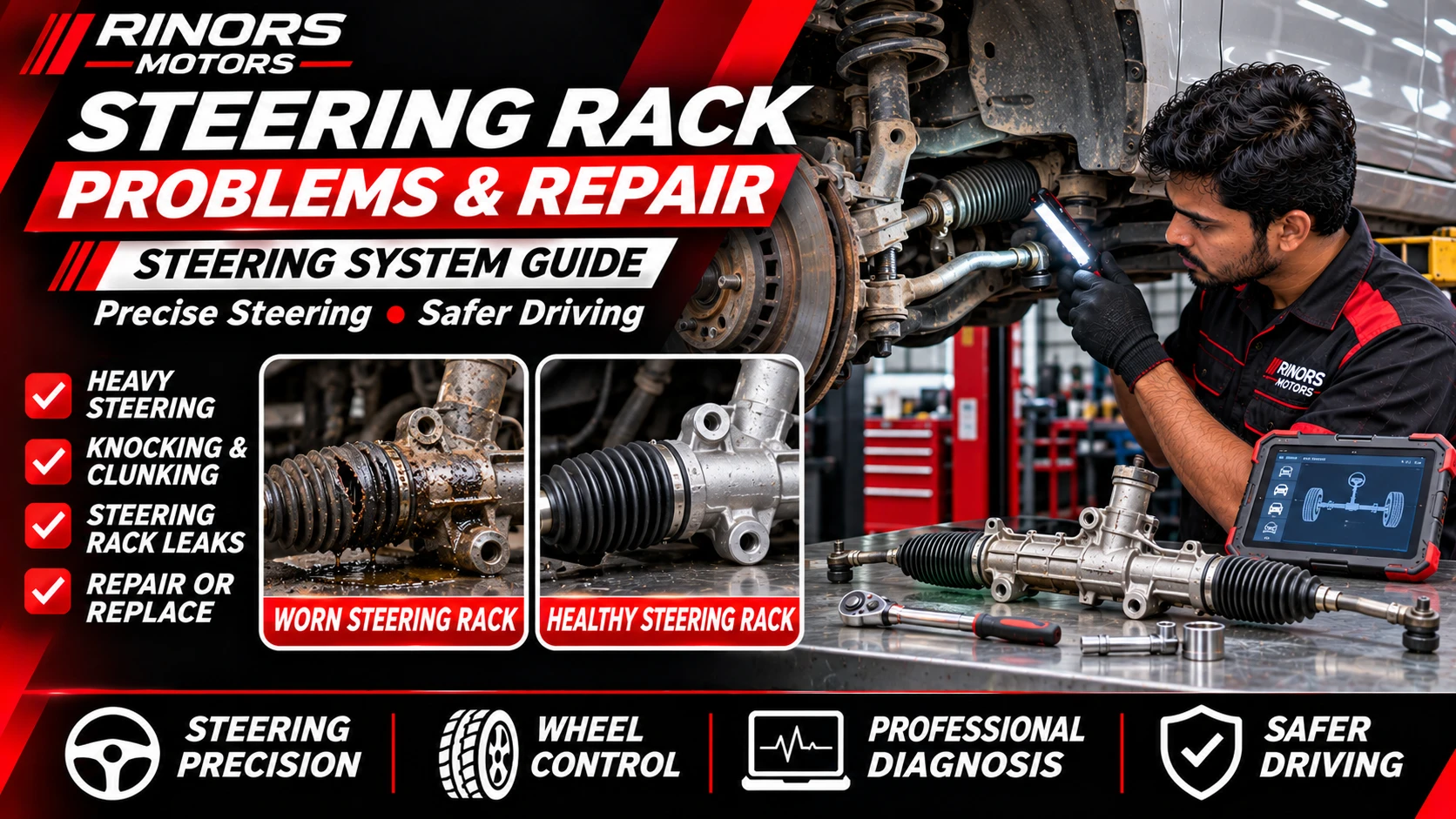
Car Steering Rack Problems in Bangladesh: Complete Diagnosis & Repair Guide
Does your car make a knocking sound when turning? Is the steering wheel becoming unusually heavy, or does the vehicle feel loose and difficult to control? These symptoms may indicate a problem with the steering rack or another steering-system component.
The steering rack is a critical component that helps convert steering wheel movement into controlled movement of the front wheels.
When the rack-and-pinion steering mechanism develops excessive wear, damage, or internal problems, it can affect steering precision, driving comfort, and vehicle safety.
In Bangladesh, potholes, damaged roads, repeated steering loads, and normal component ageing can contribute to steering and suspension problems.
Whether you drive a Toyota Corolla, Axio, Premio, Allion, Aqua, Honda Civic, Vezel, Nissan X-Trail, or another vehicle, understanding steering rack problems can help you recognize important warning signs and make informed repair decisions.
This guide explains the symptoms of a faulty steering rack, differences between hydraulic and electric power steering, diagnostic procedures, repair options, replacement requirements, and servicing costs in Bangladesh.
What Is a Car Steering Rack?
A steering rack is a mechanical component that helps control the direction of a vehicle's wheels.
Most modern passenger cars use a rack-and-pinion steering mechanism.
The system converts rotational movement from the steering wheel and steering shaft into side-to-side movement of the steering rack.
Tie rods transfer this movement to the steering knuckles, allowing the wheels to change direction.
Main Functions of a Steering Rack
Convert steering wheel rotation into wheel movement.
Help maintain precise directional control.
Transfer steering input to the front wheels.
Support predictable steering response.
Work with the steering linkage and suspension.
Help maintain vehicle stability during turns.
Provide controlled steering movement under different driving conditions.
A properly functioning steering rack is essential for reliable vehicle handling.
How Does Rack-and-Pinion Steering Work?
The rack-and-pinion system uses a small gear called the pinion and a toothed steering rack.
When the driver turns the steering wheel, the steering shaft rotates the pinion.
The pinion engages with the teeth of the rack, moving it sideways.
Tie rods connected to the ends of the rack transfer this movement to the front wheels.
Main Components of a Steering Rack System
Steering Rack: Moves left or right to control wheel direction.
Pinion Gear: Converts rotational steering input into linear rack movement.
Steering Rack Housing: Supports and protects the internal steering mechanism.
Inner Tie Rods: Connect the steering rack to the outer steering linkage.
Outer Tie Rod Ends: Connect the steering linkage to the steering knuckles.
Rack Boots: Protect the rack ends and inner tie rod areas from dirt and moisture.
Steering Shaft: Transfers driver steering input to the steering gear.
Mounting Components: Secure the steering gear to the vehicle structure.
Power-assisted steering systems also contain hydraulic or electrical components that reduce steering effort.
Types of Car Steering Systems
Not every vehicle uses the same steering assistance technology.
Understanding the differences is important before diagnosing or purchasing replacement parts.
1. Manual Rack-and-Pinion Steering
A manual rack-and-pinion system uses mechanical components without hydraulic or electric power assistance.
The driver provides the steering force directly.
This design is less common in many modern passenger cars.
2. Hydraulic Power Steering
Hydraulic power steering uses pressurized fluid to assist steering movement.
A typical system may include:
Hydraulic power steering pump.
Power steering fluid reservoir.
Hydraulic pressure and return lines.
Power-assisted steering rack.
Control valves.
Hydraulic seals.
The pump supplies pressurized fluid, helping reduce steering effort.
Hydraulic systems require the correct fluid and proper maintenance.
3. Electric Power Steering (EPS)
Electric power steering uses an electric motor and electronic control system to provide steering assistance.
Depending on the vehicle, the motor may be located at the steering column, pinion, or rack assembly.
Possible components include:
Electric assist motor.
Torque sensor.
Steering control module.
Steering angle information.
Electrical wiring and connectors.
Mechanical steering rack or gear.
Pure electric power steering systems do not use conventional hydraulic power steering fluid.
4. Electro-Hydraulic Power Steering
Some vehicles use an electrically driven hydraulic pump instead of an engine-driven pump.
These systems still use hydraulic fluid, even though the pump is electrically powered.
Important: Never assume a car uses hydraulic steering simply because it has a steering rack. Many modern Toyota, Honda, and Nissan vehicles use electric power steering.
8 Warning Signs of a Bad Steering Rack
Steering rack problems can produce different symptoms depending on the steering-system design.
However, similar symptoms can also originate from tie rods, ball joints, tyres, suspension parts, power steering pumps, and electrical controls.
1. Heavy or Difficult Steering
One possible symptom is a steering wheel that becomes unusually difficult to turn.
The driver may notice that parking or making slow-speed turns requires more effort.
Possible causes include:
Hydraulic steering fluid loss.
Weak hydraulic pump.
Internal rack binding.
Electric power steering failure.
Steering shaft problems.
Mechanical steering linkage damage.
Other power-assist faults.
Heavy steering does not automatically mean the steering rack itself needs replacement.
A complete system inspection is necessary.
2. Knocking or Clunking When Turning
A worn steering rack or its associated mounting components may contribute to knocking or clunking sounds.
The sound may appear when:
Turning the steering wheel.
Reversing steering direction.
Driving over uneven roads.
Entering or leaving a parking space.
However, similar sounds may originate from:
Inner tie rods.
Outer tie rod ends.
Ball joints.
Stabilizer links.
Steering shaft joints.
Control arm bushings.
Strut mounts.
Replacing the rack without locating the actual source can result in unnecessary expense.
3. Excessive Steering Wheel Play
Steering play occurs when the steering wheel moves without producing an appropriate response at the road wheels.
A small amount of movement may be consistent with a particular steering design, but excessive looseness requires inspection.
Possible causes include:
Worn steering rack components.
Damaged tie rod joints.
Steering shaft joint wear.
Loose steering gear mountings.
Other steering linkage faults.
Excessive steering play can reduce steering precision and must not be ignored.
4. Hydraulic Power Steering Fluid Leakage
Vehicles equipped with hydraulic power steering may develop leaks around the rack seals, lines, or connections.
Possible signs include:
Power steering fluid level dropping.
Wet steering rack components.
Fluid collecting inside a rack boot.
Oily deposits around the steering gear.
Whining noise associated with low hydraulic fluid.
However, leaks can also originate from the pump, hoses, reservoir, or fittings.
Pure electric power steering systems do not contain conventional hydraulic steering fluid, so a fluid leak should not automatically be described as an EPS rack leak.
5. Steering Feels Uneven or Stiff in One Direction
The steering may feel normal when turning one way but unusually heavy or resistant in the other direction.
Possible causes include:
Internal rack binding.
Hydraulic assistance problems.
Electric steering control faults.
Damaged steering shaft joints.
Suspension or steering linkage restrictions.
This symptom may indicate a potentially serious steering problem.
Professional diagnosis should be arranged promptly.
6. Steering Wheel Does Not Return Normally
After completing a turn, the steering wheel normally tends to return toward the straight-ahead position because of the vehicle's steering geometry and other operating forces.
If the steering binds or does not return normally, possible causes include:
Steering rack friction or binding.
Damaged steering shaft joints.
Incorrect wheel alignment.
Suspension problems.
Other steering mechanism faults.
Steering return behavior also depends on vehicle speed, geometry, tyres, and power-assist design.
A failure to self-center does not prove the rack is defective.
7. Electric Power Steering Warning Light
In vehicles equipped with electric power steering, an EPS warning light or steering-system warning message may appear when a fault is detected.
Potential causes include:
Power steering control module faults.
Assist motor problems.
Electrical supply issues.
Damaged wiring.
Torque sensor faults.
Communication problems.
Certain mechanical or control-system issues.
A warning light alone does not establish that the complete steering rack has failed.
The steering control system should be checked using appropriate diagnostic equipment.
8. Unusual Steering Vibration or Inconsistent Response
A damaged steering mechanism may contribute to vibration, abnormal feedback, or unpredictable steering response.
However, these symptoms can also be caused by:
Wheel imbalance.
Tyre damage.
Suspension wear.
Wheel alignment problems.
Brake issues.
Steering linkage faults.
If steering becomes unpredictable, binds, or is accompanied by significant looseness, stop driving safely and arrange professional inspection.
Why Do Steering Racks Become Damaged?
Steering racks are designed to handle repeated steering loads, but several conditions can contribute to wear or failure.
1. Normal Mechanical Wear
Over time, moving components may develop excessive clearance, friction, or deterioration.
2. Damaged Steering Rack Boots
Rack boots protect the exposed rack ends and inner tie rod areas from dust, water, and road contamination.
A torn boot can allow contaminants to reach the protected components.
3. Water and Dirt Contamination
Contaminants may contribute to corrosion or damage inside vulnerable steering components.
4. Hydraulic Seal Deterioration
Hydraulic rack seals can deteriorate because of ageing, wear, contamination, or other operating conditions.
5. Severe Road Impacts
Striking potholes, curbs, or road obstacles can damage steering and suspension components.
6. Incorrect Installation
Improper mounting, incorrect fastener torque, damaged connecting components, or unsuitable replacement parts can cause steering problems.
7. Electrical Faults
Electric power steering systems can experience faults involving wiring, connectors, control modules, sensors, or assist motors.
8. Previous Collision Damage
Accident damage can affect the steering rack, mounting points, steering linkage, or nearby chassis components.
Proper inspection is essential following significant front-end damage.
Steering Rack vs Tie Rod Problems
Steering rack and tie rod problems are often confused because the components work together.
Steering Rack Problems
Possible symptoms include:
Internal steering gear binding.
Excessive play originating inside the rack.
Hydraulic leakage from confirmed rack seals.
Abnormal rack movement.
Steering gear damage.
Inner Tie Rod Problems
An inner tie rod connects the steering rack to the outer tie rod.
Worn inner tie rod joints may cause:
Steering looseness.
Knocking sounds.
Abnormal wheel movement.
Changes in steering precision.
Outer Tie Rod Problems
The outer tie rod connects the steering linkage to the steering knuckle.
A worn outer tie rod may cause:
Excessive steering play.
Knocking.
Poor directional control.
Alignment-related problems.
Why Accurate Diagnosis Matters
A damaged inner or outer tie rod does not automatically require complete steering rack replacement.
Many vehicles allow individual tie rod replacement.
The correct repair depends on the actual condition and manufacturer procedures.
Steering Rack vs Power Steering Pump Problems
A hydraulic steering system contains both a steering gear and a pump.
Their problems may produce similar symptoms.
Power Steering Pump Problems
Possible symptoms include:
Whining noise during steering.
Reduced hydraulic assistance.
Fluid leakage around the pump.
Hydraulic pressure problems.
Belt-related issues.
Steering Rack Problems
Possible symptoms include:
Confirmed internal rack seal leakage.
Mechanical binding.
Excessive internal steering play.
Damaged rack housing.
Internal steering gear faults.
How Are They Distinguished?
A professional inspection may include:
Hydraulic fluid level and condition.
Fluid leak location.
Pump operation.
System pressure testing where appropriate.
Steering linkage inspection.
Mechanical rack evaluation.
A steering rack should not be replaced simply because the hydraulic pump is noisy.
Hydraulic Steering Rack vs Electric Steering Rack
These systems require different diagnostic approaches.
Hydraulic Steering Rack Problems
Common inspection areas include:
Hydraulic fluid leakage.
Internal rack seals.
Hydraulic pressure.
Power steering pump performance.
Fluid hoses.
Steering gear movement.
Electric Power Steering Problems
Common inspection areas include:
Electrical power supply.
Steering control module.
Torque sensor.
Assist motor.
Wiring and connectors.
Stored diagnostic trouble codes.
Mechanical steering components.
Important Difference
Electric steering assistance may be provided by a motor mounted on the steering column rather than the rack itself.
Therefore, an EPS warning or heavy steering condition does not necessarily indicate a defective rack assembly.
The exact vehicle configuration must be identified.
Can a Damaged Steering Rack Be Repaired?
Repair options depend on the steering system and the location of the fault.
When Repair May Be Possible
Certain issues may be corrected through approved repairs involving:
Replaceable inner tie rods.
Damaged protective rack boots.
Repairable hydraulic hose connections.
Serviceable rack mounting components.
Manufacturer-supported hydraulic seal repairs.
External wiring or connector faults.
When Complete Replacement May Be Necessary
A complete steering rack replacement may be appropriate when:
Internal steering gears are severely damaged.
The rack is mechanically bent.
The housing is cracked or damaged.
Internal binding cannot be safely corrected.
Hydraulic leakage cannot be repaired using an approved method.
An integrated EPS assembly has a confirmed non-serviceable failure.
Manufacturer instructions require replacement.
What About Steering Rack Rebuilding?
Some hydraulic steering racks can be professionally rebuilt using appropriate replacement components and testing equipment.
However, the availability and reliability of rebuilding depend on the design, component condition, and specialist capabilities.
A rebuilt steering rack should meet the required safety and functional specifications.
Can You Drive With a Bad Steering Rack?
Driving with a faulty steering rack can be dangerous.
The risk depends on the severity and nature of the problem.
A small hydraulic leak may create a different immediate risk from a steering rack that is binding or has excessive internal play.
Possible Risks
Increased steering effort.
Reduced directional control.
Unexpected loss of steering assistance.
Excessive steering looseness.
Abnormal steering response.
Additional damage to related components.
Serious loss of control in extreme cases.
When Should You Stop Driving?
Stop safely and arrange towing or professional assistance if:
Steering becomes suddenly very heavy.
The steering mechanism binds.
Steering response becomes unpredictable.
Significant wheel or steering looseness develops.
A steering component is visibly damaged.
A serious steering-system warning appears with abnormal handling.
Do not continue normal driving with a confirmed severe steering fault.
How Are Steering Rack Problems Diagnosed?
A professional diagnosis should distinguish rack failure from problems in the steering, suspension, hydraulic, or electrical systems.
Step 1: Identify the Symptoms
The technician determines when the problem occurs.
Examples include:
During parking.
During left or right turns.
While driving over potholes.
When reversing steering direction.
At low or high road speeds.
After a collision or major road impact.
Step 2: Confirm the Steering System Type
The exact hydraulic, electric, or electro-hydraulic configuration is identified.
Step 3: Inspect Tyres and Wheels
Tyre pressure, wheel condition, and other basic factors are checked.
Step 4: Inspect Steering Linkage
The technician examines:
Inner tie rods.
Outer tie rods.
Steering shaft connections.
Steering rack mounting points.
Other relevant steering components.
Step 5: Check the Rack Boots
The protective boots are inspected for:
Tears.
Cracks.
Loose clamps.
Water contamination.
Fluid accumulation, where relevant.
Step 6: Inspect Hydraulic Components
For hydraulic systems, the technician may inspect:
Power steering fluid.
Pump and hoses.
Rack seals.
Fluid connections.
Hydraulic pressure, when required.
Step 7: Perform EPS Diagnostic Scanning
For electric power steering, an appropriate diagnostic scanner may be used to examine:
Steering fault codes.
Assist system data.
Electrical supply information.
Torque sensor signals.
Steering angle information.
Related control module communication.
Step 8: Check Mechanical Steering Movement
Qualified technicians may conduct controlled inspections to identify excessive play or binding.
Step 9: Confirm the Repair Requirement
The technician determines whether the actual fault involves a tie rod, mounting component, hydraulic connection, assist system, or steering rack assembly.
Step 10: Repair and Verify
After the required repair, the steering system should be checked for correct operation and safety.
How Is a Steering Rack Replaced?
Steering rack replacement procedures vary by vehicle design.
A professional repair may involve:
Confirming the defective component.
Selecting the correct replacement steering rack.
Securing the vehicle and steering system.
Following manufacturer-specific electrical and safety procedures.
Disconnecting relevant steering linkage components.
Disconnecting hydraulic lines or electrical connections where applicable.
Removing the damaged steering gear.
Installing and securing the correct replacement.
Reconnecting the steering linkage and relevant systems.
Performing required fluid bleeding, electronic initialization, alignment, and final checks.
Why Proper Installation Matters
The steering rack must be correctly positioned and mechanically secured.
Incorrect installation can cause steering problems or compromise vehicle safety.
Steering Wheel and Airbag Precautions
Steering repairs may involve steering column or intermediate shaft connections.
Improper steering wheel rotation while components are disconnected can damage a steering clock spring or related components.
Technicians must follow the manufacturer's airbag and steering-system safety procedures.
Steering Angle Sensor Calibration
Some vehicles require steering angle sensor calibration, electronic initialization, or other service procedures after certain steering repairs.
The requirements vary by vehicle.
Is Wheel Alignment Required After Steering Rack Replacement?
Yes, a wheel alignment is generally required after steering rack replacement.
Removing or adjusting steering linkage components can change wheel alignment settings, particularly toe.
Incorrect alignment may cause:
Uneven tyre wear.
Steering wheel off-center.
Vehicle pulling to one side.
Reduced steering precision.
Poor handling.
What Should Be Checked?
A professional post-repair inspection may include:
Steering wheel centering.
Front toe settings.
Other applicable alignment angles.
Proper tie rod adjustment.
Steering system operation.
Relevant electronic calibration requirements.
Some modern vehicles also require manufacturer-specified steering angle or driver-assistance system calibration after relevant repairs.
Wheel alignment should not be omitted simply because the vehicle appears to drive straight.
Toyota Steering Rack Problems in Bangladesh
Toyota vehicles are common in Bangladesh, but different models and production years use different steering components and assistance systems.
Toyota Corolla and Axio
Many Corolla and Axio models use electric power steering, although exact designs differ by generation and market.
If the steering becomes heavy or develops unusual noises, technicians should check the actual steering architecture before replacing components.
Possible problem areas include:
Tie rod joints.
Rack mounting components.
Mechanical steering gear.
Electric steering assistance.
Steering shaft components.
Electrical supply or control faults.
Toyota Premio and Allion
Different Premio and Allion generations use model-specific steering systems.
A knocking sound or heavy steering may originate from the steering linkage, rack, suspension, or assistance system.
The exact fault must be diagnosed before replacement.
Toyota Aqua Hybrid
The Toyota Aqua uses electric power steering.
It does not require a conventional hydraulic power steering pump and reservoir.
An EPS warning or heavy steering condition may involve electronic, electrical, or mechanical components.
A charging-system or low-voltage problem can also affect certain electrically assisted steering systems.
Toyota Corolla Axio Hybrid
The Corolla Axio Hybrid also uses vehicle-specific electric power steering technology.
Steering repairs should follow the correct hybrid model's service procedures.
Hybrid Safety
Hybrid vehicles contain high-voltage electrical systems.
Although the steering system itself may operate through lower-voltage electrical architecture, technicians must still follow the vehicle's appropriate shutdown and safety requirements.
Honda and Nissan Steering Rack Problems
Honda Civic, Grace, Vezel, Nissan X-Trail, and other vehicles may use different electric, hydraulic, or related steering system designs depending on model and production year.
Possible steering complaints include:
Knocking or clunking.
Heavy steering.
Excessive free play.
Steering warnings.
Hydraulic leaks on applicable systems.
Irregular steering response.
Correct diagnosis requires identifying the exact steering system installed in the vehicle.
Replacement components should match the specific model and chassis configuration.
How Much Does Steering Rack Repair Cost in Bangladesh?
Steering rack repair costs depend on the vehicle and the type of fault.
Main Cost Factors
Vehicle brand and model.
Hydraulic or electric steering system.
Location and extent of damage.
Tie rod or rack boot replacement.
Hydraulic seal or connection problems.
Internal steering gear damage.
Electronic control faults.
Replacement-part availability.
Required specialist labor.
Wheel alignment and electronic calibration requirements.
A damaged rack boot or replaceable tie rod may cost less to repair than replacing the entire steering rack.
However, internal mechanical damage or integrated electronic failure may require a more expensive repair.
An accurate quotation should be based on confirmed inspection findings.
Steering Rack Replacement Cost in Bangladesh
Complete steering rack replacement prices vary widely.
Important Pricing Factors
Vehicle manufacturer.
Model and production year.
Steering system design.
Original-equipment or compatible aftermarket component.
New or professionally remanufactured assembly.
Integrated EPS motor or control components.
Mounting and linkage requirements.
Labor required for removal.
Wheel alignment.
Required electronic initialization or calibration.
Warranty coverage.
An electric steering gear with integrated electronic components can have a different cost from a conventional hydraulic rack.
The price should be confirmed using the exact vehicle and steering rack part number.
How to Choose the Correct Steering Rack
Steering racks are safety-critical components.
A replacement must meet the specific vehicle's mechanical and electrical requirements.
Vehicle Information to Verify
Manufacturer.
Exact model.
Production year.
Engine and drivetrain configuration.
Chassis or VIN.
Steering system type.
Original steering rack part number.
Mounting arrangement.
Inner tie rod and steering linkage compatibility.
Electrical connector and control-system requirements where applicable.
Original vs Aftermarket Steering Racks
Original-equipment and compatible aftermarket steering racks may be available.
However, replacement quality and compatibility are essential.
A rack that appears physically similar may have different mounting points, steering ratios, control electronics, or internal specifications.
Remanufactured Steering Racks
A professionally remanufactured steering rack may be an option for certain vehicles.
Before purchasing, verify:
Compatible part number.
Rebuilding quality.
Functional testing.
Condition of internal components.
Applicable warranty.
Installation requirements.
How to Help Prevent Steering Rack Problems
Not every steering rack failure is preventable, but proper maintenance can reduce avoidable damage.
1. Avoid Severe Road Impacts
Reduce speed appropriately around potholes and road obstacles.
2. Inspect Steering Rack Boots
Damaged boots should be repaired or replaced before contamination causes further problems.
3. Maintain Correct Tyre Pressure
Incorrect tyre pressure can affect steering effort and vehicle handling.
4. Maintain Hydraulic Power Steering Fluid
For vehicles equipped with hydraulic power steering, use the manufacturer-specified fluid and inspect for leaks.
5. Do Not Ignore Steering Noises
Persistent knocking or clunking should be diagnosed.
6. Inspect Tie Rods and Steering Linkage
Worn joints can affect steering precision and safety.
7. Check Wheel Alignment
Alignment problems should be corrected when required.
8. Address EPS Warnings Promptly
Electric power steering warnings require proper diagnostic inspection.
9. Use Compatible Replacement Parts
Choose appropriate steering components that meet vehicle specifications.
10. Follow Professional Repair Procedures
Correct installation, fastener torque, alignment, and electronic calibration are important.
Frequently Asked Questions About Steering Rack Problems
What Are the Signs of a Bad Steering Rack?
Possible symptoms include excessive steering play, knocking, mechanical binding, heavy steering, confirmed hydraulic rack leaks, and abnormal steering response.
However, other steering and suspension faults can cause similar symptoms.
Can a Bad Steering Rack Make Knocking Noises?
Yes. Worn rack components or mounting parts can produce knocking.
Inner tie rods, ball joints, stabilizer links, and other components can also cause similar noises.
Why Is My Steering Wheel Becoming Heavy?
Possible causes include loss of hydraulic pressure, EPS faults, mechanical binding, tyre problems, or other steering-system issues.
Can Electric Power Steering Leak Oil?
A pure electric power steering system does not use conventional hydraulic steering fluid.
A visible leak should be investigated to determine its actual source.
Is Steering Rack Repair Better Than Replacement?
It depends on the fault.
Some external components or serviceable hydraulic problems can be repaired. Severe internal damage or non-serviceable electronic failure may require replacement.
Can a Bad Steering Rack Cause Uneven Tyre Wear?
Steering linkage problems or incorrect wheel alignment can contribute to uneven tyre wear.
However, tyre wear alone does not prove steering rack failure.
Do I Need Wheel Alignment After Replacing a Steering Rack?
Yes, a wheel alignment is generally necessary after steering rack replacement.
Additional electronic calibration may also be required on certain vehicles.
Can I Drive With a Damaged Steering Rack?
Driving with a severely damaged steering rack can be dangerous.
If steering becomes unpredictable, excessively loose, or difficult to control, stop safely and arrange professional assistance.
Do Toyota Hybrid Cars Have Steering Racks?
Yes. Toyota hybrid vehicles use mechanical steering gears and power-assist systems.
Many use electric power steering rather than conventional hydraulic assistance.
Should I Replace the Tie Rods When Replacing the Steering Rack?
The answer depends on the replacement assembly, condition of the existing parts, and manufacturer procedures.
Serviceable tie rods do not automatically require replacement unless specified or justified by inspection.
Steering Rack Inspection & Repair at Rinors Motors
At Rinors Motors, we understand the importance of precise steering, reliable handling, and safe vehicle operation on Bangladesh's roads.
If your car develops heavy steering, knocking sounds, steering looseness, hydraulic fluid leakage, or an electric power steering warning, identifying the actual cause is essential.
A professional inspection can help distinguish steering rack damage from tie rod problems, hydraulic pump faults, suspension wear, electrical issues, and wheel alignment problems.
Whether you own a Toyota, Honda, Nissan, or another vehicle, correct diagnosis and compatible replacement parts are important for restoring reliable steering performance.
Contact Rinors Motors to discuss steering rack inspection, tie rod problems, hydraulic and electric power steering diagnostics, and appropriate repair or replacement options for your vehicle.
Rinors Motors — Your Trusted Automotive Partner in Bangladesh.