Car Wheel Bearing Problems in Bangladesh: Complete Diagnosis & Replacement Guide
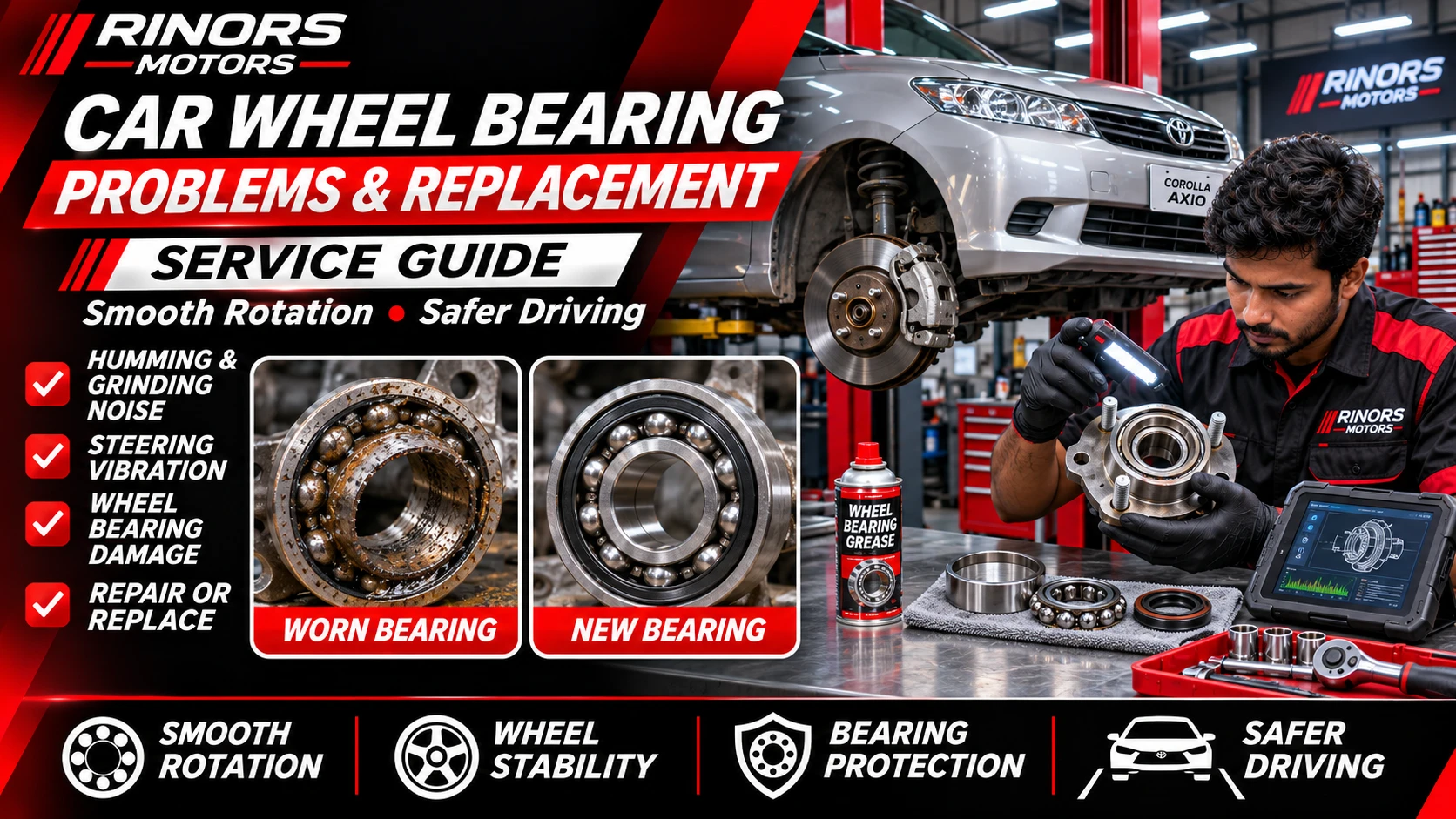
Does your car produce a humming, growling, or grinding noise while driving? Does the sound become louder as vehicle speed increases, or change when you turn? These symptoms may indicate a worn or damaged wheel bearing.
Wheel bearings are important components of a vehicle's wheel and hub assembly. They allow the wheels to rotate smoothly while supporting loads generated during driving, braking, and cornering.
When a wheel bearing deteriorates, it may create unusual noises, vibration, excessive wheel movement, or other safety concerns.
In Bangladesh, potholes, uneven roads, severe road impacts, water contamination, and normal component wear can contribute to wheel-end problems.
Whether you drive a Toyota Corolla, Axio, Premio, Allion, Aqua, Honda Civic, Vezel, Nissan X-Trail, or another vehicle, understanding wheel bearing problems can help you identify warning signs before more serious damage occurs.
This guide explains common symptoms, bearing types, diagnostic methods, replacement procedures, maintenance recommendations, and repair cost considerations.
What Is a Car Wheel Bearing?
A wheel bearing is a precision mechanical component that allows a vehicle's wheel hub to rotate with minimal friction.
It also supports significant vehicle loads while maintaining proper wheel positioning.
Modern passenger vehicles commonly use sealed ball-bearing or roller-bearing assemblies, depending on the vehicle design.
Main Functions of Wheel Bearings
Allow smooth wheel rotation.
Reduce friction between rotating components.
Support vehicle weight and driving loads.
Maintain proper wheel hub positioning.
Help the wheel operate correctly during cornering.
Support normal steering and braking operation.
Maintain accurate wheel rotation where required by the vehicle's design.
A properly functioning wheel bearing is essential for reliable wheel-end operation.
How Does a Wheel Bearing Work?
Wheel bearings contain precisely manufactured rolling elements positioned between inner and outer bearing races.
The rolling elements allow components to rotate relative to one another while carrying mechanical loads.
Most modern passenger-car wheel bearings are designed with internal lubrication and protective seals.
Main Components of a Wheel Bearing Assembly
Inner Race: Supports the inner bearing contact surface.
Outer Race: Provides the outer bearing contact surface.
Rolling Elements: Ball or roller components that reduce friction.
Bearing Cage: Maintains appropriate spacing between rolling elements.
Bearing Seals: Help retain lubricant and limit contamination.
Wheel Hub: Supports wheel attachment and rotation.
Bearing Housing or Steering Knuckle: Supports the bearing within the vehicle structure.
Some assemblies also incorporate a magnetic encoder used by the anti-lock braking system.
Different vehicles use different bearing arrangements.
8 Warning Signs of Bad Wheel Bearings
1. Humming Noise While Driving
One of the most recognizable symptoms of a worn wheel bearing is a humming sound that becomes more noticeable as the vehicle moves.
The sound may resemble a low-pitched drone.
Possible characteristics include:
Noise increasing with vehicle speed.
A persistent humming sound.
Noise that continues during steady driving.
Changes in sound during cornering.
However, tyres and other drivetrain components can produce similar noises.
A humming sound alone does not confirm wheel bearing failure.
2. Growling or Grinding Noise
A deteriorating wheel bearing may produce a rough growling or rumbling sound.
In more severe cases, grinding noises can develop.
These sounds may indicate increased internal bearing wear or damage.
However, brake components, damaged tyres, and other mechanical parts can also produce grinding noises.
A loud or worsening grinding sound should be investigated promptly.
3. Noise That Changes With Vehicle Speed
Wheel bearings rotate with the wheel, so bearing-related noises frequently change as road speed changes.
For example, the sound may become more noticeable as the vehicle accelerates.
This differs from some engine-related noises that primarily follow engine RPM.
However, road-speed-related noise can also result from tyres, brake components, and other rotating drivetrain parts.
4. Noise Changes During Cornering
Wheel bearings experience changing loads when a vehicle turns.
A damaged bearing may become louder or quieter as cornering forces change.
For example, a noise that changes during a gentle left or right turn may suggest a wheel-end problem.
However, the louder direction does not reliably identify the defective bearing in every vehicle.
Professional inspection is needed before deciding which side requires replacement.
5. Steering Wheel Vibration
A severely worn wheel bearing may contribute to vibration felt through the steering wheel.
Possible symptoms include:
Vibration increasing with road speed.
Unusual wheel-end movement.
Changes in vibration during cornering.
Roughness while driving.
However, steering vibration is more commonly associated with several possible causes, including wheel imbalance, tyre damage, and suspension problems.
Wheel bearings should be considered as one possible source rather than the automatic diagnosis.
6. Excessive Wheel Play or Looseness
A severely deteriorated bearing may allow abnormal movement at the wheel hub.
During professional inspection, excessive movement may be detected when the vehicle is safely supported.
However, looseness can also originate from ball joints, steering components, or other wheel-end connections.
Some defective bearings may produce noise without measurable looseness.
Therefore, the absence of excessive play does not always prove a bearing is healthy.
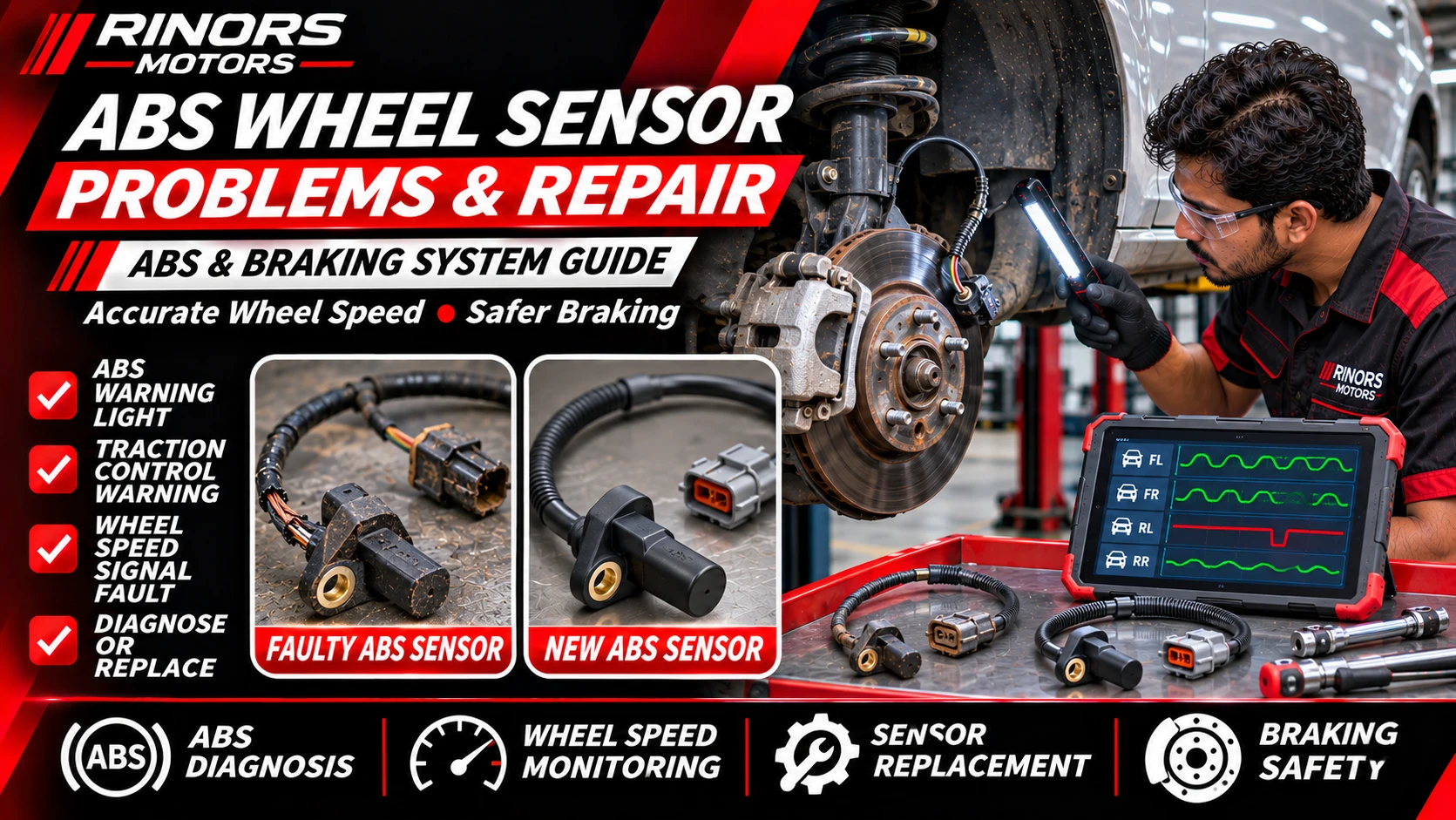
7. ABS Warning Light
Some modern wheel bearings incorporate magnetic encoders that provide wheel-speed information to the anti-lock braking system.
If an encoder becomes damaged or the wheel-speed signal is affected, an ABS warning may appear.
Potential causes include:
Damaged magnetic encoder.
Incorrect bearing installation.
Wheel-speed sensor problems.
Damaged wiring.
Excessive bearing movement.
Other ABS system faults.
An ABS warning light does not automatically mean the wheel bearing needs replacement.
The braking system should be diagnosed using appropriate equipment.
8. Abnormal Tyre Wear or Wheel-End Movement
Significant wheel-end looseness or related suspension problems can contribute to abnormal tyre wear.
However, uneven tyre wear is more often associated with alignment, tyre pressure, suspension condition, and other factors.
If unusual tyre wear occurs alongside humming, grinding, or excessive wheel movement, a wheel bearing inspection may be appropriate.
What Causes Wheel Bearings to Fail?
Wheel bearings are designed to operate under substantial mechanical loads.
However, several factors can contribute to premature deterioration.
1. Normal Wear and Ageing
Bearings experience repeated rotation and changing loads throughout their service life.
Over time, internal rolling elements and contact surfaces may deteriorate.
2. Severe Road Impacts
Striking deep potholes, curbs, or other road obstacles can transmit significant impact forces through the wheel hub.
These forces may damage bearing surfaces or nearby supporting components.
3. Water Contamination
Bearings rely on appropriate lubrication and protective sealing.
If water enters a damaged bearing assembly, it can contribute to corrosion and lubricant deterioration.
4. Damaged Bearing Seals
Protective seals help prevent contaminants from entering the bearing.
If seals become damaged, dirt and moisture may reach the internal components.
5. Incorrect Installation
Improper installation can cause premature bearing damage.
Examples include:
Incorrect pressing procedures.
Applying force through the wrong bearing race.
Using unsuitable tools.
Damaging seals during installation.
Incorrect fastener tightening.
Improper bearing orientation.
6. Incorrect Axle Nut Torque
Some wheel bearing designs require precise axle fastener tightening.
Incorrect torque can affect bearing preload, internal clearance, or mechanical integrity.
The manufacturer's specifications must always be followed.
7. Vehicle Overloading
Excessive vehicle loading increases forces on wheels, suspension components, and bearings.
Repeated loading beyond vehicle specifications may contribute to premature wear.
8. Poor-Quality Replacement Components
Bearings that do not meet the required dimensions, materials, or manufacturing specifications may fail prematurely.
Selecting compatible, reliable replacement components is important.
Front Wheel Bearing vs Rear Wheel Bearing
Most passenger vehicles have wheel bearings at both front and rear wheel positions.
However, the bearing construction and replacement procedures may differ.
Front Wheel Bearings
Front wheel bearings support the front wheel hubs.
On many front-wheel-drive vehicles, the front hubs are connected to the drive shafts.
The bearing assembly must accommodate normal wheel rotation, steering forces, and vehicle loads.
Rear Wheel Bearings
Rear wheel bearings support the rear wheel hubs.
Depending on the vehicle, they may be integrated into a hub assembly or installed as separate bearing components.
Are Front and Rear Bearings Interchangeable?
Not generally.
Front and rear wheel bearings may have different:
Dimensions.
Load capacities.
Mounting arrangements.
Hub designs.
ABS encoder configurations.
Installation requirements.
Always confirm the correct part number for the exact wheel position.
Wheel Bearing vs CV Joint: What's the Difference?
Wheel bearing problems are sometimes confused with CV joint problems because both components are located near the wheels.
However, they perform different functions.
Wheel Bearing
A wheel bearing supports wheel rotation and helps maintain the correct relationship between the rotating hub and its supporting structure.
Common symptoms may include:
Humming noise.
Growling noise.
Grinding noise.
Road-speed-related rumbling.
Abnormal hub movement.
CV Joint
A CV joint transfers rotational power through changing angles between drivetrain components.
Possible symptoms include:
Repetitive clicking during tight turns.
Grease leaking from a damaged CV boot.
Clunking during drivetrain load changes.
Acceleration-related vibration.
How Can You Tell the Difference?
A humming or growling noise that changes with road speed may suggest a wheel bearing.
A repeated clicking sound during tight turns under power may suggest an outer CV joint.
However, these are diagnostic clues rather than definitive tests.
Both systems should be inspected when symptoms overlap.
Wheel Bearing Noise vs Tyre Noise
Tyres can sometimes create noises that closely resemble worn wheel bearings.
Tyre-Related Noise
Possible causes include:
Uneven tread wear.
Tyre cupping.
Feathered tread.
Damaged tyre construction.
Aggressive tread patterns.
Incorrect tyre inflation.
Tyre noise may change noticeably across different road surfaces.
Wheel Bearing Noise
Wheel bearing noise may be more directly related to wheel rotational speed and changes in wheel loading.
However, both types of noise can overlap.
Why Diagnosis Matters
Replacing a wheel bearing will not fix noise originating from tyres.
A technician should inspect tyre condition, wheel balance, suspension, and the bearing before recommending replacement.
Wheel Bearing vs Brake Noise
Brake problems can also create grinding or rubbing noises near the wheels.
Possible Brake-Related Causes
Worn brake pads.
Damaged brake discs.
Contacting brake dust shields.
Loose brake hardware.
Foreign objects near brake components.
How Are They Different?
Brake-related noises may change when the brake pedal is applied.
Wheel bearing noises often change with road speed and wheel loading.
However, these characteristics are not universally reliable.
A professional inspection should determine the actual source.
Can You Drive With a Bad Wheel Bearing?
Driving with a worn wheel bearing can become unsafe.
The risk depends on the severity of the damage.
A bearing that produces mild humming may not have the same immediate risk as one with severe looseness or grinding.
However, bearing deterioration can progress.
Possible Risks of Continued Driving
Increasing wheel-end noise.
Excessive vibration.
Additional bearing deterioration.
Damage to related hub components.
Increased wheel-end looseness.
Potential effects on braking and steering.
Serious wheel-end failure in extreme cases.
If your vehicle develops loud grinding, significant wheel looseness, abnormal wheel movement, or severe vibration, stop safely and arrange professional assistance or towing.
Continuing to drive with a severely damaged wheel bearing can create a serious safety risk.
How Are Wheel Bearing Problems Diagnosed?
A professional wheel bearing inspection should identify the affected component before replacement.
Step 1: Review the Symptoms
The technician asks when the noise occurs.
Important details include:
Vehicle speed.
Turning direction.
Road surface.
Braking conditions.
Acceleration or deceleration.
Noise location.
Step 2: Inspect Tyres and Wheels
The technician checks tyres for uneven wear, structural damage, and other conditions that may produce similar sounds.
Step 3: Inspect Suspension and Steering
Ball joints, tie rods, bushings, and other wheel-end components are examined when appropriate.
Step 4: Perform a Controlled Road Test
Where the vehicle is safe to drive, a technician may evaluate the noise under controlled conditions.
Road-speed and cornering-related changes can provide useful diagnostic clues.
Aggressive swerving or unsafe road testing should be avoided.
Step 5: Safely Raise the Vehicle
The vehicle is secured and raised using appropriate professional lifting equipment.
Step 6: Check Wheel-End Movement
The technician checks for abnormal looseness or movement.
Any movement must be distinguished from play in steering or suspension components.
Step 7: Inspect Bearing Rotation
Depending on the vehicle, a technician may evaluate rotating components for roughness, abnormal sounds, or other signs of damage.
A bearing that feels smooth during a low-speed manual rotation can still produce noise under road loads.
Step 8: Inspect ABS Components
Where applicable, the wheel-speed sensor, magnetic encoder, and related electrical system are checked.
Step 9: Confirm the Required Repair
The technician determines whether the vehicle requires an individual bearing or a complete wheel hub assembly.
Step 10: Repair and Verify
After installation, the vehicle is checked for correct wheel-end operation, abnormal noise, fastener security, and relevant warning lights.
Wheel Bearing vs Wheel Hub Assembly
Not all vehicles use separately serviceable wheel bearings.
Individual Wheel Bearing
Some vehicles use a bearing that is pressed into a steering knuckle or another supporting component.
Replacement typically requires appropriate press tools and manufacturer-specific procedures.
Complete Wheel Hub Bearing Assembly
Other vehicles use a combined hub and bearing unit.
Depending on the design, the complete assembly may be removed and replaced as one component.
Which Is Better?
Neither arrangement is universally better.
The correct replacement method depends on the original vehicle design and the component's serviceability.
A complete hub assembly should not automatically be substituted for an individual bearing unless it is compatible and appropriate.
Can a Damaged Wheel Bearing Be Repaired?
Most modern sealed passenger-car wheel bearings are not designed for internal repair.
When their internal rolling elements or bearing races are damaged, replacement is usually necessary.
When Bearing Replacement Is Appropriate
Confirmed internal bearing wear.
Excessive bearing roughness.
Damaged bearing races.
Severe corrosion or contamination.
Excessive bearing looseness.
Manufacturer-specified bearing failure.
When Other Repairs May Solve the Problem
If the problem actually originates from a loose component, damaged tyre, brake part, or suspension joint, replacing the bearing may not be necessary.
Correct diagnosis helps prevent unnecessary costs.
Are Wheel Bearings Repacked With Grease?
Some older or specialized wheel bearing designs use serviceable bearings that require periodic lubrication or adjustment.
However, many modern passenger-car wheel bearings are sealed and permanently lubricated.
These sealed units are typically replaced when worn rather than opened and repacked.
How Are Wheel Bearings Replaced?
Wheel bearing replacement procedures vary by vehicle.
A professional service may involve the following steps.
Step 1: Confirm the Defective Bearing
Diagnosis should establish which wheel position requires repair.
Step 2: Select the Correct Replacement
Confirm the appropriate bearing or hub assembly using the vehicle's specifications.
Step 3: Secure and Raise the Vehicle
The vehicle must be supported using suitable lifting equipment.
Step 4: Remove Relevant Components
Depending on the design, technicians may need to remove the wheel, brake components, axle fastener, or other related parts.
Step 5: Remove the Damaged Bearing
The damaged bearing or hub assembly is removed according to the manufacturer's service procedure.
Step 6: Install the Replacement
Correct tools and pressing procedures are essential.
Improperly applied installation force can damage a new bearing before the vehicle is driven.
Step 7: Protect ABS Components
Where a magnetic ABS encoder is incorporated into the bearing, correct orientation and careful handling are critical.
Step 8: Apply Specified Fastener Torque
Relevant axle, hub, and wheel fasteners must be tightened according to manufacturer instructions.
Some fasteners are single-use and require replacement.
Step 9: Reassemble and Inspect
All removed components are correctly reinstalled.
Step 10: Verify Operation
The technician checks wheel rotation, abnormal movement, noise, and relevant electronic warning systems.
Safety Warning: Wheel bearings support critical wheel-end loads. Incorrect installation or fastener torque can compromise vehicle safety. Replacement should be performed by qualified technicians using appropriate equipment.
ABS Problems After Wheel Bearing Replacement
Some modern wheel bearings incorporate magnetic encoder rings used by the vehicle's ABS wheel-speed sensors.
Incorrect installation or encoder damage may cause ABS warnings.
Possible Causes
Incorrect bearing orientation.
Damaged magnetic encoder.
Incorrect replacement bearing.
Damaged wheel-speed sensor.
Damaged sensor wiring.
Excessive installation force.
Incompatible hub assembly.
Why Correct Installation Matters
Certain magnetic encoder bearings must face a particular direction.
If the bearing is installed backward, the sensor may not receive the expected wheel-speed signal.
A qualified technician should identify the encoder orientation and follow the manufacturer's installation instructions.
Toyota Wheel Bearing Problems in Bangladesh
Toyota vehicles are widely used in Bangladesh, but wheel bearing designs vary by model and production year.
Toyota Corolla and Axio
Different generations of Corolla and Axio may use different front and rear wheel bearing assemblies.
Common complaints that require investigation include:
Humming while driving.
Noise changing during cornering.
Rough wheel-end rotation.
Abnormal wheel movement.
The exact component should be identified using the vehicle's model and chassis information.
Toyota Premio and Allion
Wheel bearing problems in these vehicles may produce road-speed-related noise or roughness.
However, tyres, brakes, and suspension components should also be inspected before replacing a bearing.
Toyota Aqua Hybrid
The Toyota Aqua uses conventional wheel-end bearing components as part of its chassis and drivetrain system.
Hybrid operation does not eliminate the possibility of wheel bearing wear.
However, the relative quietness of some hybrid driving conditions may make certain tyre or wheel noises more noticeable.
Toyota Corolla Axio Hybrid
The Axio Hybrid also requires properly specified wheel bearings and hub components.
Replacement parts must match the exact model, year, and wheel position.
Honda and Nissan Wheel Bearing Problems
Honda Civic, Grace, Vezel, Nissan X-Trail, and other vehicles can also experience wheel bearing deterioration.
Potential symptoms include humming, growling, vibration, or unusual wheel-end movement.
However, bearing construction, hub design, ABS integration, and replacement procedures can differ significantly.
Before ordering parts, the vehicle's specific configuration should be confirmed.
How Much Does Wheel Bearing Replacement Cost in Bangladesh?
Wheel bearing replacement costs vary depending on the vehicle and type of assembly.
Main Cost Factors
Vehicle manufacturer and model.
Front or rear wheel position.
Individual bearing or complete hub assembly.
Original-equipment or compatible aftermarket component.
Integrated ABS encoder requirements.
Labor and installation complexity.
Availability of the replacement part.
Additional fasteners, seals, or related components.
Product warranty.
A separately replaceable bearing may have a lower parts cost than a complete hub assembly.
However, press-fit bearing replacement may require additional labor and specialized tools.
The total repair cost should be determined after identifying the defective component and confirming the correct replacement.
How to Choose the Correct Wheel Bearing
Wheel bearings are precision components, so correct compatibility is essential.
Information to Verify
Vehicle brand and model.
Production year.
Engine and drivetrain configuration.
Chassis or VIN information.
Front or rear bearing position.
Left-side or right-side application, where relevant.
Required part number.
Bearing dimensions.
Hub mounting design.
ABS encoder compatibility.
Original vs Aftermarket Wheel Bearings
Original-equipment and compatible aftermarket bearings may be available.
Important considerations include:
Correct dimensions and fitment.
Reliable manufacturing quality.
Proper bearing sealing.
Compatible ABS components.
Genuine product identification.
Supplier reliability.
Warranty conditions.
Avoid purchasing a bearing solely because it appears visually identical to the original.
How Long Do Car Wheel Bearings Last?
There is no universal replacement interval applicable to every modern passenger-car wheel bearing.
Many sealed wheel bearings are designed for extended service life without routine lubrication.
However, actual durability depends on:
Vehicle design.
Road conditions.
Driving loads.
Bearing manufacturing quality.
Water and dirt contamination.
Installation quality.
Previous impact damage.
General component condition.
Some bearings last for many years, while others may fail earlier because of damage or contamination.
Replacement should normally be based on confirmed condition or manufacturer instructions rather than an arbitrary mileage figure.
Should Both Wheel Bearings Be Replaced Together?
Not necessarily.
If one bearing is defective and the bearing on the opposite side is functioning correctly, replacing only the damaged component may be appropriate.
When One Bearing May Be Replaced
Only one bearing has confirmed damage.
The other bearing passes inspection.
Manufacturer procedures allow individual replacement.
No other wheel-end defects are present.
When Multiple Bearings May Require Replacement
More than one bearing shows damage.
Several wheel-end components have been affected by an incident.
Inspection confirms defects on both sides.
A manufacturer-specific service procedure requires additional components.
Automatically replacing both bearings without evaluating their condition may increase repair costs unnecessarily.
How to Help Prevent Wheel Bearing Problems
1. Avoid Severe Pothole Impacts
Slow down appropriately around damaged road surfaces whenever safe.
2. Maintain Correct Tyre Pressure
Follow the vehicle manufacturer's tyre inflation recommendations.
3. Avoid Vehicle Overloading
Do not exceed the vehicle's specified load capacity.
4. Inspect After Significant Impacts
If the vehicle strikes a deep pothole or curb, investigate new noises, vibration, or wheel-end problems.
5. Use Suitable Replacement Components
Select bearings and hub assemblies that meet vehicle specifications.
6. Follow Correct Installation Procedures
Incorrect pressing techniques or fastener torque can damage new bearings.
7. Investigate Unusual Noise
Persistent humming, rumbling, or grinding should be checked promptly.
8. Maintain Suspension and Wheel Components
Damaged wheel-end and suspension components should be inspected and repaired when necessary.
9. Protect Bearing Seals
Avoid damaging protective bearing seals during related repairs.
10. Inspect ABS Warnings
Where relevant, investigate warning lights that could indicate wheel-speed signal problems.
Frequently Asked Questions About Wheel Bearings
Can a Bad Wheel Bearing Make a Humming Noise?
Yes. Worn wheel bearings commonly produce humming, growling, or rumbling noises that may change with vehicle speed.
However, tyres and other drivetrain parts can create similar sounds.
Does Wheel Bearing Noise Get Louder When Turning?
It can. Changes in cornering loads may affect bearing noise.
However, turning direction alone cannot reliably identify the defective bearing in every vehicle.
Can a Bad Wheel Bearing Cause Steering Vibration?
Yes, especially when bearing damage is significant.
However, tyre imbalance, suspension faults, and other wheel-related problems may also cause vibration.
Can a Bad Wheel Bearing Trigger an ABS Light?
Yes, in some vehicles. Damage to an integrated magnetic encoder or related wheel-speed sensing components may cause ABS warnings.
Is a Wheel Bearing the Same as a CV Joint?
No. A wheel bearing supports smooth wheel rotation, while a CV joint transfers rotational power through changing drivetrain angles.
Can a Bad Wheel Bearing Damage Other Parts?
Severe bearing failure may affect wheel hub alignment, related wheel-end components, and potentially braking or steering performance.
Do All Wheel Bearings Need Regular Greasing?
No. Many modern passenger-car bearings are sealed and permanently lubricated.
Some older or specialized designs have different maintenance requirements.
Is It Safe to Drive With a Noisy Wheel Bearing?
A noisy bearing should be inspected promptly.
If there is loud grinding, significant looseness, or severe vibration, stop safely and arrange professional assistance.
Should Both Wheel Bearings Be Changed Together?
Not automatically. Replace bearings based on their actual condition and the manufacturer's service requirements.
Do Hybrid Cars Have Wheel Bearings?
Yes. Hybrid vehicles use wheel bearings just like other passenger vehicles.
Wheel Bearing Inspection & Replacement at Rinors Motors
At Rinors Motors, we understand the importance of reliable wheel-end components for safe and comfortable driving in Bangladesh.
If your car produces humming or grinding noises, develops unusual steering vibration, or shows signs of wheel-end looseness, identifying the actual cause is essential before replacing parts.
A professional diagnostic inspection can help distinguish worn wheel bearings from tyre noise, CV joint problems, suspension faults, and brake-related issues.
Whether you own a Toyota, Honda, Nissan, or another vehicle, selecting the correct wheel bearing or hub assembly is important for proper fitment and long-term reliability.
Contact Rinors Motors to discuss wheel bearing inspection, compatible replacement parts, and appropriate wheel hub repair or replacement options for your vehicle.
Rinors Motors — Your Trusted Automotive Partner in Bangladesh.