Car Engine Oil Leak Problems in Bangladesh: Complete Diagnosis & Repair Guide
Have you noticed dark oil spots underneath your car? Is your engine oil level dropping between services, or do you smell burning oil after driving? These symptoms may indicate an engine oil leak.
Engine oil is essential for lubricating moving components, reducing friction, helping manage heat, and protecting internal engine parts against excessive wear.
When engine oil escapes through a damaged gasket, seal, filter housing, or another component, the engine may gradually lose the lubrication it needs.
In Bangladesh, high temperatures, traffic congestion, road impacts, ageing vehicles, and demanding everyday driving conditions make engine maintenance particularly important.
Whether you drive a Toyota Corolla, Axio, Premio, Allion, Aqua, Honda Civic, Vezel, Nissan X-Trail, or another vehicle, understanding oil leak problems can help you identify warning signs and avoid expensive engine repairs.
This guide explains the common causes of engine oil leaks, how to distinguish different fluid leaks, professional diagnostic procedures, repair options, and maintenance recommendations.
What Is an Engine Oil Leak?
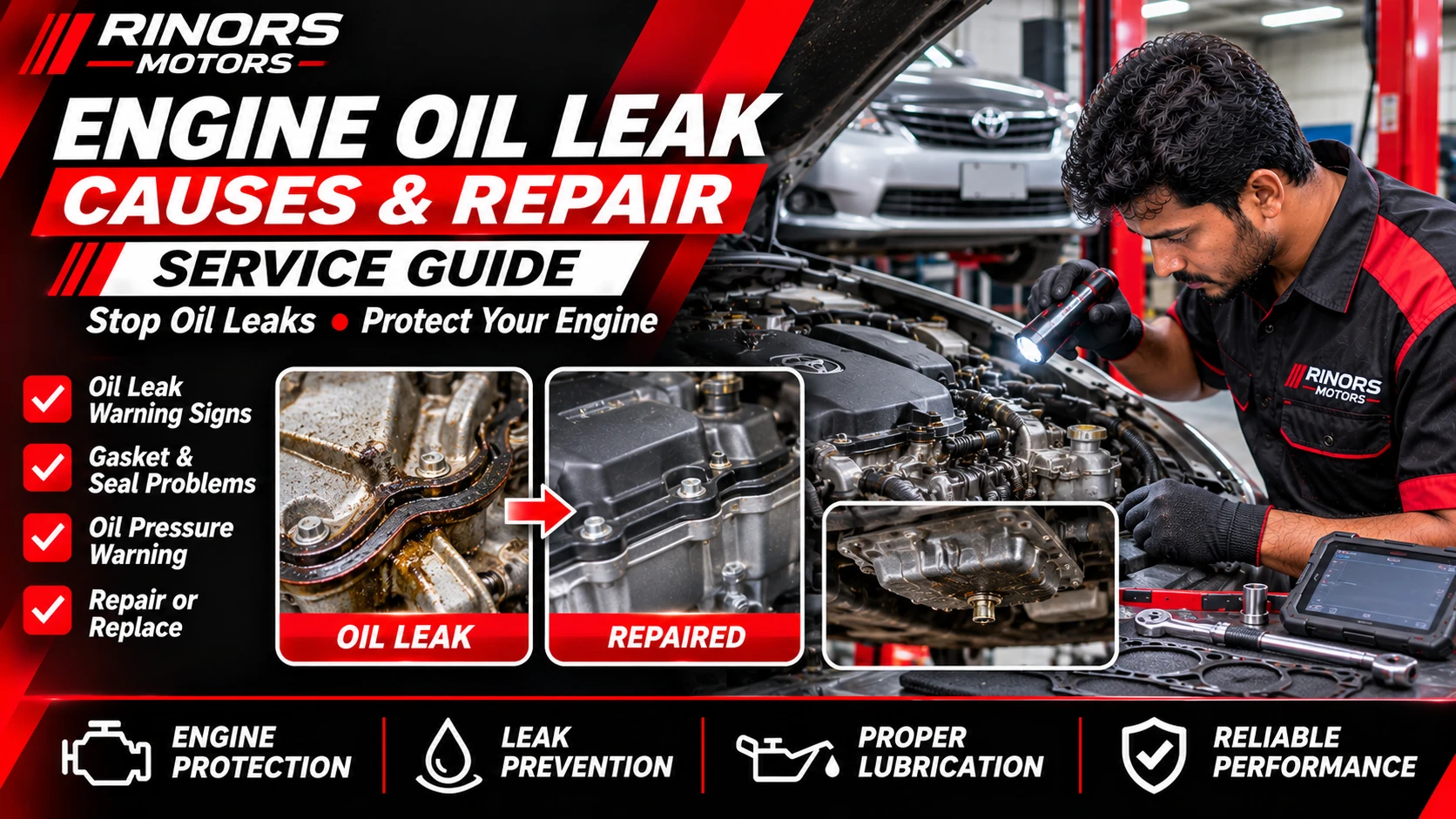
An engine oil leak occurs when lubricating oil escapes from the engine through an unintended opening or a component that no longer seals correctly.
Modern engines contain multiple gaskets, seals, covers, housings, and connections designed to keep oil inside the lubrication system.
Over time, these components may deteriorate or become damaged.
Common Locations of Engine Oil Leaks
Valve cover gasket.
Engine oil pan gasket.
Oil drain plug and sealing washer.
Engine oil filter or filter housing.
Front crankshaft oil seal.
Rear main crankshaft seal.
Timing cover gasket or sealing surface.
Oil pressure sensor or switch.
Oil cooler connections and associated seals.
The exact leak location depends on engine design, condition, and maintenance history.
Why Is Engine Oil Important?
Engine oil circulates throughout the engine to protect important moving components.
Main Functions of Engine Oil
Lubricate moving engine parts.
Reduce friction and mechanical wear.
Help carry heat away from lubricated components.
Protect against corrosion.
Suspend certain contaminants until they are removed by filtration or during an oil change.
Support the operation of hydraulic engine components where applicable.
Help maintain proper engine operation.
Insufficient engine oil can lead to inadequate lubrication, increased friction, overheating, and potentially serious internal engine damage.
8 Warning Signs Your Car Is Leaking Engine Oil
1. Oil Spots Underneath the Car
One of the most recognizable signs of an engine oil leak is an oily spot where the vehicle has been parked.
Engine oil may appear amber, brown, or black depending on its condition.
However, other automotive fluids can sometimes look similar.
The fluid type and source should be confirmed before deciding on a repair.
2. Engine Oil Level Dropping Frequently
If your car requires repeated engine oil top-ups, the engine may be leaking or consuming oil.
A significant reduction in oil level should be investigated.
Low oil levels may increase the risk of internal engine damage.
3. Burning Oil Smell
An oil leak may allow engine oil to contact hot components such as parts of the exhaust system.
This can produce a distinctive burning oil smell.
Persistent burning oil odors should not be ignored because oil contacting sufficiently hot surfaces can create a fire hazard.
4. Smoke From the Engine Compartment
Oil leaking onto hot engine or exhaust components may create visible smoke.
If smoke appears from the engine compartment, stop safely and switch off the engine.
Do not continue normal driving until the cause has been identified.
5. Low Engine Oil Warning
Some vehicles have an engine oil level monitoring system.
A low oil level warning may indicate insufficient oil.
However, a red oil-can warning light commonly indicates an engine oil pressure problem rather than simply a low oil level.
If the red engine oil pressure warning appears while driving, stop safely and switch off the engine immediately. Do not restart until the problem has been evaluated.
6. Oil Around the Engine
A leaking gasket or seal may leave oily residue around the engine block, valve cover, filter housing, or other components.
Fresh oil residue can help technicians identify the likely source.
7. Unusual Engine Noise
If oil loss causes inadequate lubrication, the engine may develop ticking, knocking, or other abnormal mechanical noises.
These symptoms can indicate serious engine problems.
Do not continue driving if unusual engine noises occur alongside low oil pressure or major oil loss.
8. Oil Stains Around the Engine Underbody
Oil may collect on the engine splash shield, undertray, or subframe.
This can make the leak appear to originate from a different location.
An inspection may be required to identify where the oil first escapes.
9 Common Causes of Car Engine Oil Leaks
1. Damaged Valve Cover Gasket
The valve cover gasket seals the joint between the valve cover and the cylinder head.
Over time, the gasket may harden, crack, compress, or lose its sealing ability.
Warning Signs
Oil residue around the valve cover.
Oil running down the side of the engine.
Burning oil smell.
Oil accumulating near certain ignition components.
Visible leakage at the gasket seam.
Repair Options
If the gasket is confirmed to be leaking, replacement may be appropriate.
The technician should also inspect the valve cover for distortion, damage, and other sealing problems.
Simply tightening the valve cover bolts may not solve the issue and can damage certain covers or gaskets.
2. Engine Oil Pan Gasket Leak
The oil pan is located at the lower part of the engine and contains oil collected from the lubrication system.
A gasket or specified sealant seals the connection between the oil pan and the engine.
Over time, the sealing material may deteriorate.
Warning Signs
Oil dripping beneath the engine.
Wet areas around the oil pan.
Oil accumulating on the engine undertray.
Falling engine oil level.
Repair Options
Depending on the engine, the repair may involve removing the oil pan and installing the correct replacement gasket or specified sealing material.
The oil pan must also be inspected for cracks, corrosion, and deformation.
3. Loose or Damaged Oil Drain Plug
The oil drain plug closes the opening used to remove engine oil during servicing.
An oil leak may develop if:
The drain plug is not tightened correctly.
The sealing washer is damaged.
The plug threads are stripped.
The oil pan threads are damaged.
An incorrect drain plug is installed.
Repair Options
The correct repair depends on the type of damage.
It may involve replacing a sealing washer, installing an appropriate drain plug, repairing damaged threads using an approved method, or replacing a damaged oil pan.
Important: Oil leaking from a drain plug can sometimes cause rapid oil loss. A significant leak requires immediate attention.
4. Oil Filter or Filter Housing Leak
The engine oil filter removes contaminants from circulating oil.
Depending on the vehicle, the oil filter may be a spin-on unit or a replaceable cartridge inside a housing.
Leaks can occur because of:
Damaged filter gaskets.
Incorrect installation.
Loose filter connections.
Damaged housing seals.
Cracked filter housings.
Incorrect replacement filter specifications.
Repair Options
The technician should confirm whether the filter, gasket, housing, or another component is responsible.
A leaking oil filter should be addressed promptly because oil pressure and flow can be affected by significant oil loss.
5. Front Crankshaft Oil Seal Leak
The crankshaft extends through the engine at locations that require specialized oil seals.
The front crankshaft seal helps prevent engine oil from leaking around the crankshaft near the front of the engine.
Warning Signs
Oil residue near the crankshaft pulley.
Oil distributed around the front engine area.
Oil dripping from the lower front section.
Contamination of nearby components.
Repair Options
Replacing the front crankshaft seal may require removing a pulley, belt, or other components.
The procedure depends on the specific engine.
The crankshaft sealing surface should also be inspected for damage.
6. Rear Main Seal Leak
The rear main seal prevents engine oil from escaping around the rear end of the crankshaft.
It is typically located near the connection between the engine and transmission.
Warning Signs
Oil leaking near the engine-transmission junction.
Oily residue around the lower transmission bellhousing.
Engine oil level gradually decreasing.
Repair Options
Rear main seal replacement can require substantial labor because access may involve removing the transmission or related drivetrain components.
Before recommending this repair, a technician should confirm the actual source of the leak.
Oil running down from higher engine components can sometimes resemble a rear main seal leak.
7. Timing Cover Oil Leak
The timing cover protects internal timing components in applicable engine designs.
It may use a gasket, liquid sealant, or another sealing arrangement.
Warning Signs
Oil residue around the timing cover.
Oil running down the front or side of the engine.
Oily deposits near timing-related components.
Repair Options
The repair may involve replacing a gasket or resealing the timing cover using manufacturer-approved procedures.
Some engines require substantial disassembly to access this area.
8. Oil Pressure Sensor or Oil Cooler Seal Leak
Certain engine components contain pressurized oil passages.
Leaks may occur around:
Oil pressure sensors.
Oil pressure switches.
Oil cooler connections.
Oil filter adapters.
Oil cooler housing seals.
Warning Signs
Oil around the sensor or housing.
Oil dripping from a specific connection.
Falling engine oil level.
Oil pressure warnings in some cases.
Repair Options
The defective sensor, gasket, seal, or connection may require replacement.
Proper diagnosis is important because oil can travel along engine surfaces before dripping.
9. Damaged Oil Pan or Engine Housing
The lower part of the engine can be exposed to road impacts.
A deep pothole, road obstruction, or underbody collision may damage the oil pan.
Warning Signs
Sudden large oil puddle.
Visible damage beneath the engine.
Rapid oil loss.
Oil pressure warning.
Unusual engine noise.
Repair Options
A cracked oil pan may require replacement or an approved repair, depending on its construction and the damage.
If substantial oil loss occurs, the engine should not be restarted until the system has been inspected.
Engine Oil Leak vs Engine Burning Oil
A falling engine oil level does not always mean oil is leaking externally.
Some engines consume oil internally.
External Engine Oil Leak
An external leak occurs when oil escapes through a gasket, seal, housing, or other opening.
Possible evidence includes:
Oil drops under the car.
Wet engine surfaces.
Visible oil residue.
Burning oil smell from oil contacting hot external components.
Internal Engine Oil Consumption
Oil consumption occurs when engine oil enters the combustion process or is otherwise consumed internally.
Possible contributing problems include:
Worn piston rings.
Valve stem seal problems.
Certain crankcase ventilation faults.
Other internal engine conditions.
Blue or blue-grey exhaust smoke can be associated with engine oil burning.
Why the Difference Matters
Replacing an external gasket will not fix excessive internal oil consumption.
Likewise, replacing internal engine components will not correct a simple leaking oil filter.
An engine can also experience both problems at the same time.
Is Oil Leaking After an Oil Change Normal?
A small amount of residual oil may occasionally remain on nearby surfaces after a service.
However, fresh oil continuously dripping from the engine after an oil change is not normal.
Possible Causes
Incorrectly installed oil filter.
Damaged filter gasket.
Old filter gasket left behind during replacement.
Loose drain plug.
Damaged drain plug washer.
Incorrect filter housing seal.
Oil spilled during servicing.
Pre-existing gasket or seal leak.
What Should You Do?
If you notice a new oil leak immediately after an oil change, contact the workshop and arrange inspection.
If the vehicle is losing oil rapidly, displaying an oil pressure warning, or producing abnormal engine noises, stop safely and do not continue driving.
Engine Oil Leak vs Other Fluid Leaks
Different vehicle fluids may collect beneath the car.
Identifying the correct fluid is important.
Engine Oil
May appear amber, brown, or black and usually has an oily texture.
Transmission Fluid
Appearance varies depending on the fluid type.
Some automatic transmission fluids are red or reddish-brown, while other transmission fluids may be amber or different colors.
Engine Coolant
Coolant comes in several colors, including pink, red, green, and blue, depending on the product.
Color alone cannot reliably identify the fluid.
Brake Fluid
Brake fluid may appear clear, yellowish, or darkened with age.
Any suspected brake fluid leak requires urgent professional attention.
Air-Conditioning Condensation
Clear water dripping from the air-conditioning drainage system can be normal during operation.
Important: Fluid color and location are useful clues, but they do not conclusively identify the leak. Avoid touching unknown fluids directly.
What Should You Do if Your Car Is Leaking Engine Oil?
The correct response depends on the severity of the leak.
Step 1: Park in a Safe Location
If you suspect significant oil loss, stop safely away from traffic.
Step 2: Check for Warning Lights
Pay particular attention to engine oil pressure warnings.
A red oil pressure warning requires immediate engine shutdown.
Step 3: Check the Oil Level When Safe
Follow the owner's manual for the correct oil-level checking procedure.
Some vehicles use electronic oil-level measurement rather than a conventional dipstick.
Step 4: Observe the Leak
A few old oil stains may indicate a different level of urgency from a growing puddle or active stream of oil.
Step 5: Avoid Continued Driving With Significant Leakage
Do not operate the engine if oil pressure is low, oil loss is severe, or abnormal mechanical sounds are present.
Step 6: Arrange Professional Diagnosis
A qualified technician can identify the source and determine the appropriate repair.
Step 7: Use Towing When Necessary
If the engine may be damaged by continued operation, towing is safer than attempting to drive.
How Are Engine Oil Leaks Diagnosed Professionally?
Oil leaks can be difficult to locate because oil flows downward and can spread across multiple engine components.
A professional inspection may involve the following steps.
Step 1: Review the Symptoms
The technician asks about:
Oil spots after parking.
Frequency of engine oil top-ups.
Recent oil changes.
Burning oil smells.
Smoke.
Dashboard warnings.
Previous engine repairs.
Step 2: Inspect Engine Oil Level
The oil level is checked according to the vehicle manufacturer's procedure.
A dangerously low level may require immediate action.
Step 3: Inspect the Engine Externally
Accessible components are checked for fresh oil residue.
Special attention may be given to the valve cover, filter housing, oil pan, sensors, and visible sealing surfaces.
Step 4: Inspect the Underbody
The oil pan, drain plug, lower engine, and undertray are examined.
The vehicle must be properly supported using professional lifting equipment.
Step 5: Clean Contaminated Areas
Where appropriate, contaminated surfaces may be professionally cleaned to make the source of new leakage easier to identify.
Step 6: Use Leak Detection Equipment
A technician may use inspection lighting or a manufacturer-compatible ultraviolet dye and detection method when appropriate.
Step 7: Inspect Related Systems
If the engine shows abnormal crankcase pressure or other symptoms, related ventilation and engine systems may also require evaluation.
Step 8: Identify the Actual Leak Source
The technician determines which gasket, seal, connection, or component is defective.
Step 9: Repair the Component
The correct replacement part or approved repair method is selected.
Step 10: Verify the Repair
After servicing, the technician checks for continued leakage and confirms the correct oil level and operating condition.
Valve Cover Gasket vs Oil Pan Gasket vs Rear Main Seal
These are three common areas where engine oil leakage can occur, but their repair requirements differ.
Valve Cover Gasket
Located toward the upper part of the engine.
Leakage may appear around the valve cover and run down the engine.
Replacement access varies by engine design.
Oil Pan Gasket
Located around the joint between the engine and oil pan.
Leakage commonly appears around the lower engine.
Replacement may require removing the oil pan and nearby components.
Rear Main Seal
Located near the rear of the crankshaft, generally between the engine and transmission.
This leak can be more labor-intensive to repair because accessing the seal may require substantial drivetrain disassembly.
Why Correct Diagnosis Matters
Oil running from an upper gasket may collect near a lower seal or transmission housing.
Replacing the wrong gasket can result in unnecessary expenses without correcting the leak.
Can Engine Oil Leaks Be Repaired Without Replacing the Gasket?
Some oil leaks originate from components that do not require major engine disassembly.
For example, a defective oil filter seal or drain plug washer may be corrected with the appropriate replacement.
However, a damaged valve cover gasket, crankshaft seal, or oil pan seal generally requires a proper mechanical repair.
Are Engine Oil Stop-Leak Additives Effective?
Some additives are marketed to reduce minor leakage from certain ageing seals.
However, their effectiveness varies, and they cannot repair cracked housings, broken gaskets, failed mechanical components, or major leaks.
Additives may also be unsuitable for particular engines.
Do not use stop-leak products as a substitute for diagnosing a significant oil leak.
Follow the vehicle manufacturer's recommendations before adding any chemical product to the engine oil.
Toyota Engine Oil Leak Problems in Bangladesh
Toyota vehicles are widely used in Bangladesh, but different models and generations use different engine designs.
Toyota Corolla and Axio
If engine oil leakage is suspected, technicians may inspect relevant gaskets, seals, filter connections, and lower engine components.
The exact likely source depends on the installed engine and its service history.
Toyota Premio and Allion
Oil deposits around the valve cover, oil filter area, or lower engine may require inspection.
However, the location of visible oil does not always identify where the leak started.
Toyota Aqua Hybrid
The Toyota Aqua uses a petrol engine as part of its hybrid powertrain.
Its petrol engine requires the correct engine oil and sealing-system maintenance.
An engine oil leak can occur even though the vehicle also uses electric propulsion.
Toyota Corolla Axio Hybrid
The Corolla Axio Hybrid also uses a petrol engine with gaskets, oil seals, and lubrication components.
Maintenance should follow the exact model and engine specifications.
Hybrid Safety: A hybrid vehicle can start its petrol engine automatically while the READY system is active. The vehicle must be made safe according to manufacturer procedures before engine inspection or repair.
Honda and Nissan Engine Oil Leaks
Honda Civic, Grace, Vezel, Nissan X-Trail, and other vehicles may develop oil leaks from ageing seals, gaskets, filter housings, or other components.
However, leak locations and repair procedures vary by engine design.
Before ordering replacement parts, confirm the engine code, model year, and required gasket or seal specifications.
How Much Does Engine Oil Leak Repair Cost in Bangladesh?
The cost of engine oil leak repair depends on the actual cause, vehicle model, and labor requirements.
Main Cost Factors
Vehicle brand and model.
Engine type.
Location of the leak.
Type of gasket or seal requiring replacement.
Accessibility of the defective component.
Whether major engine components must be removed.
Original-equipment or compatible aftermarket parts.
Replacement oil and filter requirements.
Additional damaged components.
Workshop labor and diagnostic charges.
Relatively Simple Repairs
Certain oil filter, oil filler cap, or drain plug sealing problems may require relatively limited labor.
Moderate Repairs
Some valve cover gasket and accessible oil seal replacements require more disassembly and careful installation.
Complex Repairs
Rear main seal, timing cover, and certain oil pan repairs may involve extensive labor.
A quotation should specify the defective component, replacement parts, labor, and any additional fluids or materials.
An accurate price cannot be determined from the presence of an oil stain alone.
How to Choose the Correct Engine Gasket or Oil Seal
Gaskets and oil seals are precision components designed for specific engine applications.
Important Information to Verify
Vehicle manufacturer.
Exact vehicle model.
Production year.
Engine code.
Chassis or VIN information.
Gasket or seal location.
Original part number.
Compatible replacement specifications.
Why Gasket Quality Matters
A gasket must maintain the required seal despite temperature changes, engine vibration, and operating conditions.
Poor-quality or incompatible components may result in premature leakage.
Correct Installation Is Essential
A high-quality gasket can still leak if installed incorrectly.
Important considerations include:
Proper surface preparation.
Correct installation position.
Manufacturer-specified sealant where required.
Correct tightening sequence.
Specified fastener torque.
Inspection of mating surfaces.
Replacement of single-use components when required.
Using excessive sealant or overtightening fasteners can create additional problems.
Can an Engine Oil Leak Cause Engine Damage?
Yes.
An oil leak can become dangerous when the engine loses enough oil to compromise lubrication.
Possible Consequences
Increased engine friction.
Excessive component wear.
Inadequate lubrication.
Overheating of lubricated components.
Damage to engine bearings.
Increased mechanical noise.
Severe internal engine damage.
Complete engine failure in extreme cases.
Oil contacting hot exhaust components can also create smoke and potentially a fire hazard.
Even relatively small leaks should be inspected before they become more serious.
How to Help Prevent Engine Oil Leaks
1. Follow the Engine Oil Maintenance Schedule
Use the engine oil and service interval specified by the manufacturer.
2. Use the Correct Oil Filter
Install a filter that meets the vehicle's requirements.
3. Replace Required Sealing Washers
Use appropriate replacement washers or seals during oil servicing.
4. Avoid Overfilling Engine Oil
Follow the manufacturer's specified oil quantity and checking procedure.
5. Inspect Gaskets and Seals
Check for visible leakage during routine vehicle maintenance.
6. Repair Oil Leaks Early
Small leaks can develop into more significant problems if ignored.
7. Maintain the Crankcase Ventilation System
Where applicable, a malfunctioning PCV or crankcase ventilation system may contribute to abnormal pressure and oil leakage.
8. Avoid Severe Underbody Impacts
Drive carefully around potholes and road obstacles to reduce the risk of oil pan damage.
9. Use Compatible Replacement Components
Select suitable gaskets, seals, filters, and related components.
10. Check Engine Oil Level Regularly
Follow the manufacturer's instructions and investigate unexplained oil loss.
Frequently Asked Questions About Engine Oil Leaks
Why Is My Car Leaking Engine Oil?
Common causes include damaged gaskets, worn oil seals, incorrectly installed filters, leaking drain plugs, and damaged oil pans.
A professional inspection is required to identify the actual source.
Is a Small Engine Oil Leak Dangerous?
A minor leak may not cause immediate engine failure, but it can worsen and reduce oil level over time.
It should be inspected rather than ignored.
Can a Valve Cover Gasket Cause a Burning Smell?
Yes. Oil leaking from a valve cover gasket may contact hot engine or exhaust components, producing a burning smell.
Can an Oil Filter Cause an Engine Oil Leak?
Yes. Damaged filter seals, incorrect installation, unsuitable filters, or damaged housings can cause leakage.
Why Does My Car Leak Oil After an Oil Change?
Possible causes include a leaking filter seal, loose drain plug, damaged washer, residual spilled oil, or a pre-existing leak.
Does a Rear Main Seal Leak Require Engine Replacement?
Not normally. A defective rear main seal can often be replaced, although access may require substantial labor.
Can I Drive With an Engine Oil Leak?
The risk depends on the severity. A small seep still requires inspection, while significant leakage, a red oil-pressure warning, smoke, or abnormal engine noise means you should stop safely and avoid further driving.
Can the Wrong Engine Oil Cause Leaks?
Using an oil that does not meet manufacturer specifications can affect engine operation and may contribute to certain problems.
However, oil leaks often originate from damaged gaskets, seals, or other components.
Can an Oil Leak Make the Engine Overheat?
Severe oil loss can reduce lubrication and increase friction and component temperatures.
An overheating engine requires prompt diagnosis.
Do Hybrid Cars Have Engine Oil Leaks?
Yes. Hybrid vehicles with petrol engines still use engine oil and can develop conventional engine oil leaks.
Engine Oil Leak Inspection & Repair at Rinors Motors
At Rinors Motors, we understand the importance of reliable engine lubrication and proper maintenance for vehicles operating in Bangladesh.
If your car is losing engine oil, leaving oil spots under the vehicle, producing a burning oil smell, or showing visible leakage around the engine, identifying the actual cause is essential before replacing parts.
A professional inspection can help distinguish valve cover gasket leaks, oil pan problems, filter housing leaks, damaged crankshaft seals, and other potential sources.
Whether you own a Toyota, Honda, Nissan, or another vehicle, selecting the correct gasket, seal, or replacement component is important for a reliable repair.
Contact Rinors Motors to discuss engine oil leak diagnosis, gasket replacement, oil seal problems, and appropriate engine maintenance or repair options for your vehicle.
Rinors Motors — Your Trusted Automotive Partner in Bangladesh.