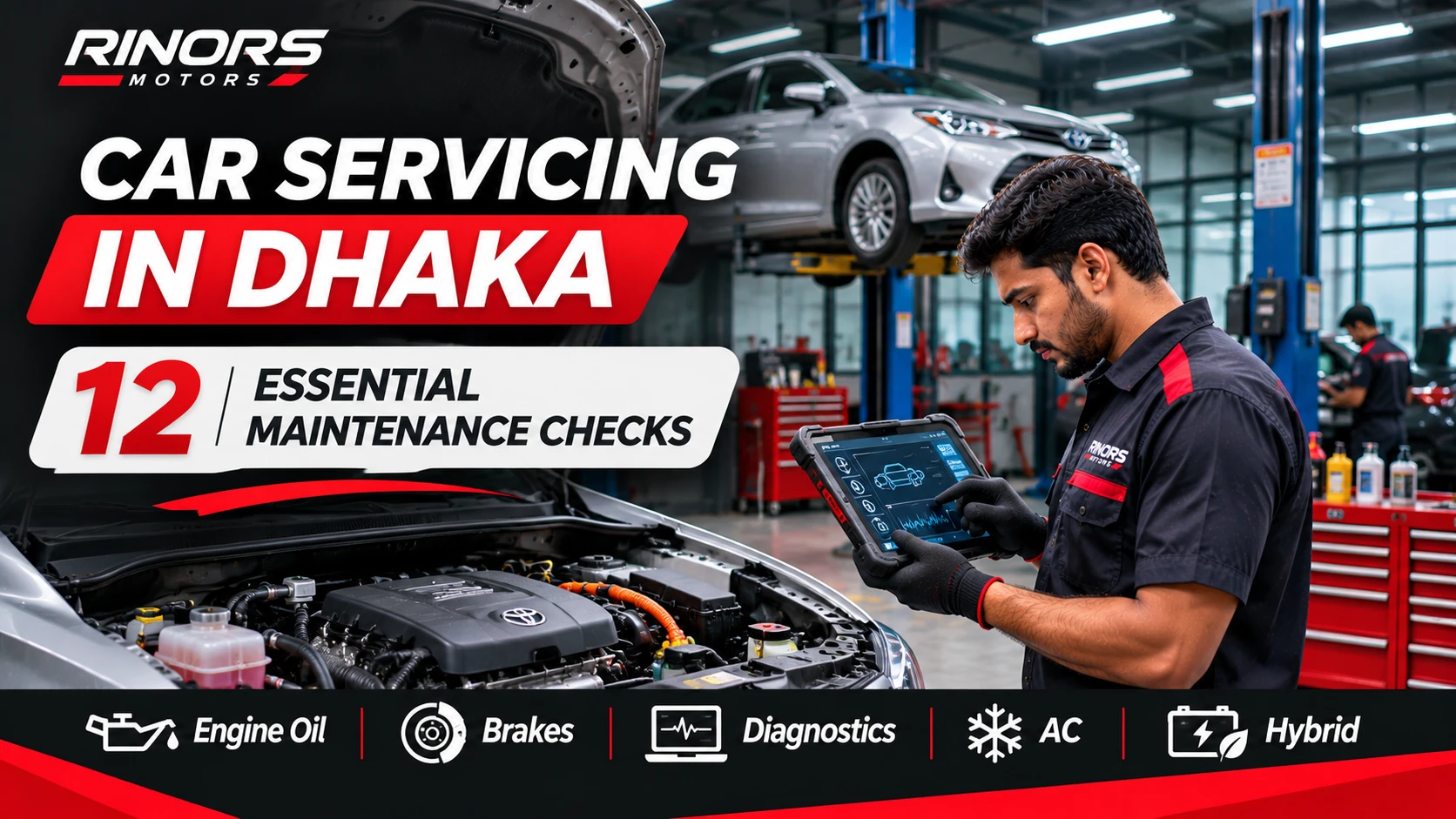
Car Servicing in Dhaka: 12 Essential Checks & Maintenance Guide
Regular car servicing in Dhaka is essential for maintaining vehicle safety, performance, fuel efficiency, and long-term reliability. Heavy traffic, frequent idling, dusty roads, potholes, and hot weather can place additional demands on many vehicle components.
Whether you drive a Toyota Corolla Axio, Toyota Aqua, Toyota Premio, Honda Grace, Honda Vezel, Nissan X-Trail, or another vehicle, proper maintenance helps identify potential problems before they become expensive repairs.
At Rinors Motors, we bring over 30 years of automotive industry experience to vehicle maintenance, diagnostics, spare parts, and professional servicing.
This guide explains 12 important vehicle maintenance checks, signs that your car needs attention, servicing costs in Bangladesh, and how to choose a reliable car workshop in Dhaka.
Why Regular Car Servicing Matters in Dhaka
Vehicles driven primarily through heavy traffic, short journeys, dusty roads, and rough road conditions may require additional maintenance compared with vehicles operating under less demanding conditions.
For example, frequent stop-and-go traffic can increase brake usage, while dusty roads can cause air filters to become dirty more quickly.
Benefits of Regular Car Maintenance
Helps maintain engine and transmission performance.
Supports safer braking and steering.
Identifies fluid leaks and component wear.
Reduces the risk of unexpected breakdowns.
Helps maintain fuel efficiency.
Supports air conditioning performance.
Provides a documented maintenance history.
Helps preserve vehicle condition and potential resale value.
However, servicing requirements differ by manufacturer, model, engine, vehicle age, and driving conditions.
Always follow the appropriate owner's manual and maintenance schedule.
12 Essential Car Servicing Checks
1. Engine Oil and Oil Filter
Engine oil lubricates moving engine components, reduces friction, and helps control heat and contamination.
Over time, oil deteriorates and must be replaced according to the manufacturer's recommendations.
Important checks:
Engine oil level and condition.
Correct oil viscosity and specification.
Oil filter condition and replacement requirements.
Signs of engine oil leakage.
Previous oil change records.
Common warning signs:
Low engine oil level.
Oil pressure warning light.
Unusual engine noise.
Oil leakage underneath the vehicle.
Oil replacement intervals should be based on the vehicle's official maintenance schedule and driving conditions. Frequent short trips, dusty roads, or extensive idling may require additional attention.
2. Engine Air Filter and Cabin Air Filter
A clean engine air filter helps prevent excessive dust and debris from entering the engine intake system.
The cabin air filter helps remove dust and particles from air entering the passenger compartment.
Common symptoms of dirty filters:
Reduced airflow from AC vents.
Unpleasant cabin odors.
Visible dust accumulation.
Restricted engine intake airflow.
Filters should be inspected and replaced when required.
Driving regularly on dusty roads may shorten their useful service life.
3. Brake System Inspection
The braking system is among the most important safety-related components of any vehicle.
Regular brake inspections help identify worn components and potential hydraulic problems.
Important checks:
Brake pads and brake shoes.
Brake discs and drums.
Brake fluid condition.
Brake hoses and lines.
Brake calipers.
Parking brake operation.
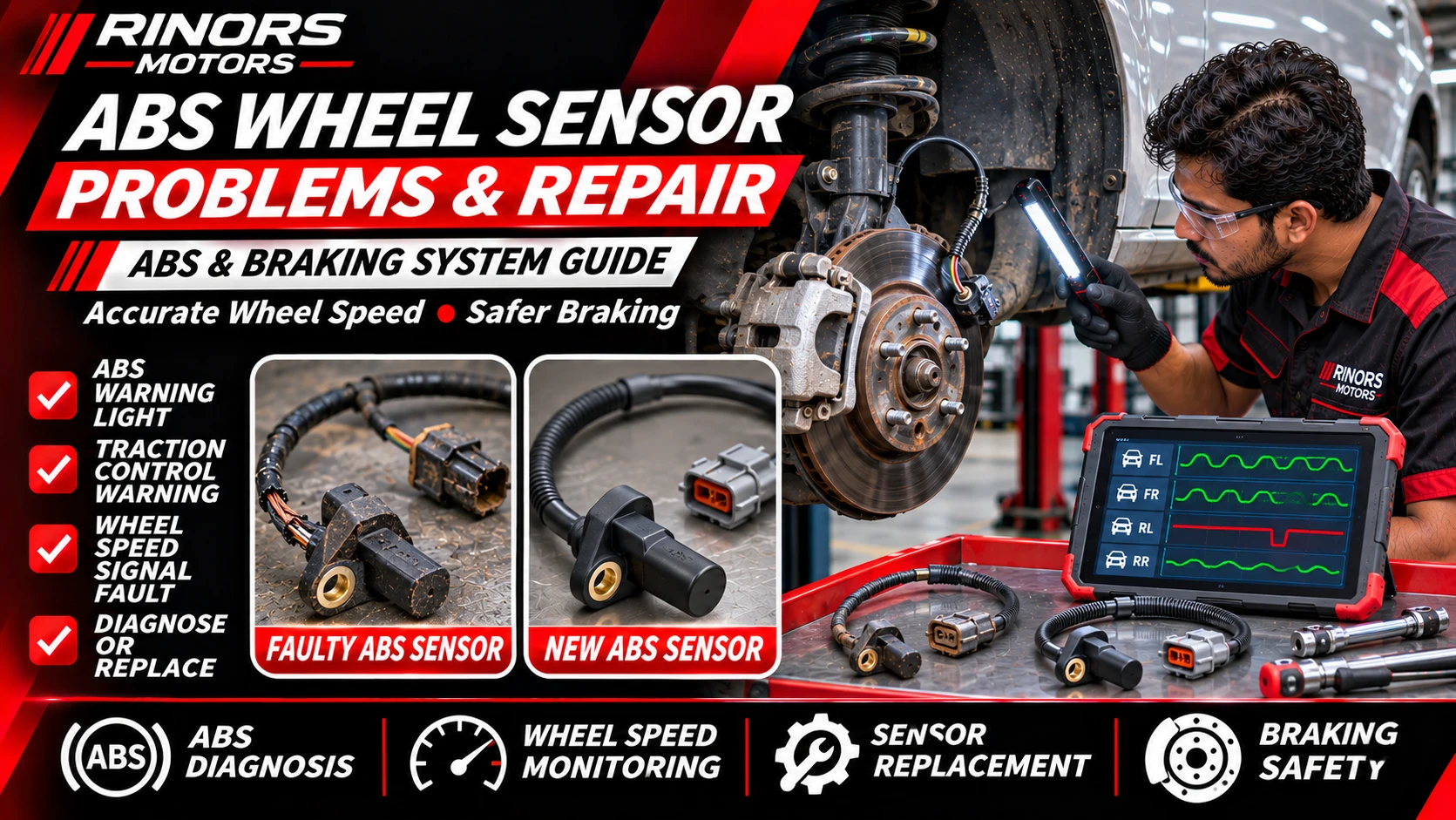
ABS or brake warning lights.
Warning signs:
Squealing or grinding sounds.
Soft or unusually low brake pedal.
Vibration while braking.
Vehicle pulling to one side.
Reduced braking performance.
If braking performance is significantly reduced, avoid driving until the problem is assessed by a qualified technician.
4. Tyres, Wheel Alignment and Balancing
Tyres are the vehicle's main contact points with the road.
Improper tyre pressure, uneven wear, or alignment problems can affect handling, braking, and tyre lifespan.
Important checks:
Tyre pressure.
Tread depth.
Tyre age.
Sidewall damage.
Uneven tyre wear.
Wheel alignment.
Wheel balancing when necessary.
Common warning signs:
Steering vibration.
Vehicle pulling to one side.
Irregular tyre wear.
Unusual road noise.
Use the tyre pressure recommended for the vehicle rather than simply inflating to the maximum pressure printed on the tyre sidewall.
5. Suspension and Steering System
Road bumps, potholes, and uneven surfaces can contribute to wear in suspension and steering components.
A healthy suspension system supports vehicle stability and driving comfort.
Important checks:
Shock absorbers.
Suspension bushings.
Ball joints.
Tie rods.
Steering rack.
Control arms.
Relevant rubber boots and mounting points.
Warning signs:
Knocking noises over bumps.
Excessive bouncing.
Loose steering response.
Uneven tyre wear.
Unstable handling.
A qualified technician should assess any significant steering or suspension problem.
6. Radiator and Engine Cooling System
The engine cooling system helps maintain an appropriate operating temperature.
Cooling failures can cause overheating and potentially serious engine damage.
Important checks:
Radiator condition.
Coolant level and condition.
Cooling fan operation.
Hoses and connections.
Thermostat operation.
Water pump and visible leaks.
Warning signs:
Engine temperature warning.
Coolant leakage.
Cooling fan malfunction.
Repeated overheating.
Never open a hot radiator cap or coolant reservoir under pressure.
If the engine overheats, stop safely and follow the manufacturer's instructions.
7. Car Air Conditioning System
A functioning car AC is particularly important during Bangladesh's hot and humid weather.
Poor AC performance may be related to refrigerant leaks, compressor problems, cooling fans, condenser restrictions, or electrical faults.
Important checks:
AC cooling performance.
Cabin air filter.
Condenser condition.
Compressor operation.
Blower airflow.
Cooling fan function.
Refrigerant leaks.
Common warning signs:
Warm air from AC vents.
AC cooling poorly in traffic.
Unusual compressor noise.
Weak airflow.
Unpleasant smell from the vents.
Refrigerant should not be added automatically without confirming the actual problem.
8. Battery and Electrical System
The vehicle's battery and electrical system support starting, lighting, controls, and other electronic features.
Important checks:
12V battery condition.
Battery terminals and connections.
Charging system, where applicable.
Headlights and indicators.
Electrical wiring.
Dashboard warning lights.
Power windows and door locks.
Warning signs:
Difficulty starting.
Weak or intermittent electrical operation.
Battery warning light.
Corroded or loose terminals.
Hybrid and electric vehicles may require different electrical testing procedures from conventional petrol vehicles.
9. Transmission and Gearbox Inspection
The transmission transfers engine or motor power to the wheels.
Automatic, CVT, manual, and hybrid transmissions have different service requirements.
Important checks:
Transmission leaks.
Unusual operating noises.
Delayed gear engagement.
Jerking or vibration.
Manufacturer-specified transmission fluid requirements.
Available service history.
Warning signs:
Transmission slipping.
Delayed response when selecting a gear.
Abnormal vibration.
Unusual whining or grinding sounds.
Transmission fluid should not be replaced with an arbitrary product or at an assumed universal interval.
Follow the manufacturer's specified service procedure.
10. Computerized Car Diagnostics
Modern vehicles use electronic control systems to monitor engine performance, transmission operation, braking, emissions, and other components.
A computerized diagnostic scan can help identify stored fault codes and relevant operating data.
Common diagnostic services:
Engine fault-code scanning.
Check Engine Light diagnosis.
Transmission diagnostics.
ABS and safety-system diagnostics.
Electrical fault diagnosis.
Hybrid-system scanning where applicable.
Important: A diagnostic fault code identifies a possible problem area. It does not always identify the exact component that needs replacement.
Further testing may be necessary.
11. Lights, Wipers and Safety Equipment
Small maintenance problems can become major safety concerns during bad weather or night driving.
Important checks:
Headlights.
Brake lights.
Turn indicators.
Reverse lights.
Windshield wipers.
Washer fluid.
Horn.
Seat belts.
Dashboard safety warnings.
Replace faulty bulbs or worn wiper blades when necessary.
Investigate any persistent airbag, ABS, or other safety-related warning light.
12. Hybrid Battery and Hybrid System Inspection
Hybrid vehicles require some maintenance procedures that differ from conventional petrol cars.
For models such as Toyota Aqua, Corolla Axio Hybrid, Prius, and Honda Grace Hybrid, relevant inspections may include:
Hybrid-system diagnostic codes.
High-voltage battery performance information.
Battery cooling airflow.
Battery cooling fan operation.
Hybrid-system temperature data.
12V auxiliary battery condition.
Relevant inverter and cooling-system checks.
Possible warning signs:
Check Hybrid System message.
Reduced hybrid performance.
Battery cooling fan operating unusually.
Hybrid-related diagnostic fault codes.
High-voltage battery components should only be handled by properly trained technicians.
How Often Should You Service Your Car in Bangladesh?
There is no single maintenance schedule suitable for every vehicle.
The correct service intervals depend on:
Manufacturer recommendations.
Engine and transmission type.
Vehicle model and manufacturing year.
Distance driven.
Time since the previous service.
Driving and road conditions.
Vehicle age and condition.
Normal vs Severe Driving Conditions
Some manufacturers specify additional maintenance for vehicles primarily used in demanding conditions such as dusty roads, repeated short trips, extensive idling, or rough surfaces.
Because these conditions may occur in Dhaka, owners should check whether their vehicle's severe-service schedule applies.
Do not assume that every car requires an engine oil change at exactly the same kilometre interval.
Use the correct manufacturer's maintenance schedule for your particular vehicle.
Signs Your Car Needs Immediate Attention
Some symptoms should not be postponed until the next routine service.
Engine Overheating
Stop safely, switch off the engine when appropriate, and seek professional assistance.
Brake Problems
Significantly reduced braking, an unusually soft pedal, or grinding noises require prompt inspection.
Oil Pressure Warning
A low oil pressure warning may indicate insufficient lubrication. Follow the owner's manual and avoid continued engine operation when instructed.
Serious Check Engine Warning
A flashing Check Engine Light or significant loss of power may indicate a serious problem requiring immediate attention.
Steering Problems
Unusual steering stiffness, excessive looseness, or loss of control should be treated as a safety concern.
Fluid Leaks or Smoke
Significant fluid leakage, smoke, or burning smells should be investigated before continuing to drive.
How Much Does Car Servicing Cost in Dhaka?
Car servicing costs in Dhaka vary depending on the vehicle, the type of service, replacement parts, and workshop labour.
Main Factors Affecting Service Cost
Vehicle brand and model.
Petrol, diesel, hybrid, or electric configuration.
Routine maintenance versus major repair.
Genuine, OEM, or aftermarket replacement parts.
Diagnostic testing requirements.
Labour and equipment requirements.
Actual mechanical condition.
Additional problems discovered during inspection.
Basic vs Comprehensive Servicing
A basic maintenance visit may involve engine oil, filters, fluid checks, and visual inspections.
A comprehensive service may include braking, suspension, cooling-system, electrical, transmission, and diagnostic assessments.
Major repairs should be quoted separately.
Before approving work, request an itemized quotation showing labour, parts, and any additional charges.
How to Choose a Reliable Car Service Workshop in Dhaka
Choosing a suitable workshop is important for vehicle safety, service quality, and cost control.
1. Check Technical Experience
Ask whether the workshop has experience with your vehicle brand, model, and drivetrain.
2. Look for Suitable Diagnostic Equipment
Modern cars, particularly hybrids, may require model-specific diagnostic equipment.
3. Request a Clear Inspection Report
A workshop should be able to explain the reported problem and recommended work.
4. Compare Parts and Labour Costs
Ask whether quoted components are genuine, OEM, aftermarket, new, or refurbished.
5. Confirm Before Additional Repairs
Additional work should be discussed before the customer is charged for it.
6. Keep Service Records
Invoices, diagnostic results, and maintenance records help track the vehicle's condition and future service needs.
7. Ask About Warranty Conditions
Confirm any applicable parts or workmanship warranty before approving work.
Car Servicing Checklist Before Visiting a Workshop
Before taking your vehicle for servicing:
Record the current odometer reading.
Note dashboard warning messages.
Describe unusual noises or vibrations.
Check your previous maintenance records.
Identify whether problems occur during cold starts, traffic, braking, or acceleration.
Remove valuable personal belongings.
Request an estimated inspection or service cost.
Ask when the vehicle is expected to be ready.
Request approval before additional work.
Collect the invoice and service report after completion.
Clear information helps technicians investigate problems more efficiently.
Frequently Asked Questions
How often should I service my car in Dhaka?
Follow the service intervals in the owner's manual, adjusted where the manufacturer's severe-driving schedule applies. Dusty roads, frequent idling, and short trips may justify additional maintenance.
What is included in basic car servicing?
It depends on the workshop and vehicle. Basic servicing commonly includes scheduled oil and filter work, fluid inspections, tyre checks, and visual assessments.
Does my car need a computer diagnostic scan during every service?
Not necessarily. Diagnostic scanning is particularly useful when warning lights, unusual symptoms, or manufacturer-required checks are present.
Why does my car AC cool poorly in Dhaka traffic?
Possible causes include condenser cooling fan problems, restricted condenser airflow, refrigerant issues, or related electrical faults.
Is hybrid car servicing different from petrol car servicing?
Yes. Hybrid cars have additional high-voltage and hybrid control components. Some checks require specialist equipment and trained technicians.
Can regular car servicing improve mileage?
Proper maintenance can help maintain the efficiency expected from a healthy vehicle. However, real fuel consumption also depends on traffic, driving habits, load, and vehicle condition.
How do I know whether a mechanic is recommending unnecessary parts?
Request an explanation of the diagnostic findings, ask to see relevant evidence where practical, and obtain a second opinion before approving expensive repairs.
Professional Car Servicing and Repair at Rinors Motors
At Rinors Motors, we provide automotive maintenance, diagnostics, spare parts, and repair services for various vehicle brands and models.
With over 30 years of automotive industry experience, our goal is to help customers maintain their vehicles safely and address problems using appropriate diagnostic and repair methods.
Our automotive service offerings include:
Engine diagnostics and maintenance.
Oil and filter replacement.
Brake inspection and repair.
Suspension and steering repairs.
Car AC inspection and servicing.
Electrical diagnostics and repair.
Battery inspection and replacement.
General automotive maintenance.
Hybrid vehicle diagnostics and servicing.
Looking for Car Servicing in Dhaka?
Contact Rinors Motors to discuss your vehicle's service requirements, workshop availability, diagnostic inspection, and estimated repair costs.
Rinors Motors — Your Automotive Partner in Bangladesh.