Car Alternator Problems in Bangladesh: Complete Diagnosis & Replacement Guide
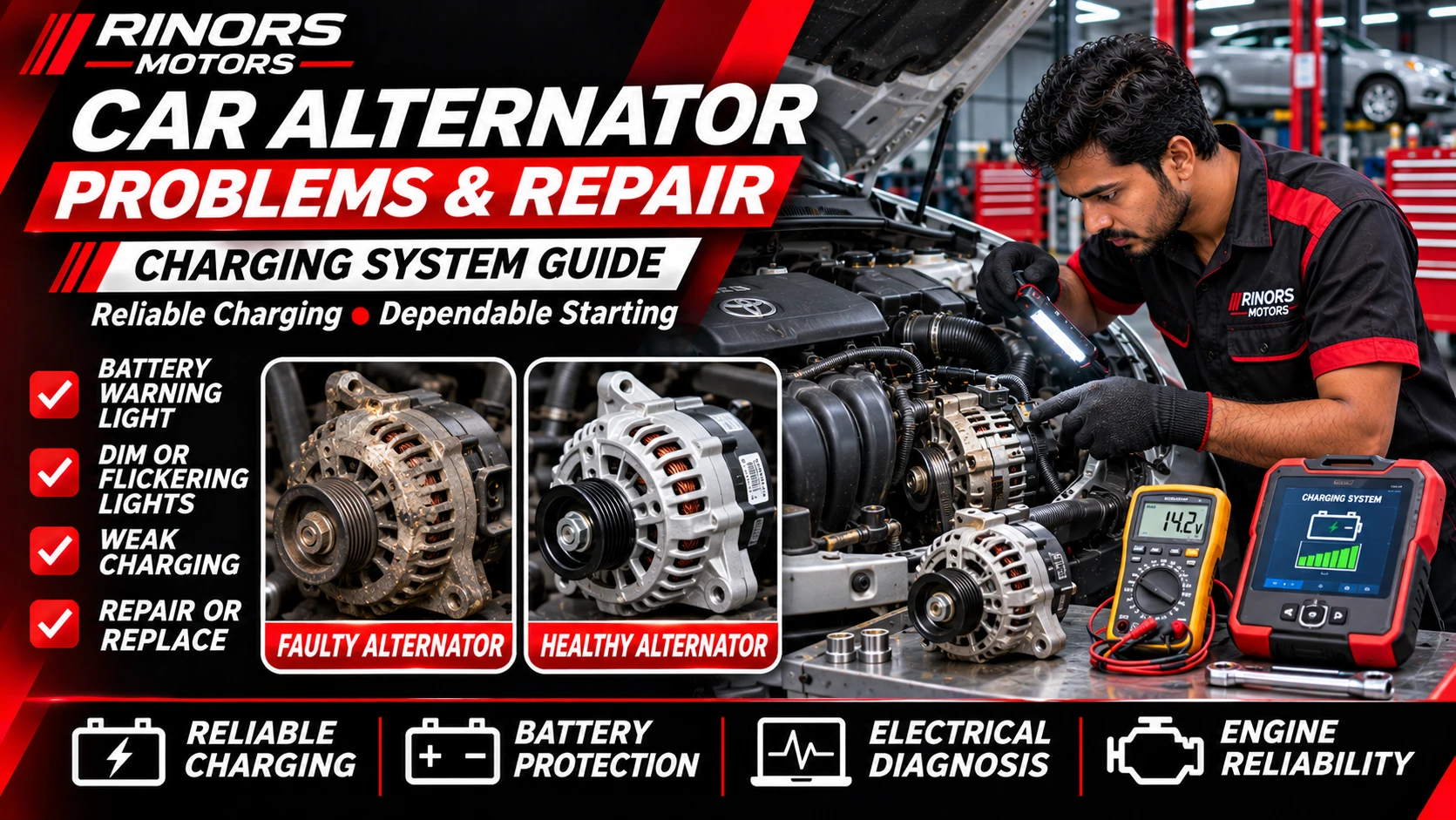
Is your car's battery warning light appearing while driving? Are the headlights becoming dim, or does the battery repeatedly discharge even after replacement? These symptoms may indicate a problem with the vehicle's alternator or charging system.
The alternator is an essential electrical component in most conventional petrol and diesel cars. It generates electricity while the engine runs, powers vehicle electrical systems, and helps maintain the battery's charge.
When the alternator fails, the vehicle may continue operating temporarily using energy stored in the battery. However, once the available electrical power becomes insufficient, the engine may stop or fail to restart.
In Bangladesh, heavy traffic, frequent electrical accessory use, ageing components, and everyday driving conditions make reliable charging-system performance particularly important.
Whether you drive a Toyota Corolla, Axio, Premio, Allion, Honda Civic, Nissan, or another conventional petrol-powered vehicle, understanding alternator problems can help you identify warning signs and avoid unnecessary repairs.
This guide covers alternator functions, eight common warning signs, charging-system diagnosis, battery-related problems, repair options, and replacement considerations.
What Is a Car Alternator?
An alternator is an electrical generator driven by the engine in most conventional petrol and diesel vehicles.
It converts mechanical energy from the engine into electrical energy.
The alternator produces alternating current internally, which is converted into direct current for the vehicle's electrical system.
A voltage regulation system controls charging performance according to the vehicle's design.
Main Functions of an Alternator
Supply electricity while the engine operates.
Help recharge the 12-volt battery.
Support headlights and interior lighting.
Power electrical accessories.
Supply electricity to engine control systems.
Support electric cooling fans and other equipment.
Maintain suitable electrical-system voltage.
Help ensure reliable vehicle operation.
An alternator that cannot provide the required electrical output may cause a variety of vehicle problems.
How Does a Car Alternator Work?
In most conventional petrol vehicles, the alternator is connected to the engine by an accessory drive belt, often called a serpentine belt.
When the engine rotates, the belt turns the alternator pulley.
Inside the alternator, a rotating magnetic field interacts with electrical windings to produce alternating current.
Rectifier diodes convert the alternating current into direct current.
The charging system then provides electrical power to the vehicle and battery.
Main Components of an Alternator
Rotor: Creates a rotating magnetic field.
Stator: Contains windings where electrical energy is generated.
Rectifier Diodes: Convert alternating current into direct current.
Voltage Regulator: Helps control alternator output.
Pulley: Transfers rotation from the engine belt.
Bearings: Support smooth rotor rotation.
Brushes and Slip Rings: Provide electrical contact in applicable alternator designs.
Alternator Housing: Supports and protects internal components.
Electrical Terminals: Connect the alternator to the vehicle's electrical system.
Some modern alternators communicate with engine or body control systems as part of an intelligent charging strategy.
8 Warning Signs of a Bad Car Alternator
1. Battery or Charging Warning Light Appears
One of the most recognizable symptoms of a charging-system problem is a battery-shaped warning light on the dashboard.
Although the symbol resembles a battery, it commonly indicates a problem with the charging system rather than proving that the battery itself is defective.
Possible causes include:
Alternator failure.
Faulty voltage regulation.
Damaged accessory drive belt.
Loose electrical connections.
Wiring or fuse problems.
Charging-system control faults.
The warning may appear continuously or intermittently.
If the charging warning light comes on while driving, stop safely and arrange inspection promptly. The vehicle may lose electrical power and stall.
2. Headlights Become Dim or Flicker
The alternator supplies electricity for the vehicle's lighting and electrical systems while the engine operates.
If the charging system cannot provide stable power, headlights may become dim or fluctuate in brightness.
You may notice:
Headlights becoming dim at idle.
Dashboard lights flickering.
Interior lights changing brightness.
Lighting becoming unstable when accessories operate.
However, damaged ground connections, wiring faults, and battery problems can also cause these symptoms.
3. Battery Repeatedly Becomes Discharged
If your battery repeatedly loses charge, the alternator or charging system may not be replenishing it properly.
Common symptoms include:
Slow or unsuccessful engine starting.
Repeated need for jump-starting.
Battery becoming discharged after driving.
Low battery voltage despite recent charging.
However, repeated battery discharge can also result from:
An ageing or defective battery.
Excessive electrical consumption while parked.
Electrical accessories remaining active.
Loose or corroded battery connections.
Faulty charging-system components.
Replacing the alternator without testing the battery and electrical system may not solve the problem.
4. Engine Stalls While Driving
If the alternator stops supplying electricity, the vehicle may temporarily operate using stored battery energy.
As the available battery energy decreases, essential electrical systems may stop functioning correctly.
In some conventional vehicles, this can cause the engine to stall.
The engine may then fail to restart.
Unexpected engine stalling can be dangerous, especially in heavy traffic.
Do not continue driving with a confirmed severe charging-system failure.
5. Electrical Accessories Malfunction
A charging-system problem may affect electrical equipment throughout the vehicle.
Possible symptoms include:
Slow electric windows.
Unusual dashboard behavior.
Intermittent electrical accessory problems.
Unstable lighting.
Electronic control warnings.
Reduced operation of certain electrically powered systems.
Some modern vehicles automatically reduce or disable nonessential electrical loads when system voltage becomes insufficient.
These symptoms can also result from individual component failures, so the charging system must be tested.
6. Whining, Grinding, or Squealing Noise
A faulty alternator or related belt-drive component may produce unusual mechanical noises.
Possible sounds include:
Whining.
Grinding.
Rattling.
Squealing.
Potential causes include:
Worn alternator bearings.
Damaged pulley.
Belt slipping.
Faulty belt tensioner.
Other accessory drive problems.
A squealing sound does not automatically mean the alternator itself is defective.
The accessory belt and surrounding components should also be inspected.
7. Burning Smell From the Engine Compartment
Electrical or mechanical charging-system problems can sometimes create unusual heat or burning odors.
Possible causes include:
Overheated electrical connections.
Damaged wiring.
Belt friction.
Alternator internal faults.
Other engine-compartment problems.
A burning smell should be investigated promptly.
If you notice smoke, visible electrical damage, or a strong burning odor, stop safely, switch off the engine, and arrange professional assistance.
8. Engine Starts After a Jump-Start but Later Stops
If a discharged battery is jump-started successfully, the engine may operate temporarily.
However, if the charging system is not working, the battery may continue to lose energy.
The vehicle may eventually stall or fail to restart.
This behavior can suggest an alternator or charging fault, but it is not conclusive.
Battery condition, wiring, and other electrical systems must also be evaluated.
Why Do Car Alternators Fail?
Several factors can contribute to alternator failure or poor charging performance.
1. Internal Bearing Wear
Alternator bearings support the rotating assembly.
Over time, bearing damage can create noise, friction, and mechanical problems.
2. Voltage Regulator Failure
The voltage regulator controls charging output in accordance with the system design.
A regulator fault may cause insufficient or excessive charging voltage.
Both conditions can affect vehicle electrical operation.
3. Rectifier Diode Problems
Rectifier diodes convert alternator output into direct current.
Damaged diodes can reduce charging performance or introduce excessive electrical ripple.
4. Worn Brushes or Slip Rings
Certain alternator designs use brushes and slip rings to maintain electrical contact with the rotor.
Wear or damage can interrupt proper alternator operation.
5. Damaged Accessory Drive Belt
A broken, loose, slipping, or incorrectly installed belt can prevent the alternator from rotating properly.
This may cause charging failure even when the alternator itself is functional.
6. Poor Electrical Connections
Corroded terminals, loose cables, damaged grounding points, or high-resistance connections can interfere with charging.
7. Heat and Environmental Exposure
Alternators operate in demanding engine-compartment conditions.
Excessive heat, water contamination, and dirt can contribute to component deterioration.
8. Incorrect Installation or Replacement Parts
Using an incompatible alternator, incorrect pulley, unsuitable electrical connector, or improper installation procedure can cause charging problems.
Alternator vs Car Battery: What's the Difference?
The alternator and battery perform different but closely related functions.
Car Battery
The battery stores electrical energy.
In conventional cars, it supplies energy for engine starting and supports electrical systems when necessary.
Alternator
The alternator generates electricity while the engine operates and helps maintain the battery's charge.
Signs That May Suggest Battery Problems
Difficult starting after the vehicle has been parked.
Poor battery performance during testing.
Age-related reduction in battery capacity.
Low battery charge even when charging performance is normal.
Signs That May Suggest Alternator Problems
Charging warning light while driving.
Battery becoming discharged despite normal engine operation.
Unstable charging-system voltage.
Dimming lights while the engine runs.
Confirmed insufficient alternator output.
Why Both Should Be Tested
A weak battery can make a healthy alternator appear defective.
Likewise, a failed alternator can discharge and eventually damage a battery.
Professional diagnosis should consider both components.
Alternator vs Starter Motor: Are They the Same?
No. The alternator and starter motor have different purposes.
Starter Motor
The starter motor rotates the engine during the starting process in conventional vehicles.
Alternator
The alternator supplies electrical power while the engine is running.
Common Starter Motor Problems
Engine fails to crank.
Clicking when attempting to start.
Intermittent starter engagement.
Unusual starter-related noises.
Common Alternator Problems
Charging warning light.
Low charging output.
Electrical accessories malfunctioning.
Battery repeatedly losing charge.
Engine stalling because of insufficient electrical power.
Both systems may contribute to starting problems, but they require different diagnostic procedures.
How Is a Car Alternator Tested?
A professional alternator inspection should include more than a simple voltage reading.
Step 1: Confirm the Vehicle Configuration
The technician identifies the exact vehicle model, engine, battery type, and charging-system design.
This is particularly important because modern vehicles may use intelligent charging controls.
Step 2: Inspect the Battery
The battery's condition and state of charge are checked.
A weak or damaged battery may interfere with charging-system diagnosis.
Step 3: Inspect the Accessory Belt
Where applicable, the alternator drive belt is checked for:
Damage.
Excessive wear.
Incorrect tension.
Pulley problems.
Tensioner defects.
Improper alignment.
Step 4: Check Battery and Alternator Connections
The technician inspects relevant electrical terminals, grounds, wiring, and charging connections.
Step 5: Measure Charging Voltage
Using appropriate equipment, the technician checks system voltage under specified operating conditions.
Many conventional 12-volt charging systems operate around 13–15 volts during normal charging conditions.
However, this is not a universal pass-or-fail range. Modern smart charging systems may intentionally vary voltage based on battery condition, electrical demand, temperature, and operating strategy.
The results must be compared with the manufacturer's specifications.
Step 6: Perform Charging Output Testing
The alternator may be tested under electrical load to evaluate its ability to supply the required power.
Step 7: Perform Voltage Drop Tests
Voltage drop testing helps identify excessive resistance in charging cables and ground connections.
A healthy alternator may appear to underperform if the connecting wiring is defective.
Step 8: Check Alternator Ripple or Regulation
Where appropriate, technicians may evaluate rectifier performance and voltage regulation using suitable diagnostic equipment.
Step 9: Scan Relevant Control Systems
Vehicles with electronically controlled charging systems may require diagnostic scanning for fault codes, control commands, and related electrical data.
Step 10: Confirm the Fault and Verify Repairs
The defective component is repaired or replaced.
The charging system is then retested under the manufacturer's specified conditions.
Important Alternator Testing Safety Precautions
Alternator diagnosis involves live electrical systems and moving engine components.
Incorrect testing methods can damage vehicle electronics or cause injury.
Never Disconnect the Battery While the Engine Is Running
Disconnecting the battery to see whether the engine continues operating is an outdated and unsafe testing method.
It can create voltage disturbances and may damage sensitive electronic components.
Avoid Contact With Moving Belts
Alternator belts, pulleys, and cooling fans can cause serious injury.
Testing equipment and loose clothing must be kept away from moving components.
Do Not Short Alternator Terminals
The alternator's main output connection may remain electrically live even when the engine is switched off.
Accidental short circuits can cause sparks, burns, component damage, or fire.
Charging-system diagnosis should be carried out using appropriate instruments and safe professional procedures.
Can a Car Alternator Be Repaired?
Some alternator faults may be repairable, depending on the component design and extent of damage.
Repairable Alternator Problems May Include
Certain voltage regulator failures.
Worn brushes in serviceable designs.
Damaged bearings.
Certain rectifier faults.
Repairable external wiring or connectors.
Some pulley-related defects.
However, not every alternator is designed for individual component replacement.
When Complete Replacement May Be Better
Complete alternator replacement may be appropriate when:
Internal damage is extensive.
Several components have failed.
The alternator is not economically repairable.
Suitable internal repair parts are unavailable.
Manufacturer procedures require replacement.
A complete compatible unit provides a more reliable repair solution.
The decision should consider technical condition, parts availability, repair cost, and warranty.
Alternator Repair vs Replacement: Which Is Better?
Both options can be appropriate.
Alternator Repair
Repair may be worthwhile when a specific faulty component can be replaced properly and the remaining assembly is in good condition.
Alternator Replacement
Replacement may be preferable when the alternator has extensive damage or when a complete unit offers a more practical solution.
Factors to Compare
Actual fault.
Vehicle compatibility.
Repairability.
Replacement-part quality.
Labor requirements.
Warranty.
Long-term reliability.
Total cost.
A technician should confirm the failure before recommending either option.
Can a Faulty Alternator Damage the Battery?
Yes, certain charging-system faults can adversely affect the battery.
Undercharging
If the alternator does not provide adequate charging, the battery may remain at a low state of charge.
Repeated deep discharge can shorten the service life of certain battery types.
Overcharging
A faulty charging-control system can sometimes produce excessive voltage.
Overcharging may cause battery overheating, electrolyte loss in applicable designs, or other damage.
Why Correct Diagnosis Matters
When charging problems have persisted, both the alternator and battery should be assessed.
Replacing only one component may not fully resolve the issue.
Toyota Alternator Problems in Bangladesh
Toyota vehicles are widely used in Bangladesh, but alternator designs vary by engine and generation.
Toyota Corolla and Axio Petrol
Many conventional petrol-powered Corolla and Axio variants use belt-driven alternators.
Possible charging-system issues may involve:
Alternator output.
Accessory drive belt.
Voltage regulator.
Charging-system wiring.
Battery connections.
Related control components.
The exact system must be identified using the engine code and model year.
Toyota Premio and Allion
Conventional petrol Premio and Allion variants may experience similar charging-system faults.
However, different engines can use different alternator part numbers and output specifications.
A replacement should be selected according to the exact vehicle configuration.
Toyota Aqua Hybrid
The Toyota Aqua uses a hybrid powertrain.
Unlike a conventional petrol vehicle, it does not normally use a belt-driven alternator for 12-volt battery charging.
Instead, a DC-DC converter within the hybrid electrical system supplies the 12-volt network and charges the auxiliary battery when the system is operating appropriately.
Therefore, a Toyota Aqua charging problem should not automatically be diagnosed as a conventional alternator failure.
Toyota Corolla Axio Hybrid
The Corolla Axio Hybrid also uses a hybrid charging architecture rather than the conventional belt-driven alternator arrangement found on many petrol-only vehicles.
Diagnosis should focus on the correct 12-volt charging system, battery condition, vehicle control information, and DC-DC converter operation.
Hybrid Safety: High-voltage hybrid components require specialized safety procedures, training, and equipment. Owners should not attempt high-voltage electrical repairs.
Honda and Nissan Alternator Problems
Conventional petrol-powered Honda Civic, Nissan X-Trail, and other vehicles may use engine-driven alternators.
However, exact charging-system designs differ by model and powertrain.
Some modern vehicles use intelligent alternator regulation or electronically controlled charging.
Hybrid variants may use different electrical architectures.
Always confirm the vehicle configuration before diagnosing or purchasing charging components.
How Much Does Alternator Repair Cost in Bangladesh?
Alternator repair prices vary depending on the vehicle and the nature of the fault.
Main Repair Cost Factors
Vehicle manufacturer and model.
Alternator design.
Internal component failure.
Voltage regulator or rectifier requirements.
Bearing or pulley replacement.
Availability of serviceable parts.
Diagnostic testing.
Labor required for removal and installation.
Repair warranty.
A minor wiring repair may cost substantially less than rebuilding or replacing a complete alternator.
However, internal repair is not appropriate for every alternator.
Alternator Replacement Cost in Bangladesh
Complete alternator replacement costs depend on several factors.
Main Pricing Factors
Vehicle brand.
Engine model.
Alternator output rating.
Original-equipment or aftermarket component.
New, professionally remanufactured, or other replacement condition.
Mounting and pulley compatibility.
Electrical connector and control-system requirements.
Installation labor.
Additional belt or tensioner work.
Product warranty.
An accurate price should be based on the correct alternator part number and the vehicle's electrical specifications.
Avoid purchasing a replacement before the actual charging fault has been confirmed.
How to Choose the Correct Alternator
Alternators are not universally interchangeable.
Even vehicles from the same manufacturer may use different electrical and mounting configurations.
Important Details to Confirm
Vehicle manufacturer.
Exact model.
Production year.
Engine code.
Chassis or VIN.
Alternator part number.
Required electrical output.
Voltage regulation design.
Electrical connector.
Mounting points.
Pulley type.
Compatibility with the vehicle's charging-control system.
Original vs Aftermarket Alternators
Original-equipment and compatible aftermarket alternators may be available.
The replacement should meet the vehicle's electrical and mechanical requirements.
Why Output Rating Matters
An alternator must support the electrical demands of the vehicle.
An unsuitable alternator may provide insufficient output or have incompatible regulation and control characteristics.
A higher advertised amperage rating does not automatically make an alternator a suitable upgrade.
Compatibility with the original vehicle design is essential.
How Are Car Alternators Replaced?
Replacement procedures vary depending on vehicle construction.
A professional service may include the following steps.
Step 1: Confirm the Charging Fault
Testing should establish whether the alternator requires replacement.
Step 2: Identify the Correct Alternator
The technician confirms part number, output, mounting design, and electrical compatibility.
Step 3: Prepare the Vehicle Safely
The vehicle is switched off and the electrical system is prepared according to the manufacturer procedure.
Step 4: Access the Alternator
Relevant engine covers, brackets, or other components may need removal.
Step 5: Remove the Accessory Belt
Where applicable, the belt is released using the proper procedure.
Step 6: Disconnect Electrical Connections
The alternator wiring is disconnected safely according to manufacturer instructions.
Step 7: Remove the Defective Unit
The alternator is removed from its mounting brackets.
Step 8: Install the Replacement
The new or properly remanufactured unit is fitted using the required mounting hardware and procedures.
Step 9: Reinstall and Inspect the Belt
The belt, pulley, and tensioner are checked for correct alignment and condition.
Step 10: Test the Charging System
The technician verifies system operation, relevant charging voltage, warning lights, and output under appropriate electrical loads.
How to Help Prevent Alternator Problems
Not every alternator failure can be prevented, but appropriate maintenance can help reduce avoidable charging-system problems.
1. Maintain the Car Battery
A battery in poor condition should be professionally assessed.
2. Inspect the Accessory Drive Belt
Check for damage, abnormal noise, and other belt-drive problems during scheduled maintenance.
3. Maintain Electrical Connections
Corroded or damaged charging-system connections should be repaired.
4. Avoid Incorrect Jump-Starting Procedures
Incorrect polarity or electrical connections can damage sensitive components.
Follow the vehicle manufacturer's instructions.
5. Investigate Charging Warning Lights
Do not ignore recurring battery or charging-system warnings.
6. Address Belt or Bearing Noises
Persistent squealing, grinding, or whining should be checked promptly.
7. Protect the Charging System From Contamination
Oil leaks, water intrusion, and other contamination around electrical components should be investigated.
8. Use Compatible Replacement Parts
Choose components with suitable output, regulation, mounting, and electrical specifications.
9. Diagnose Repeated Battery Discharge
Check for both charging problems and excessive electrical consumption while parked.
10. Follow Manufacturer Service Procedures
Use the correct maintenance and diagnostic guidance for the vehicle.
Frequently Asked Questions About Car Alternators
What Are the First Signs of a Bad Alternator?
Possible symptoms include a charging warning light, flickering headlights, repeated battery discharge, unusual alternator noise, and unstable electrical operation.
Can a Bad Alternator Cause a Car Not to Start?
Yes. If the alternator fails to maintain the battery's charge, the battery may eventually become too discharged to start the engine.
Can a Car Run With a Bad Alternator?
Some vehicles may continue operating temporarily using stored battery energy.
However, they can eventually stall or fail to restart. Continuing to drive with confirmed charging failure is not recommended.
Does a Battery Warning Light Mean the Battery Is Bad?
Not necessarily. The warning commonly indicates a charging-system problem involving the alternator, wiring, belt, or control system.
Can an Alternator Be Repaired Instead of Replaced?
Some alternators can be repaired by replacing defective internal or external components. Others require complete replacement.
Can a Bad Alternator Drain a Battery Overnight?
Yes, certain alternator faults, including defective rectifier diodes, can contribute to electrical discharge while the vehicle is parked.
However, many other parasitic electrical loads can cause the same problem.
What Voltage Should a Car Alternator Produce?
Many conventional 12-volt charging systems operate around 13–15 volts during normal charging, but modern intelligent systems may use different voltages under different conditions.
Always compare readings with vehicle-specific specifications.
Should I Replace the Battery When Replacing the Alternator?
Not automatically. The battery should be tested and replaced only when its condition warrants replacement.
Can Alternator Problems Cause Headlights to Flicker?
Yes. Unstable charging voltage or related electrical faults can cause flickering lights.
Do Toyota Hybrid Cars Have Alternators?
Toyota Aqua and many other Toyota hybrid models normally use a DC-DC converter for their 12-volt electrical system rather than a conventional belt-driven alternator.
Alternator & Charging System Inspection at Rinors Motors
At Rinors Motors, we understand the importance of reliable electrical power, proper battery charging, and dependable engine starting for everyday driving in Bangladesh.
If your car displays a battery warning light, repeatedly loses battery charge, develops unstable lighting, or experiences unexpected electrical problems, identifying the actual cause is essential.
A professional inspection can help distinguish alternator failure from weak batteries, damaged wiring, faulty belts, voltage regulation problems, and other electrical faults.
For conventional petrol vehicles, the correct alternator must match the engine and charging-system specifications. For hybrid vehicles, diagnosis must follow the appropriate DC-DC charging architecture.
Contact Rinors Motors to discuss alternator diagnostics, car battery charging problems, compatible electrical replacement parts, and suitable repair or replacement options for your vehicle.
Rinors Motors — Your Trusted Automotive Partner in Bangladesh.