Car Engine Mount Problems in Bangladesh: Complete Diagnosis & Replacement Guide
Does your car vibrate excessively while idling? Do you feel a strong shaking sensation when shifting into Drive or Reverse? Does your engine make a knocking or clunking sound during acceleration?
These symptoms may indicate worn or damaged engine mounts.
Engine mounts, also known as motor mounts or engine mountings, are essential components that secure the engine to the vehicle's structure while reducing the transmission of engine vibration into the passenger cabin.
When an engine mount deteriorates, the vehicle may develop unusual vibrations, knocking sounds, or excessive engine movement.
In Bangladesh, road conditions, high temperatures, everyday driving demands, and normal component ageing can contribute to engine mounting problems.
Whether you drive a Toyota Corolla, Axio, Premio, Allion, Aqua, Honda Civic, Vezel, Nissan X-Trail, or another vehicle, understanding engine mount problems can help you recognize symptoms and avoid unnecessary repairs.
This guide explains the warning signs of failing engine mounts, their causes, professional diagnostic procedures, replacement options, and maintenance recommendations.
What Is a Car Engine Mount?
An engine mount is a component that supports and secures the engine to the vehicle's chassis, subframe, or supporting structure.
Although the engine is securely mounted, it naturally produces vibration and movement during operation.
Engine mounts are designed to manage these movements while isolating much of the vibration from the passenger cabin.
Main Functions of Engine Mounts
Secure the engine in its intended position.
Support the engine's weight and operating loads.
Reduce vibration transmitted into the vehicle body.
Control excessive engine movement during acceleration.
Help maintain drivetrain alignment.
Reduce unnecessary stress on connected components.
Improve driving comfort and refinement.
Most vehicles use multiple engine and transmission mounting components, although the number and arrangement vary by model.
How Do Engine Mounts Work?
When an engine operates, combustion, rotating components, and changes in engine load generate vibration and movement.
Engine mounts use elastic or specially designed damping materials to absorb and isolate these forces.
For example, when the driver accelerates, the engine produces torque that can cause the powertrain to rotate slightly relative to the vehicle body.
A correctly functioning mounting system limits this movement while allowing the controlled flexibility required by the vehicle's design.
What Happens When an Engine Mount Wears Out?
A damaged mount may lose its ability to isolate vibration or control engine movement effectively.
As a result, drivers may notice:
More engine vibration inside the cabin.
Unusual knocking during acceleration.
Increased shaking when selecting Drive or Reverse.
Excessive movement of the powertrain.
Reduced driving comfort.
Additional stress on nearby components.
The severity of symptoms depends on which mount is damaged and the extent of deterioration.
Types of Engine Mounts Used in Modern Cars
Different vehicles use different mounting technologies.
1. Conventional Rubber Engine Mounts
These mounts generally combine rubber and metal components.
The rubber provides flexibility and vibration isolation, while the metal structure connects the engine to the vehicle.
Advantages:
Relatively simple construction.
Effective vibration isolation when properly designed.
Common availability.
Often less complicated than electronically controlled mounts.
Possible Problems:
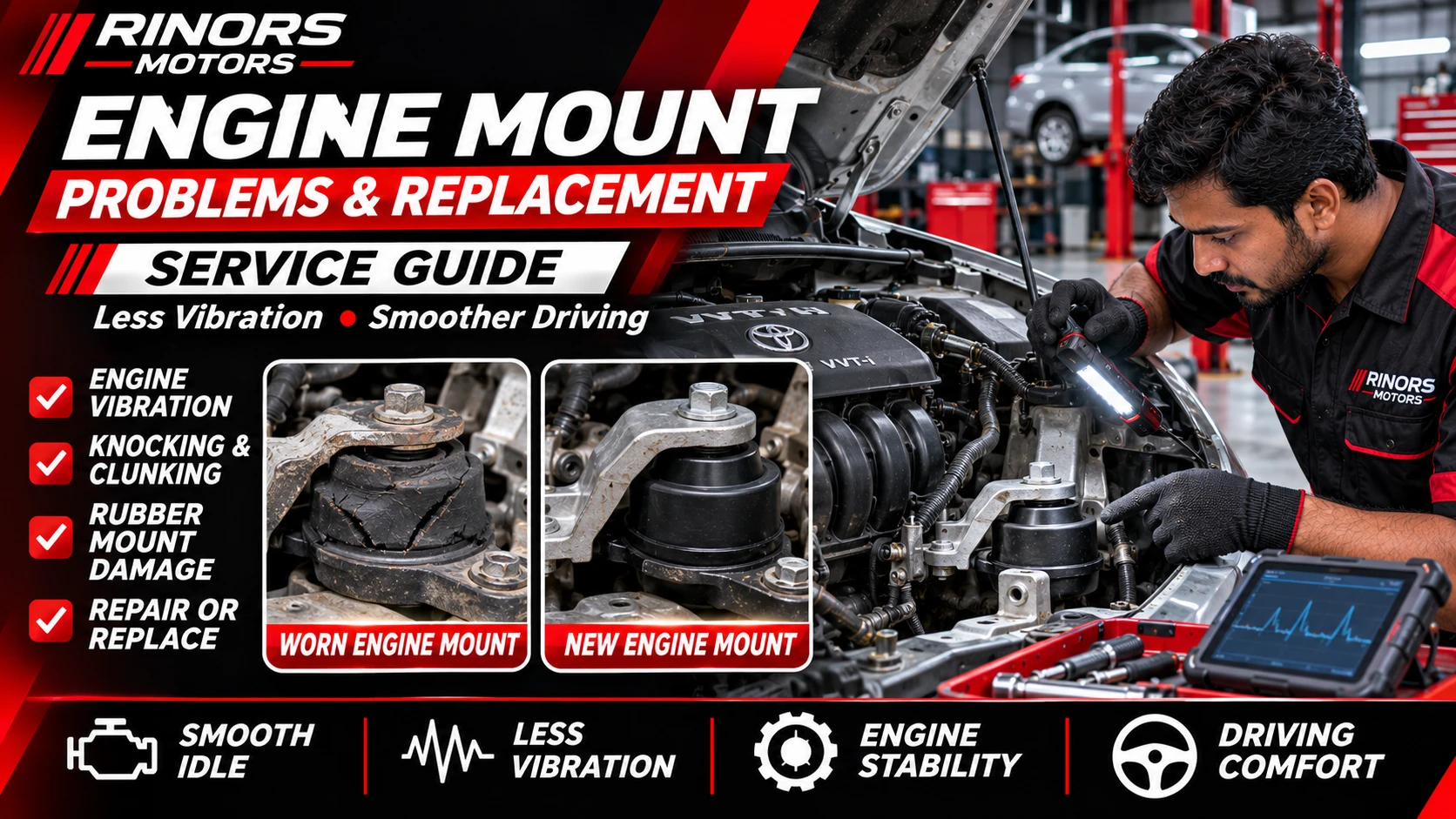
Rubber cracking.
Rubber-to-metal separation.
Hardening or deterioration.
Excessive movement after wear.
2. Hydraulic Engine Mounts
Hydraulic mounts contain specially designed fluid chambers that improve vibration damping.
They are used in various passenger vehicles to help control vibration under different operating conditions.
Advantages:
Effective vibration damping.
Improved cabin comfort in suitable applications.
Reduced transmission of certain engine vibrations.
Possible Problems:
Fluid leakage.
Internal deterioration.
Loss of damping performance.
Collapse or excessive movement.
A leaking hydraulic mount may require replacement.
3. Active or Electronically Controlled Engine Mounts
Certain advanced vehicles use engine mounts with electronically controlled or active damping functions.
These systems can adjust their behavior according to engine operation or other vehicle conditions.
Possible Problems:
Electrical faults.
Control-system problems.
Internal mount deterioration.
Wiring or actuator failures.
These systems may require additional diagnostic procedures.
4. Torque Mounts or Torque Rods
Some vehicles use torque-control mounts, sometimes called torque rods, torque struts, or dog-bone mounts.
These components help limit powertrain rotation during acceleration and deceleration.
When worn, they may contribute to excessive engine movement or knocking sounds.
8 Warning Signs of Bad Engine Mounts
1. Excessive Engine Vibration at Idle
One of the most recognizable symptoms of worn engine mounts is increased vibration while the engine is idling.
You may feel shaking through:
The steering wheel.
Driver or passenger seats.
Dashboard.
Floor.
Vehicle body.
A damaged mount may allow engine vibration to transfer more directly into the cabin.
However, rough idle caused by spark plugs, ignition coils, fuel injectors, or other engine problems can produce similar symptoms.
A technician must determine whether the engine itself is running unevenly or whether the mounts are failing to isolate normal vibration.
2. Strong Vibration When Shifting Into Drive or Reverse
In an automatic vehicle, engine and transmission loads change when the driver selects Drive or Reverse.
If an engine or transmission mount is worn, this change in load may produce noticeable vibration or movement.
Some drivers experience more vibration while stopped in Drive than in Neutral or Park.
This symptom can suggest a mounting issue, but it does not prove that a particular mount has failed.
Important: Do not attempt high-load gear engagement or engine movement tests without professional supervision. Incorrect testing can cause unexpected vehicle movement.
3. Knocking or Clunking During Acceleration
A worn engine mount may allow the engine to move excessively when torque changes.
This can produce a dull knocking or clunking sound when:
Accelerating from a stop.
Releasing the accelerator.
Changing gears.
Starting or stopping the engine.
However, transmission mounts, CV joints, suspension components, and other drivetrain problems can also create similar noises.
4. Excessive Engine Movement
The engine naturally moves slightly during operation.
However, a severely worn mounting system may allow excessive rocking or shifting.
Possible symptoms include unusual movement during acceleration or changes in engine load.
This condition should be inspected by a qualified technician using appropriate procedures.
Never place hands, tools, or other objects near moving engine components during operation.
5. Increased Vibration Inside the Passenger Cabin
Engine mounts are important for maintaining cabin comfort.
When their vibration-isolating materials deteriorate, vibrations can become noticeable through the dashboard, seats, or steering wheel.
These vibrations may be more pronounced at certain engine speeds.
Cabin vibration alone is not enough to diagnose engine mount failure because wheels, tyres, engine misfires, exhaust contact, and other components can produce similar sensations.
6. Visible Cracks or Damaged Rubber
Some engine mount problems can be identified during a visual inspection.
Warning signs may include:
Cracked rubber.
Torn rubber sections.
Separation between rubber and metal.
Collapsed mounting material.
Damaged mounting brackets.
Unusual deformation.
Minor surface ageing does not always require immediate replacement. The actual structural condition and manufacturer inspection criteria should be considered.
7. Fluid Leaking From a Hydraulic Engine Mount
Certain engine mounts contain internal hydraulic fluid.
If the mount develops a leak, it may lose some of its damping capability.
Possible indicators include:
Fluid around the mount body.
Wet or oily deposits near the mount.
Increased engine vibration.
Visible collapse or deterioration.
However, engine oil or other vehicle fluids can also leak onto an otherwise healthy mount.
The source of the fluid must be identified before diagnosing hydraulic mount failure.
8. Repeated Stress on Nearby Components
A severely damaged mounting system may allow excessive powertrain movement.
In some cases, this can place additional stress on connected components, including:
Exhaust connections.
Flexible hoses.
Electrical wiring.
Intake ducts.
Other drivetrain mounting components.
These problems do not occur with every worn mount, but they demonstrate why significant mounting damage should not be ignored.
Why Do Car Engine Mounts Become Damaged?
Several factors can contribute to engine mounting deterioration.
Normal Ageing and Wear
Rubber and other damping materials gradually change with age and repeated use.
Over time, their ability to isolate vibration may decrease.
Engine Heat
Engine compartments experience repeated heating and cooling cycles.
Heat exposure may contribute to deterioration of certain rubber and mounting materials.
Oil or Fluid Contamination
Oil leaks and exposure to unsuitable fluids can damage some rubber materials.
Contaminated mounts should be inspected, and the source of the leak should be addressed.
Repeated Engine Movement
Acceleration, deceleration, engine braking, and drivetrain load changes place forces on the mounting system.
The mounts are designed to handle normal loads, but deterioration or abnormal operating conditions can increase wear.
Road Impacts and Vehicle Damage
Severe road impacts or accidents may damage mounting brackets or related supporting structures.
Incorrect Installation
Using the wrong components, improper bolt torque, or incorrect mounting alignment can affect the system's operation.
Engine Performance Problems
Persistent engine misfires or unusually severe engine vibration may impose additional movement and stress on mounting components.
The underlying engine problem should also be corrected.
Engine Mount vs Transmission Mount: What's the Difference?
Many cars use separate components to support the engine and transmission.
Engine Mount
An engine mount supports the engine and helps control engine vibration and movement.
Transmission Mount
A transmission mount supports the transmission or transaxle and helps control drivetrain movement and vibration.
Can Both Produce Similar Symptoms?
Yes.
Engine mounts and transmission mounts can produce overlapping symptoms, including:
Vibration at idle.
Clunking during gear selection.
Excessive drivetrain movement.
Knocking during acceleration or deceleration.
Increased cabin vibration.
A proper diagnosis should evaluate the complete powertrain mounting system rather than examining only one mount.
Engine Mount Problems vs Engine Misfire
A common mistake is assuming that every vibrating engine needs new engine mounts.
However, engine vibration can result from several unrelated problems.
Symptoms More Consistent With Mounting Problems
Engine operation appears smooth but vibration transfers into the cabin.
Clunking occurs during changes in drivetrain load.
A mount has visible structural damage.
A hydraulic mount has confirmed fluid leakage.
Excessive powertrain movement is observed during professional testing.
Symptoms That May Indicate Engine Performance Problems
Uneven engine RPM.
Engine misfire warning codes.
Noticeable combustion-related shaking.
Loss of engine power.
Rough operation under different driving conditions.
Spark plugs, ignition coils, fuel injectors, intake leaks, and mechanical engine faults may need inspection.
Both problems can also exist simultaneously.
A diagnostic inspection is more reliable than replacing engine mounts solely because the vehicle vibrates.
Can Bad Engine Mounts Cause Steering Wheel Vibration?
Yes, worn engine mounts may allow vibration to transfer into the steering wheel through the vehicle structure.
This can be noticeable while the vehicle is stationary with the engine running.
However, steering wheel vibration can also be caused by:
Wheel imbalance.
Tyre problems.
Brake-related issues.
Suspension or steering faults.
Other engine performance problems.
Vibration that occurs mainly at particular road speeds may have a different cause from vibration that is strongest at idle.
The operating conditions should be considered during diagnosis.
Can Engine Mount Problems Affect Gear Shifting?
A worn engine or transmission mount may contribute to noticeable movement or clunking when selecting gears.
This does not necessarily mean the transmission itself is damaged.
Possible symptoms include:
A noticeable jolt when selecting Drive.
Clunking when shifting between Drive and Reverse.
Excessive powertrain rocking.
Vibration under drivetrain load.
However, delayed gear engagement, slipping, or other transmission performance problems should be diagnosed separately.
Replacing a mount will not repair an internal transmission fault.
How Are Engine Mount Problems Diagnosed?
Professional engine mounting inspection may involve several steps.
Step 1: Understand the Symptoms
The technician first identifies when the vibration or noise occurs.
For example:
While idling.
When selecting Drive.
When selecting Reverse.
During acceleration.
During deceleration.
At particular engine speeds.
This information helps narrow the possible causes.
Step 2: Check Engine Performance
The technician checks whether the engine is operating smoothly.
If the engine misfires or runs unevenly, the ignition, fuel, and intake systems may require diagnosis.
Step 3: Visual Mount Inspection
Accessible engine and transmission mounts are inspected for:
Cracked rubber.
Separation.
Structural damage.
Fluid leakage.
Collapsed components.
Damaged brackets.
Step 4: Inspect Related Components
The technician checks nearby exhaust parts, brackets, hoses, and other components that may transmit or produce vibration.
Step 5: Evaluate Powertrain Movement
Where appropriate, a qualified technician may use an approved procedure to assess excessive movement under controlled conditions.
The vehicle must be properly secured, and manufacturer safety requirements must be followed.
Step 6: Identify the Defective Mount
The technician determines which mount or mounting component requires repair or replacement.
Step 7: Replace the Damaged Component
The defective mounting component is replaced using the correct vehicle-specific procedures.
Step 8: Verify the Repair
After installation, the technician checks:
Engine position.
Mounting alignment.
Fastener torque.
Vibration levels.
Unusual noise.
Powertrain movement.
Successful repair should address the original symptoms without creating new mounting stress or vibration.
Can a Bad Engine Mount Be Repaired?
Repair options depend on the mount's design and the type of damage.
When Repair May Be Possible
Some mounting-related problems can be corrected without replacing the mount itself.
Examples include:
Certain loose fasteners.
Repairable supporting brackets.
Correctable installation or alignment problems.
Other serviceable mounting hardware.
These issues should be addressed according to the manufacturer's procedures.
When Replacement Is Necessary
The mount usually requires replacement when:
The rubber is severely torn.
Rubber-to-metal bonding has separated.
A hydraulic mount has failed internally.
The mounting structure is damaged beyond repair.
The mount has collapsed.
The component no longer provides adequate support or vibration isolation.
Most damaged rubber or hydraulic engine mounts are replaced rather than repaired internally.
Should You Replace One Engine Mount or All Mounts?
Not every engine mount must be replaced at the same time.
If one mount has failed and the remaining components are serviceable, replacing only the defective mount may be appropriate.
However, the complete powertrain mounting system should be inspected because a failed mount can place additional stress on neighboring components.
When Replacing One Mount May Be Appropriate
Only one mount is defective.
The remaining mounts are in good condition.
Manufacturer procedures allow individual replacement.
The replacement component matches the required specifications.
When Multiple Mounts May Need Replacement
Several mounts have deteriorated.
More than one mount has visible structural damage.
Multiple components fail inspection.
Manufacturer service instructions specify additional replacements.
Replacing every mount without confirming their condition may create unnecessary expenses.
Can You Drive With a Bad Engine Mount?
The risk depends on the severity of the damage.
A mount with minor deterioration may initially cause only increased vibration.
However, a severely damaged mount may allow excessive engine movement and contribute to damage to nearby components.
Possible Risks
Increased vibration and noise.
Additional stress on other mounts.
Damage to nearby hoses or exhaust connections.
Excessive powertrain movement.
Reduced driving comfort.
Potential mechanical or safety concerns in severe cases.
If the engine is visibly displaced, loud clunking occurs, or significant movement is suspected, avoid driving until the vehicle has been inspected.
Do not continue normal driving with a severely damaged mounting system.
Toyota Engine Mount Problems in Bangladesh
Toyota vehicles are widely used in Bangladesh, but mounting designs vary by engine and model.
Toyota Corolla and Axio
Different Corolla and Axio generations use specific engine and transmission mounting arrangements.
If the car vibrates excessively while idling or when selecting Drive, the complete mounting system should be evaluated alongside engine performance.
Toyota Premio and Allion
These vehicles may develop mounting-related vibration as components age.
However, unusual vibration can also originate from ignition, fuel-system, or other drivetrain problems.
The actual cause should be diagnosed before replacing mounts.
Toyota Aqua Hybrid
The Toyota Aqua uses a petrol-electric hybrid powertrain.
The petrol engine may automatically start and stop depending on driving conditions and hybrid system operation.
A brief change in vibration during a normal engine start or stop may not indicate a defective mount.
However, excessive shaking, clunking, persistent vibration, or warning lights should be investigated.
Toyota Corolla Axio Hybrid
The Corolla Axio Hybrid also uses engine and transaxle mounting components that support the hybrid powertrain.
Replacement parts must match the specific engine, chassis, and hybrid configuration.
Important: Engine mount service must not be confused with high-voltage hybrid electrical repairs. Any work involving high-voltage components requires appropriate training and safety procedures.
Honda and Nissan Engine Mount Problems
Honda Civic, Grace, Vezel, Nissan X-Trail, and other models may develop engine mounting wear over time.
Symptoms can include:
Increased cabin vibration.
Clunking during acceleration.
Vibration during gear engagement.
Visible mount deterioration.
However, mounting systems vary by vehicle model, production year, and powertrain.
A replacement mount should be selected only after confirming compatibility.
How Much Does Engine Mount Replacement Cost in Bangladesh?
Engine mount replacement costs depend on the vehicle and the component that requires replacement.
Main Cost Factors
Vehicle brand and model.
Engine and transmission configuration.
Position of the damaged mount.
Conventional rubber or hydraulic mounting technology.
Original-equipment or compatible aftermarket parts.
Number of mounts requiring replacement.
Access required for removal.
Installation labor.
Additional mounting brackets or fasteners.
Warranty conditions.
A conventional rubber mount may cost less than a sophisticated hydraulic or electronically controlled mount, although actual prices vary.
An accurate quotation should identify the defective mount, replacement part number, and labor requirements.
How to Choose the Correct Engine Mount
Not all engine mounts are interchangeable.
Even vehicles from the same manufacturer may use different mounts depending on the engine and transmission.
Important Information to Verify
Vehicle brand.
Model.
Production year.
Engine code.
Transmission type.
Chassis or VIN.
Engine mount position.
Required part number.
Mounting design and specifications.
Original vs Aftermarket Engine Mounts
Original-equipment and compatible aftermarket engine mounts may be available for various vehicles.
However, the replacement component should meet the required fitment, support, and vibration-isolation specifications.
Using an incompatible mount may result in excessive vibration or incorrect powertrain alignment.
Why Part Quality Matters
Engine mounts must balance mechanical support with vibration isolation.
A mount that is excessively rigid or has unsuitable damping characteristics may transmit more vibration into the vehicle body, even if it physically fits.
Choose components that match the manufacturer's design requirements.
How Are Engine Mounts Replaced?
Engine mount replacement procedures vary considerably depending on vehicle construction.
A professional service generally includes:
Confirming the defective mount.
Selecting the correct replacement component.
Preparing and securing the vehicle.
Supporting the engine or transaxle using approved equipment.
Removing the damaged mount according to the service procedure.
Installing the replacement mount.
Aligning the mounting system correctly.
Tightening fasteners to specified torque values.
Checking related components.
Verifying normal operation and vibration levels.
Safety Warning: Engine mounts support heavy powertrain components. Removing a mount without properly supporting the engine or transmission can cause sudden movement, serious injury, or vehicle damage. Replacement should be carried out by trained technicians using appropriate equipment.
How to Help Prevent Engine Mount Problems
Although engine mounts naturally deteriorate with use, suitable maintenance can reduce avoidable damage.
1. Maintain Proper Engine Performance
Persistent engine misfires and abnormal engine vibration should be diagnosed and corrected.
2. Repair Engine Oil Leaks
Some rubber mounting materials can deteriorate when exposed to oil or other unsuitable fluids.
3. Inspect Mounts During Maintenance
Visible cracks, fluid leakage, and significant movement should be investigated.
4. Avoid Severe Road Impacts
Slow down appropriately around potholes and road obstacles whenever it is safe to do so.
5. Maintain Supporting Components
Damaged brackets, transmission mounts, and related components should be repaired when required.
6. Use Correct Replacement Parts
Select mounts compatible with the exact engine and vehicle configuration.
7. Follow Professional Installation Procedures
Improper mounting alignment or fastener torque can affect mount performance.
8. Investigate New Vibration or Clunking
Unusual vibration should be checked rather than automatically attributed to normal engine operation.
Frequently Asked Questions About Engine Mounts
Can Bad Engine Mounts Cause Car Vibration?
Yes. Damaged mounts may allow normal engine vibration to transfer more directly into the vehicle body and passenger cabin.
Why Does My Car Vibrate More in Drive Than Neutral?
Selecting Drive can change powertrain loading and engine operating conditions. Worn engine or transmission mounts are possible causes, but engine performance issues must also be considered.
Can a Bad Engine Mount Cause Knocking Sounds?
Yes. Excessive powertrain movement can create clunking or knocking sounds during acceleration, deceleration, or gear selection.
Does Every Engine Mount Need Replacement Together?
No. Only the mounts that require replacement need to be changed, unless manufacturer procedures or inspection findings indicate otherwise.
Can a Bad Engine Mount Damage Other Parts?
In severe cases, excessive engine movement may place additional stress on connected components such as hoses, exhaust connections, and other mounts.
How Long Do Engine Mounts Last?
There is no universal engine mount replacement interval. Service life depends on the vehicle, mounting design, operating conditions, material ageing, and actual component condition.
Can Engine Mount Problems Cause Rough Idle?
A damaged mount can make engine vibration more noticeable at idle. However, the underlying cause of genuinely uneven engine operation may involve ignition, fuel, air-intake, or mechanical engine problems.
Are Hydraulic Engine Mounts Better Than Rubber Mounts?
Hydraulic mounts can offer improved vibration damping in suitable applications, but the correct choice depends on the vehicle's original design.
Should I Buy an Original Engine Mount?
A correctly specified, quality replacement is important. Original-equipment and suitable aftermarket options may both be available, but compatibility, construction, damping characteristics, and warranty should be checked.
Can Hybrid Cars Have Engine Mount Problems?
Yes. Hybrid vehicles also use mechanical mounting components. However, normal petrol-engine starting and stopping behavior should not automatically be mistaken for mount failure.
Engine Mount Inspection & Replacement at Rinors Motors
At Rinors Motors, we understand the importance of smooth engine operation, reliable drivetrain support, and comfortable driving in Bangladesh.
If your vehicle experiences excessive vibration, clunking during acceleration, unusual shaking when selecting Drive or Reverse, or visible engine mount damage, identifying the actual cause is essential.
A professional inspection can help distinguish worn engine mounts from transmission mounting problems, ignition faults, fuel-system issues, and other potential causes.
Whether you own a Toyota, Honda, Nissan, or another vehicle, selecting the correct replacement components is important for maintaining proper powertrain support and vibration isolation.
Contact Rinors Motors to discuss engine mount inspection, compatible replacement parts, and appropriate repair or replacement options for your car.
Rinors Motors — Your Trusted Automotive Partner in Bangladesh.