9 Car Brake Warning Signs You Should Never Ignore in Bangladesh
Your car's braking system is one of its most important safety features. Whether you drive a Toyota Corolla Axio, Toyota Aqua, Toyota Premio, Honda Vezel, Nissan X-Trail, or another vehicle, keeping your brakes in good condition is essential.
Heavy traffic, frequent stopping, and sudden braking on Bangladeshi roads make regular brake inspection particularly important.
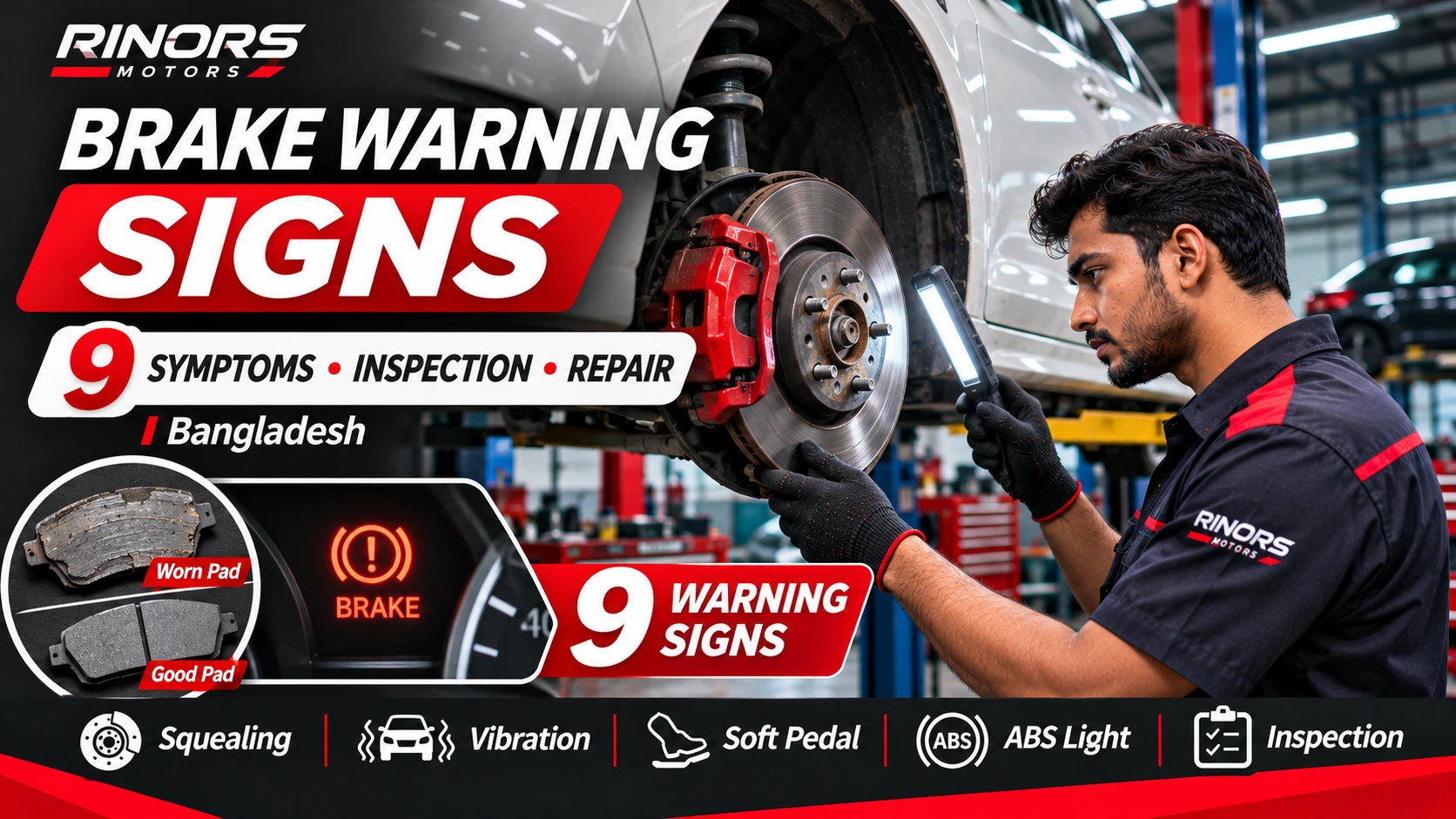
Here are nine warning signs that your vehicle may need professional brake servicing.
1. Squealing or Screeching When Braking
A high-pitched squealing sound when pressing the brake pedal may indicate worn brake pads.
Many brake pads contain wear indicators that produce noise when the friction material becomes thin.
However, moisture, dust, or other conditions can also cause brake noise. An inspection is necessary to identify the actual cause.
2. Grinding Noise From the Brakes
A grinding or metal-scraping sound is a warning that should never be ignored.
Severely worn brake pads may allow metal components to contact the brake disc, potentially damaging the rotor and reducing braking performance.
If you hear persistent grinding, stop driving safely and arrange an inspection rather than continuing to use the vehicle.
3. Steering Wheel or Brake Pedal Vibration
Do you feel vibration through the steering wheel or brake pedal while braking?
Possible causes include:
Uneven brake disc thickness
Damaged or excessively worn brake rotors
Sticking brake calipers
Other wheel or suspension problems
A professional inspection can help determine whether the brake disc needs servicing or replacement.
4. Longer Stopping Distance
If your car takes longer than normal to stop, there may be a problem with its braking system.
Possible causes include worn friction components, overheating, hydraulic problems, or poor tire grip.
Reduced braking performance requires prompt attention, even if the car otherwise drives normally.
5. Soft or Spongy Brake Pedal
A healthy conventional hydraulic braking system should provide a predictable pedal response.
If the brake pedal feels unusually soft, travels too far, or sinks toward the floor, possible causes include air in the hydraulic system, brake fluid leaks, or master-cylinder problems.
A sudden soft pedal or reduced braking ability is a serious safety warning. Stop safely and arrange towing instead of driving to a workshop.
6. Car Pulling to One Side During Braking
If your vehicle moves left or right while braking, the stopping force may be uneven.
This can happen because of a sticking brake caliper, a damaged brake hose, uneven tire grip, or other mechanical issues.
A qualified technician should identify the underlying cause before replacing components.
7. Brake or ABS Warning Light on the Dashboard
Modern cars use dashboard warning lights to indicate potential brake-system faults.
A red brake warning light may indicate an applied parking brake, low brake fluid, or a braking-system problem.
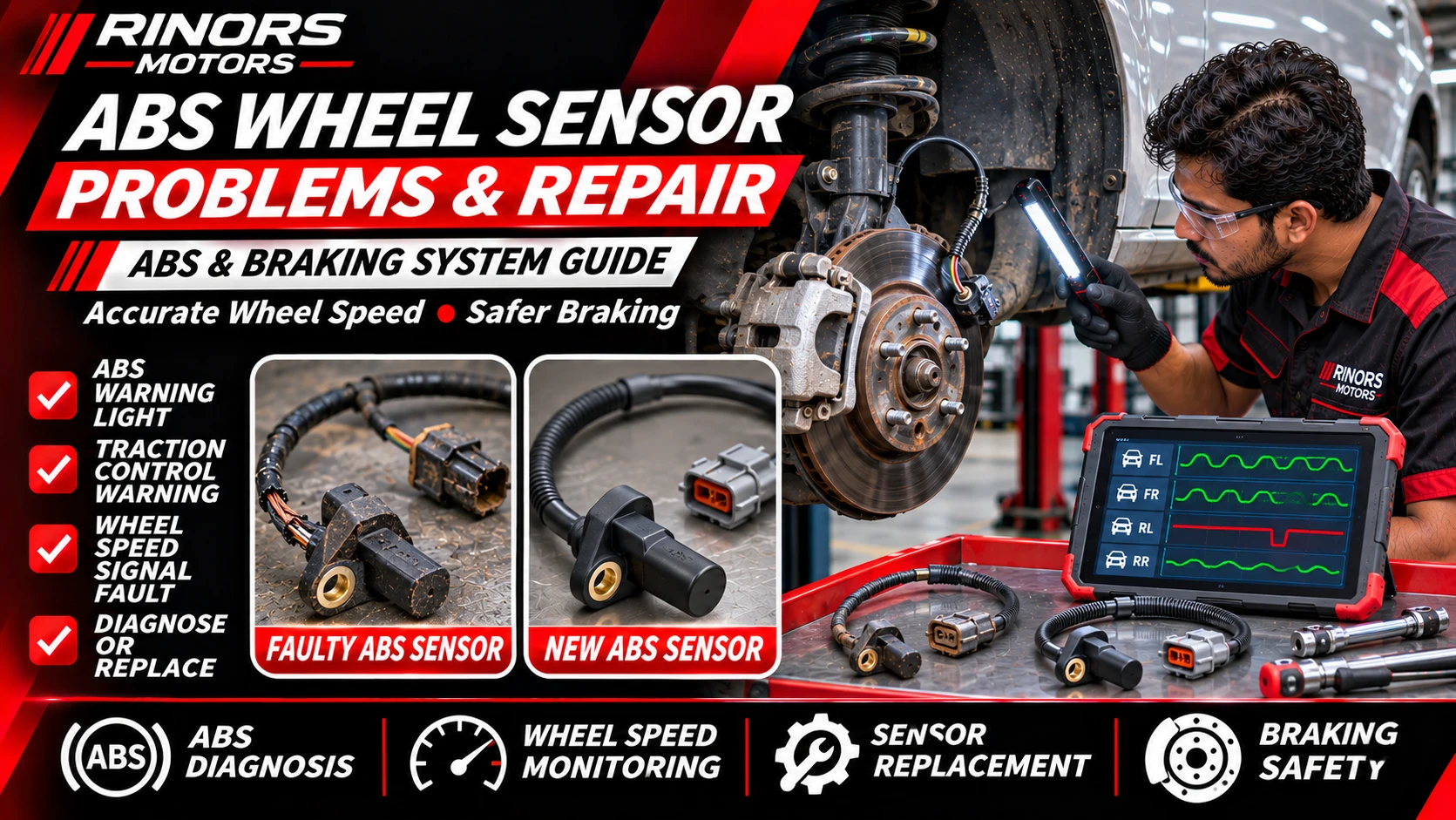
An illuminated ABS warning light may indicate an anti-lock braking system fault. The conventional brakes may still function, but ABS assistance may be unavailable.
If a red brake warning remains illuminated after the parking brake is fully released, stop safely and arrange professional assistance.
8. Burning Smell or Excessive Brake Heat
A burning smell after braking can indicate overheated brakes or a sticking caliper.
If you notice smoke, unusually hot brakes, or a strong burning smell, stop in a safe place.
Do not touch hot brake components or pour water on overheated brake discs.
Arrange an inspection before continuing your journey.
9. Low Brake Fluid or Visible Leaks
Brake fluid transfers hydraulic pressure through the braking system.
Low fluid levels may result from brake-pad wear or a hydraulic leak. A sudden drop or suspected leak is particularly concerning.
If you suspect brake fluid leakage or braking performance is affected, do not drive the vehicle.
When Should You Replace Your Brake Pads?
There is no single replacement mileage suitable for every vehicle.
Brake pad life depends on driving habits, traffic conditions, vehicle weight, pad material, and maintenance.
A technician should inspect the remaining friction material, brake discs, calipers, and related components.
Brake pads should be replaced when they reach the manufacturer's specified wear limit or when damage makes replacement necessary.
What Happens During a Professional Brake Inspection?
A proper brake inspection may include:
Checking brake pad thickness and condition.
Inspecting brake discs for damage and excessive wear.
Checking brake calipers and related hardware.
Examining brake fluid and hydraulic components.
Investigating ABS warning lights when present.
Recommending appropriate maintenance or repairs.
The required procedures depend on the vehicle and the reported symptoms.
Frequently Asked Questions
Can I Drive With Squealing Brakes?
Some brake noises have minor causes, but squealing may indicate worn brake pads. Have the brakes inspected promptly.
Is Brake Pad Replacement Enough to Fix Every Brake Problem?
No. Brake issues may involve the discs, calipers, hoses, brake fluid, ABS components, or other parts.
How Often Should I Inspect My Car's Brakes?
Follow the maintenance schedule in your vehicle's owner's manual. Arrange an earlier inspection whenever you notice unusual noises, warning lights, vibration, or reduced braking performance.
Brake Inspection & Repair at Rinors Motors
At Rinors Motors, we understand the importance of reliable braking performance for everyday driving in Bangladesh.
Our brake service and repair solutions focus on identifying braking problems and recommending suitable maintenance or repairs based on vehicle condition.
Whether you drive a Toyota, Honda, Nissan, or another vehicle, early brake inspection can help prevent further damage and support safer driving.
Contact Rinors Motors for brake inspection, brake pad replacement, and professional car brake repair assistance in Bangladesh.