Car CV Joint & Drive Shaft Problems: Complete Guide for Car Owners
Does your car make clicking noises when turning? Do you notice vibration during acceleration or grease leaking around the front wheels? These symptoms may indicate a problem with the CV joint or drive shaft.
The Constant Velocity (CV) joint is an important drivetrain component found in many modern cars. It allows engine or motor power to reach the driven wheels while accommodating movement of the suspension and, where applicable, steering.
In Bangladesh, road potholes, uneven surfaces, damaged rubber boots, and long-term wear can contribute to drivetrain problems.
Whether you drive a Toyota Corolla, Axio, Premio, Allion, Aqua, Honda Vezel, Nissan X-Trail, or another vehicle, understanding CV joint problems can help you avoid unnecessary repairs and identify potentially serious mechanical faults.
This guide explains the common symptoms, causes, inspection procedures, repair options, and replacement considerations.
What Is a CV Joint?
CV stands for Constant Velocity.
A CV joint is a mechanical joint that transmits rotating power between components operating at different angles while maintaining smooth power transfer.
In many front-wheel-drive cars, CV joints are installed at both ends of each front drive shaft.
Main Components of a CV Axle Assembly
Drive Shaft or Axle Shaft: Transfers rotational power between the drivetrain and the driven wheel.
Inner CV Joint: Connects the shaft toward the transmission or transaxle and accommodates drivetrain and suspension movement.
Outer CV Joint: Connects the shaft toward the wheel hub and allows power transfer through steering and suspension angles.
CV Boot: Flexible protective cover surrounding the joint.
CV Grease: Specialized lubricant that protects the joint's internal components.
Boot Clamps: Secure the rubber boot and help retain the lubricant.
These components work together to support smooth vehicle movement.
Inner CV Joint vs Outer CV Joint
Many front-wheel-drive vehicles use two CV joints on each front axle.
Outer CV Joint
The outer CV joint is located close to the wheel hub.
It accommodates the changing angles created when the steering wheel turns.
Common symptoms of outer CV joint wear include repeated clicking or popping noises during low-speed turns.
Inner CV Joint
The inner CV joint is located closer to the transmission or transaxle.
In many designs, it also accommodates changes in shaft length as the suspension moves.
Problems with an inner CV joint may contribute to vibration, shuddering, or clunking during acceleration and deceleration.
Important: These symptoms help identify possible problems but do not confirm which joint has failed without inspection.
7 Warning Signs of a Bad CV Joint or Drive Shaft
1. Clicking Noise While Turning
One of the most recognizable symptoms of a worn outer CV joint is a repetitive clicking sound while turning.
The noise may become more noticeable during slow, tight turns, such as entering a parking space or making a U-turn.
Possible contributing causes include:
Worn outer CV joint components.
Internal joint damage.
Loss of CV joint grease.
Contamination caused by a torn boot.
However, other steering, suspension, and wheel components can also produce similar sounds.
2. Grease Around the Inside of the Wheel
CV joints contain specialized lubricating grease protected by rubber boots.
If the boot tears or a clamp becomes loose, grease can escape.
You may notice dark grease around the inner wheel area or nearby suspension components.
A grease leak should be inspected promptly because continued lubricant loss can accelerate joint wear.
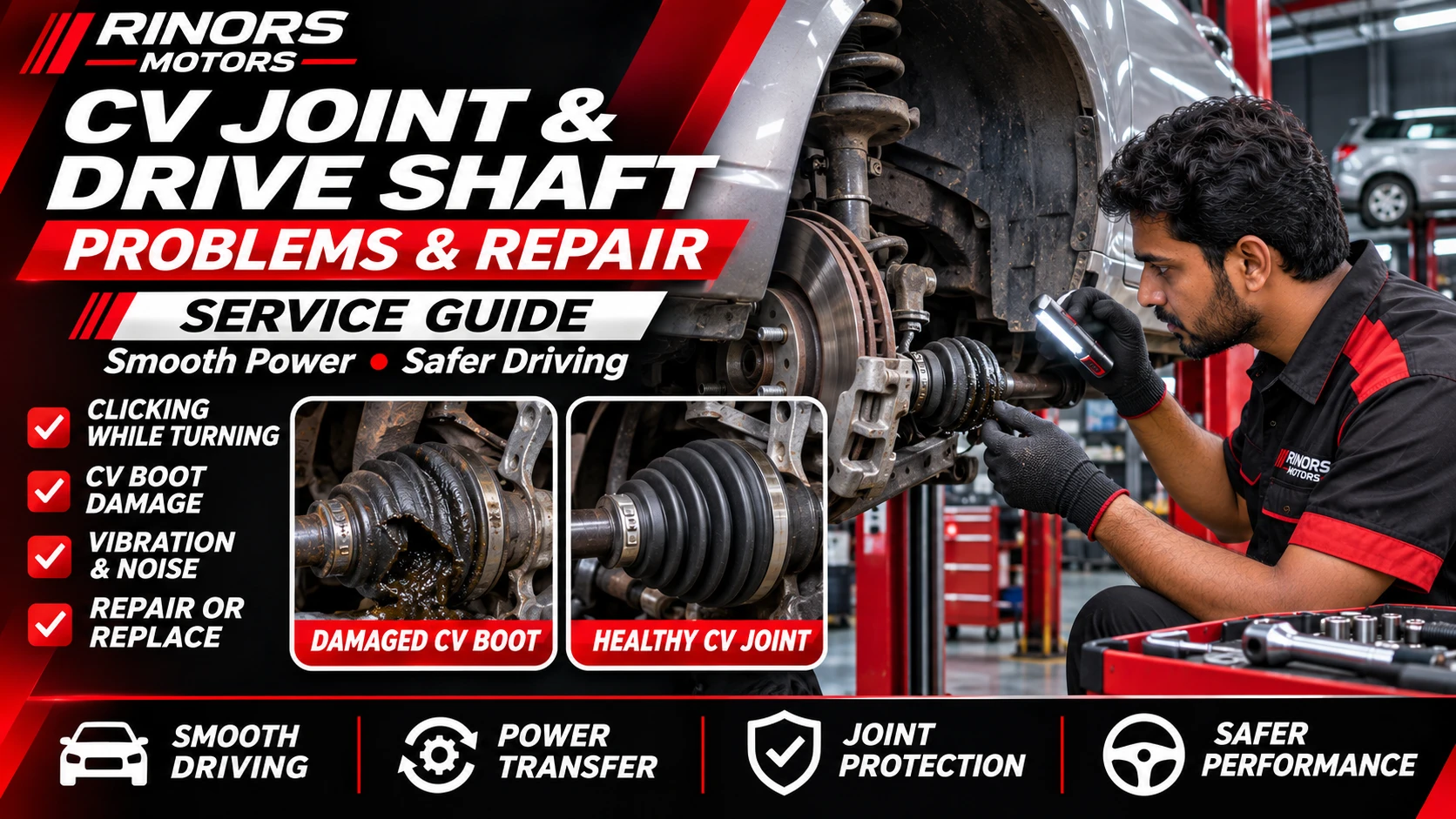
3. Torn or Cracked CV Boot
A CV boot protects the joint from dust, water, and contamination.
Common signs of boot damage include:
Visible rubber cracks.
Splits between the boot folds.
A loose or displaced clamp.
Grease leaking around the boot.
An exposed joint or damaged protective cover.
A damaged CV boot does not necessarily mean the entire drive shaft must be replaced.
If the damage is detected early and the joint remains in good condition, boot replacement may be sufficient.
4. Vibration During Acceleration
If your car vibrates or shudders when accelerating, the drive shaft or inner CV joint may require inspection.
However, similar symptoms can result from:
Damaged engine or transmission mounts.
Wheel and tyre problems.
Bent or imbalanced rotating components.
Other drivetrain faults.
Accurate diagnosis is essential before replacing a CV axle.
5. Clunking Noise When Accelerating or Decelerating
A noticeable clunk when applying or releasing the accelerator can be associated with a worn inner CV joint.
The noise may appear when drivetrain load changes.
Other potential causes include engine mounts, suspension components, or excessive movement in drivetrain connections.
6. Excessive Drivetrain Vibration
Severely worn or damaged CV axle components may create excessive vibration while driving.
The vibration may be felt through the vehicle body, floor, or steering system.
A bent axle shaft or damaged joint can also contribute to abnormal drivetrain movement.
Because vibration can originate from several vehicle systems, the actual cause must be confirmed through inspection.
7. Severe Mechanical Noise or Loss of Drive
In serious cases, significant CV joint or axle damage may produce loud mechanical noises or interrupt power delivery to the wheel.
These symptoms require urgent attention.
If your vehicle develops severe vibration, loud grinding, suspected axle separation, or loss of drive, stop in a safe location and arrange professional assistance. Do not continue driving.
Why Do CV Joints Become Damaged?
Several conditions can contribute to CV joint wear or failure.
1. Torn CV Boot
A damaged boot can allow grease to escape and water or dirt to enter.
Loss of lubrication and contamination can accelerate internal joint damage.
2. Normal Mechanical Wear
CV joints experience repeated rotational loads and angular movement during vehicle operation.
Their internal components may gradually wear over time.
3. Road Impacts
Severe potholes, collisions with road obstacles, and suspension damage can place additional stress on axle assemblies.
4. Incorrect Installation
Improper axle installation, incorrect fastener torque, damaged seals, or incompatible components can create mechanical problems.
5. Unsuitable Lubrication
CV joints require grease appropriate for their specific design.
Incorrect grease, contamination, or insufficient lubrication may reduce joint durability.
6. Modified Suspension Geometry
Significant changes in vehicle ride height or suspension geometry may alter CV axle operating angles and increase component stress.
CV Joint vs Wheel Bearing vs Suspension Noise
Not every noise near a wheel is caused by a CV joint.
CV Joint Problems
Often associated with clicking during turns, grease leakage, or acceleration-related vibration.
Wheel Bearing Problems
May produce humming, growling, or rumbling that changes with vehicle speed or load.
Suspension Problems
Worn bushings, ball joints, stabilizer links, or other suspension components may cause knocking when crossing bumps.
Brake Problems
Damaged brake hardware, contacting dust shields, or other braking components may create scraping or grinding sounds.
Proper inspection helps avoid replacing a healthy CV joint when another component is responsible.
Can a Torn CV Boot Be Repaired?
In some cases, yes.
If the rubber boot is damaged but the joint remains free of excessive wear and contamination, a technician may be able to replace the boot and apply the correct lubricant.
When Boot Replacement May Be Suitable
Damage is detected early.
The CV joint has no abnormal noise or play.
Internal components remain in serviceable condition.
Contamination can be addressed using the approved procedure.
A correctly fitting replacement boot is available.
When CV Joint Replacement May Be Necessary
The joint has significant internal wear.
Persistent clicking indicates joint damage.
Water or dirt has caused substantial deterioration.
Internal components are pitted or damaged.
Manufacturer procedures require joint replacement.
When Complete Drive Shaft Replacement Makes Sense
A complete axle assembly may be appropriate when the shaft is bent, multiple components are damaged, the joints are not separately serviceable, or complete replacement is more practical.
The correct choice depends on condition, service procedures, parts availability, and overall cost.
Can You Drive With a Bad CV Joint?
Driving with a damaged CV joint can become unsafe.
A small boot tear without joint damage is different from a severely worn joint producing loud noises or excessive vibration.
Even when the vehicle still moves normally, a leaking boot should be inspected promptly.
If there is severe vibration, significant mechanical noise, binding, or suspected loss of power transfer, stop driving and arrange professional assistance.
Delaying repairs may allow a relatively simple boot problem to develop into more expensive joint or axle damage.
How Are CV Joint Problems Diagnosed?
A professional drivetrain inspection may include several steps.
Step 1: Identify the Symptoms
The technician asks when the sound or vibration occurs.
Examples include turning, acceleration, deceleration, or driving at a particular speed.
Step 2: Inspect the CV Boots
Both inner and outer boots are checked for cracks, tears, leaks, and damaged clamps.
Step 3: Inspect the Axle Assembly
The shaft and accessible joints are examined for visible damage or abnormal movement.
Step 4: Check Nearby Components
Wheel bearings, suspension joints, mounts, and related drivetrain components are inspected when necessary.
Step 5: Conduct a Controlled Road Test
Where safe and appropriate, a technician evaluates the noise or vibration under normal operating conditions.
Step 6: Confirm the Required Repair
The technician determines whether the vehicle needs a replacement boot, an individual joint, or a complete axle assembly.
Step 7: Repair and Verify
After using the correct replacement parts and installation procedures, the drivetrain is checked for proper operation.
Safety Note: Drive axle repairs often involve high-torque axle fasteners, suspension components, and vehicle lifting. Incorrect procedures can compromise wheel-end safety. These repairs should be performed using proper equipment and manufacturer specifications.
How Much Does CV Joint Repair Cost in Bangladesh?
CV joint and drive shaft repair costs depend on the vehicle and the extent of damage.
Main Cost Factors
Vehicle brand and model.
Inner or outer CV joint.
Replacement of the boot, joint, or complete axle.
Original-equipment or compatible aftermarket parts.
Axle assembly design.
Labor required for removal and installation.
Additional seals, fasteners, or damaged components.
Available warranty and replacement-part quality.
Replacing an intact joint boot may cost less than replacing an entire drive shaft, but the most economical option depends on the actual condition of the assembly.
Request a quotation that clearly separates parts and labor.
How to Choose the Correct CV Joint or Drive Shaft
Before buying a replacement part, verify the exact vehicle specifications.
Important Information to Check
Vehicle brand and model.
Model year.
Engine and transmission configuration.
Chassis or VIN information.
Left-side or right-side application.
Front or rear axle position.
Compatible part number.
Shaft length, splines, and relevant fitment details.
Parts that appear visually similar may have different dimensions or operating specifications.
Toyota Corolla, Axio, Premio and Allion
These vehicles are available with different engines and drivetrain configurations across generations.
Do not assume that drive shafts from different models or years are interchangeable.
Toyota Aqua and Other Hybrid Cars
Hybrid vehicles also use drive axles to transfer power from the transaxle to the driven wheels.
Replacement components should match the specific hybrid drivetrain and vehicle configuration.
Honda and Nissan Vehicles
The same verification process applies to Honda Civic, Vezel, Nissan X-Trail, and other vehicles.
Always confirm compatibility before purchasing the part.
How to Prevent CV Joint Damage
1. Inspect Rubber Boots Regularly
Check for visible cracks, splits, or grease leakage during routine underbody inspections.
2. Repair Boot Damage Early
Replacing a damaged boot before significant joint contamination develops may prevent further damage.
3. Avoid Severe Road Impacts
Reduce speed appropriately around potholes, damaged roads, and obstacles.
4. Maintain the Suspension System
Damaged suspension components or inappropriate ride-height modifications can affect axle operating conditions.
5. Use Correct Replacement Parts
Choose compatible joints, boots, clamps, and complete axle assemblies.
6. Follow Proper Installation Procedures
Correct fastener torque, component positioning, and manufacturer requirements are important.
7. Investigate Unusual Noises
Do not ignore persistent clicking, clunking, or vibration.
Frequently Asked Questions
Why Does My Car Make Clicking Sounds When Turning?
A worn outer CV joint is one possible cause, particularly when clicking occurs during slow, tight turns. Other steering and suspension problems can produce similar noises.
Can a Torn CV Boot Be Replaced Without Changing the Axle?
Yes, if inspection confirms that the joint remains serviceable and the manufacturer permits the repair.
Can a Bad CV Joint Cause Vibration?
Yes. Worn inner joints or damaged axle assemblies can contribute to vibration, especially during acceleration.
Should Both CV Axles Be Replaced Together?
Not automatically. If only one assembly is defective, replacing the affected component may be appropriate. The other side should be inspected and its condition evaluated.
Is a CV Joint the Same as a Wheel Bearing?
No. A CV joint transfers rotational power through changing angles, while a wheel bearing allows the wheel hub to rotate smoothly under load.
Do Hybrid Cars Have CV Joints?
Yes. Many hybrid vehicles use CV joints and axle shafts as part of their drivetrain.
CV Joint & Drive Shaft Inspection at Rinors Motors
At Rinors Motors, we understand the importance of maintaining reliable drivetrain components for Bangladesh's driving conditions.
If your car makes clicking noises while turning, vibrates during acceleration, or shows grease leakage around the axle boots, identifying the actual cause is the first step toward an appropriate repair.
Contact Rinors Motors to discuss CV joint inspection, damaged boot replacement, compatible drive shaft parts, and appropriate repair options for your vehicle.
Rinors Motors — Your Trusted Automotive Partner in Bangladesh.