Car Tyre Maintenance in Bangladesh: Complete Guide
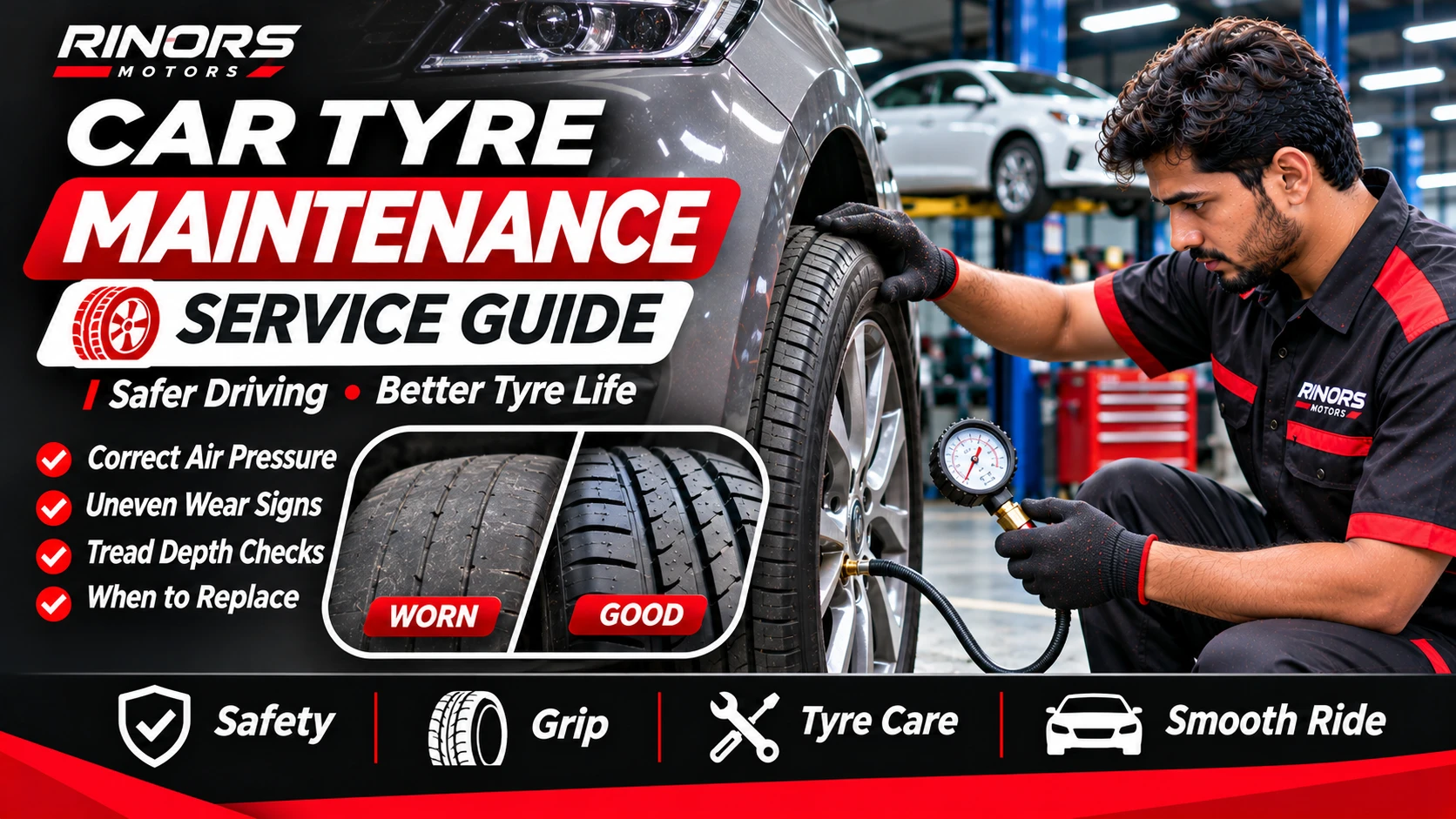
Your car's tyres are the only parts of the vehicle that normally remain in direct contact with the road. They play a critical role in braking, steering, traction, and overall driving safety.
In Bangladesh, potholes, uneven roads, heavy traffic, high temperatures, and seasonal rain can create demanding conditions for tyres.
Whether you drive a Toyota Corolla, Axio, Premio, Honda Vezel, Nissan X-Trail, or another vehicle, proper tyre maintenance helps preserve handling performance and reduce avoidable tyre damage.
This guide explains how to inspect your tyres, maintain the correct air pressure, recognize warning signs, and choose suitable replacements.
Why Car Tyre Maintenance Is Important
Properly maintained tyres support safe and efficient vehicle operation.
Benefits of Regular Tyre Maintenance
Better steering response and vehicle stability.
Improved braking traction.
Reduced risk of preventable tyre damage.
More consistent tread wear.
Potential improvements in fuel efficiency.
Greater driving comfort.
Better control on wet roads.
Tyre maintenance is particularly important during Bangladesh's monsoon season, when standing water and slippery roads can increase driving risks.
8 Warning Signs Your Car Tyres Need Attention
1. Uneven Tyre Wear
If one side of a tyre wears faster than another, the vehicle may have an alignment problem, incorrect inflation pressure, or worn suspension components.
Uneven wear should be investigated before fitting replacement tyres.
2. Low Tyre Tread Depth
Tyre tread helps maintain traction, especially on wet roads.
As tread becomes shallower, the tyre's ability to disperse water generally decreases, increasing the risk of hydroplaning.
3. Cracks on the Tyre Sidewall
Visible cracks may indicate ageing, environmental exposure, or deterioration of the tyre material.
A qualified technician should inspect tyres with noticeable cracking.
4. Tyre Bulges or Swelling
A bulge on the sidewall can indicate damage to the tyre's internal structure.
Do not continue driving on a tyre with a visible bulge. Arrange safe replacement or professional assistance.
5. Frequent Loss of Air Pressure
If a tyre repeatedly loses pressure, possible causes include a puncture, valve damage, wheel-rim problems, or a poor seal between the tyre and wheel.
6. Steering Wheel Vibration
Vibration at certain speeds may be caused by wheel imbalance, tyre damage, a bent wheel, or other mechanical faults.
7. Unusual Road Noise
Excessive tyre noise can result from irregular tread wear, damage, or certain tyre designs.
A sudden change in noise should be investigated.
8. Vehicle Pulling to One Side
If your car pulls left or right while driving on a reasonably level road, uneven tyre pressure, alignment issues, or other steering and braking problems may be responsible.
What Is the Correct Tyre Pressure?
Correct tyre inflation pressure is essential for vehicle safety and tyre performance.
Different cars require different pressures depending on tyre size, vehicle loading, and manufacturer specifications.
Where to Find the Correct Tyre Pressure
Check the vehicle manufacturer's recommended tyre pressure information, usually located:
On the driver's door jamb or door pillar.
Inside the vehicle owner's manual.
On another manufacturer-provided tyre information label.
Do not use the maximum pressure printed on the tyre sidewall as the normal inflation recommendation.
When Should You Check Tyre Pressure?
Check tyre pressure at least once a month and before long journeys.
Measure pressure when the tyres are cold, generally before driving or after the vehicle has been parked long enough for the tyres to cool.
Also inspect the spare tyre if your vehicle carries one.
Understanding Different Types of Tyre Wear
The location and pattern of tread wear can provide useful clues about vehicle condition.
Wear on Both Outer Edges
This can be associated with underinflation, although driving conditions and other factors may also contribute.
Wear in the Centre
Excessive centre wear may be associated with overinflation or other operating factors.
Wear on One Side
Uneven wear concentrated on one shoulder may indicate a wheel-alignment or suspension issue.
Cupping or Patchy Wear
Repeated patches of uneven tread wear may be associated with worn suspension components, wheel imbalance, or other mechanical problems.
These patterns are indicators rather than definitive diagnoses. Proper inspection is necessary.
Wheel Alignment vs Wheel Balancing
Many car owners confuse wheel alignment with wheel balancing, but they are different services.
Wheel Alignment
Wheel alignment involves checking and adjusting specified wheel angles according to the manufacturer's requirements.
Incorrect alignment may cause:
Uneven tyre wear.
Poor steering response.
Vehicle pulling to one side.
Reduced driving comfort.
Wheel Balancing
Wheel balancing corrects uneven mass distribution in a tyre and wheel assembly.
An imbalanced wheel can cause vibrations, particularly at certain driving speeds.
Both services may be appropriate depending on the symptoms found during inspection.
What Is Tyre Rotation?
Tyre rotation means changing the positions of tyres on a vehicle according to an approved rotation pattern.
It can help distribute tread wear more evenly where the vehicle and tyre configuration allow rotation.
When Should Tyres Be Rotated?
Follow your vehicle manufacturer's recommended maintenance schedule.
The correct rotation pattern depends on whether the tyres are directional, whether front and rear tyre sizes differ, and the vehicle's drivetrain configuration.
When Should You Replace Your Car Tyres?
Tyres should be replaced when their condition no longer meets safety or manufacturer requirements.
Important reasons include:
Tread worn to the applicable replacement limit.
Significant sidewall damage or bulging.
Structural tyre damage.
Damage that cannot be safely repaired.
Severe cracking or deterioration.
Age-related concerns identified during inspection.
How to Check Tyre Age
Many tyres display a four-digit manufacturing date code, often as part of the DOT tyre identification marking.
For example, a code ending in 2525 generally indicates manufacture during the 25th week of 2025.
Tyre age alone does not establish whether a tyre is safe, but it is an important consideration alongside condition, storage history, manufacturer guidance, and inspection findings.
How to Choose the Right Replacement Tyre
Before buying new tyres, confirm the specifications required for your vehicle.
Important Tyre Specifications
Tyre width.
Aspect ratio.
Wheel diameter.
Load index.
Speed rating.
Tyre construction and intended application.
Manufacturer compatibility requirements.
For example, a tyre marked 195/65 R15 indicates a nominal width of 195 mm, an aspect ratio of 65%, radial construction, and a 15-inch wheel diameter.
This example is not a recommendation for every vehicle.
Never choose a tyre solely because it fits the wheel diameter.
Tyre Maintenance for Hybrid Vehicles
Hybrid vehicles such as the Toyota Aqua, Prius, and Corolla Axio Hybrid also require correctly specified tyres.
Rolling resistance, tyre size, load rating, and inflation pressure can affect vehicle efficiency and driving performance.
When replacing tyres, follow the manufacturer's specifications rather than assuming all tyres of a similar size will behave identically.
How Much Does Car Tyre Replacement Cost in Bangladesh?
Tyre prices vary depending on:
Tyre brand and model.
Tyre dimensions and specifications.
Vehicle type.
Product availability.
Warranty and manufacturing date.
Installation, balancing, and other service costs.
The best choice is not necessarily the cheapest tyre. Prioritize correct specifications, product condition, authenticity, and suitability for your driving needs.
7 Practical Tips to Extend Tyre Life
Maintain the manufacturer-recommended tyre pressure.
Inspect tyres regularly for cuts, bulges, and abnormal wear.
Follow the correct tyre rotation schedule.
Investigate alignment and balancing problems.
Avoid potholes and sharp impacts whenever safely possible.
Do not overload your vehicle.
Check tread depth and tyre condition before long-distance travel.
Car Tyre Inspection at Rinors Motors
At Rinors Motors, we understand the importance of maintaining tyres for Bangladesh's road conditions.
Whether your vehicle has uneven tyre wear, steering vibration, incorrect tyre pressure, or suspected wheel damage, a suitable inspection can help identify the next step.
Contact Rinors Motors for guidance on tyre condition, appropriate replacement specifications, and related vehicle maintenance.
Rinors Motors — Your Trusted Automotive Partner in Bangladesh.