Hybrid Battery Draining Quickly: Causes, Diagnosis and Solutions in Bangladesh
Does your hybrid car battery charge drop unusually fast? Does the battery indicator go from a high level to a low level within a short time, causing the petrol engine to start more frequently?
Hybrid vehicles continuously manage battery charging and discharging during driving. Some fluctuations in the battery charge indicator are normal. However, unusually rapid changes combined with poor fuel efficiency, reduced electric driving performance or hybrid system warnings may indicate a problem that requires professional diagnosis.
Rinors Motors provides hybrid battery discharge problem diagnostics and troubleshooting solutions in Bangladesh, helping vehicle owners identify whether abnormal battery behavior is related to battery deterioration, cooling problems, electrical faults or normal hybrid system operation.
Our approach focuses on identifying the actual cause before recommending battery repair or replacement.
Understanding Hybrid Battery Charging and Discharging
Hybrid vehicles use a high-voltage traction battery to store electrical energy and support the electric motor.
Unlike a fully electric vehicle, a conventional self-charging hybrid does not normally require external charging. Its battery is managed automatically through the hybrid powertrain and regenerative braking.
The battery charge level may change depending on:
Vehicle acceleration and speed
Electric motor power demand
Regenerative braking
Road gradients
Traffic conditions
Climate control and electrical loads
Battery temperature
Hybrid system operating strategy
A changing battery indicator does not automatically mean that the hybrid battery is damaged.
However, frequent and unusually large charge fluctuations deserve further investigation, especially when accompanied by other performance problems.
Common Symptoms of a Hybrid Battery Draining Too Quickly
1. Battery Charge Drops Rapidly
The hybrid battery charge indicator may fall quickly during short driving periods or moderate acceleration.
The cause may be normal power demand, reduced usable battery capacity or another condition affecting the hybrid system.
2. Battery Charges and Discharges Repeatedly
The charge indicator may move repeatedly between high and low levels over a short period.
Some fluctuation is expected. A persistent abnormal pattern may require further examination of battery condition and operating data.
3. Petrol Engine Starts More Frequently
The gasoline engine may operate more often when the hybrid system needs to maintain battery charge or supply additional power.
Possible contributing factors include:
Reduced battery performance
Heavy air conditioning demand
Battery temperature conditions
Driving patterns
Hybrid system control requirements
Frequent engine operation alone is not proof of battery failure.
4. Fuel Consumption Increases
A hybrid vehicle with reduced electrical assistance or other powertrain problems may consume more fuel than expected.
However, fuel consumption can also change because of traffic, tire condition, driving style, maintenance requirements and air conditioning use.
5. Reduced Electric Driving Performance
The vehicle may rely more heavily on its petrol engine or provide less electric assistance than expected.
Professional diagnostics can help determine whether this behavior is related to the hybrid battery or normal system operating conditions.
6. Hybrid System Warning Lights
Some battery-related problems may trigger hybrid system warnings or diagnostic trouble codes.
A warning message should be investigated promptly because multiple hybrid electrical components can produce similar symptoms.
What Causes a Hybrid Battery to Drain Quickly?
1. Hybrid Battery Aging and Capacity Loss
Hybrid battery performance can gradually change with age, mileage, operating temperature and usage patterns.
As usable capacity decreases, the battery may store less energy within its normal operating range.
This can contribute to faster changes in the displayed charge level.
A proper battery health assessment is needed to distinguish normal aging from significant deterioration.
2. Uneven Battery Module or Cell Performance
Some hybrid battery packs contain multiple modules or cell groups monitored by the vehicle's battery management system.
Differences in their electrical characteristics may affect overall battery performance.
Diagnostic evaluation may include:
Available battery block voltage readings
Voltage variation under load
Battery temperature data
Available internal resistance information
Relevant diagnostic trouble codes
Battery charge and discharge behavior
The available measurements vary by vehicle model and battery chemistry.
3. Hybrid Battery Cooling Fan Problems
Battery temperature management is important for hybrid system performance.
Some vehicles use cooling fans and air intake ducts to circulate cabin air through the battery assembly.
Dust, debris or restricted airflow can reduce cooling efficiency.
Potential problems include:
Blocked battery cooling air intake
Dirty cooling fan
Restricted ventilation duct
Cooling fan electrical failure
Abnormal battery temperature readings
High battery temperatures may cause the hybrid system to restrict battery charging or discharging to protect its components.
4. Hot Weather and Heavy Traffic
Bangladesh's hot weather and frequent traffic congestion can increase thermal and electrical demands on hybrid vehicles.
High temperatures, prolonged low-speed operation and heavy climate control use can influence how the hybrid system manages battery energy.
These conditions do not necessarily indicate battery failure, but they should be considered during diagnosis.
5. Hybrid Battery Management and Sensor Faults
The hybrid control system monitors battery performance through sensors and electronic control modules.
Possible faults may involve:
Battery temperature sensors
Voltage monitoring circuits
Battery control module communication
Electrical connectors
Cooling fan control circuits
Relevant hybrid system wiring
Such faults require professional testing before any component is replaced.
6. Auxiliary 12V Battery Problems
Hybrid vehicles generally have a separate low-voltage battery that powers electronic control systems and related accessories.
A weak 12V battery can create starting, electronic or control-system problems.
However, a discharged 12V auxiliary battery is not the same as a rapidly changing high-voltage traction battery charge indicator.
Both systems should be evaluated separately when symptoms suggest an electrical problem.
Our Hybrid Battery Discharge Diagnostic Solutions
1. Hybrid Battery Performance Assessment
The first step is understanding how the battery behaves during normal vehicle operation.
Depending on the vehicle and available diagnostic equipment, assessment may include:
Battery state-of-charge monitoring
Charge and discharge behavior analysis
Battery voltage data evaluation
Battery block voltage comparisons
Battery temperature assessment
Relevant hybrid system fault scanning
Review of operating conditions when symptoms occur
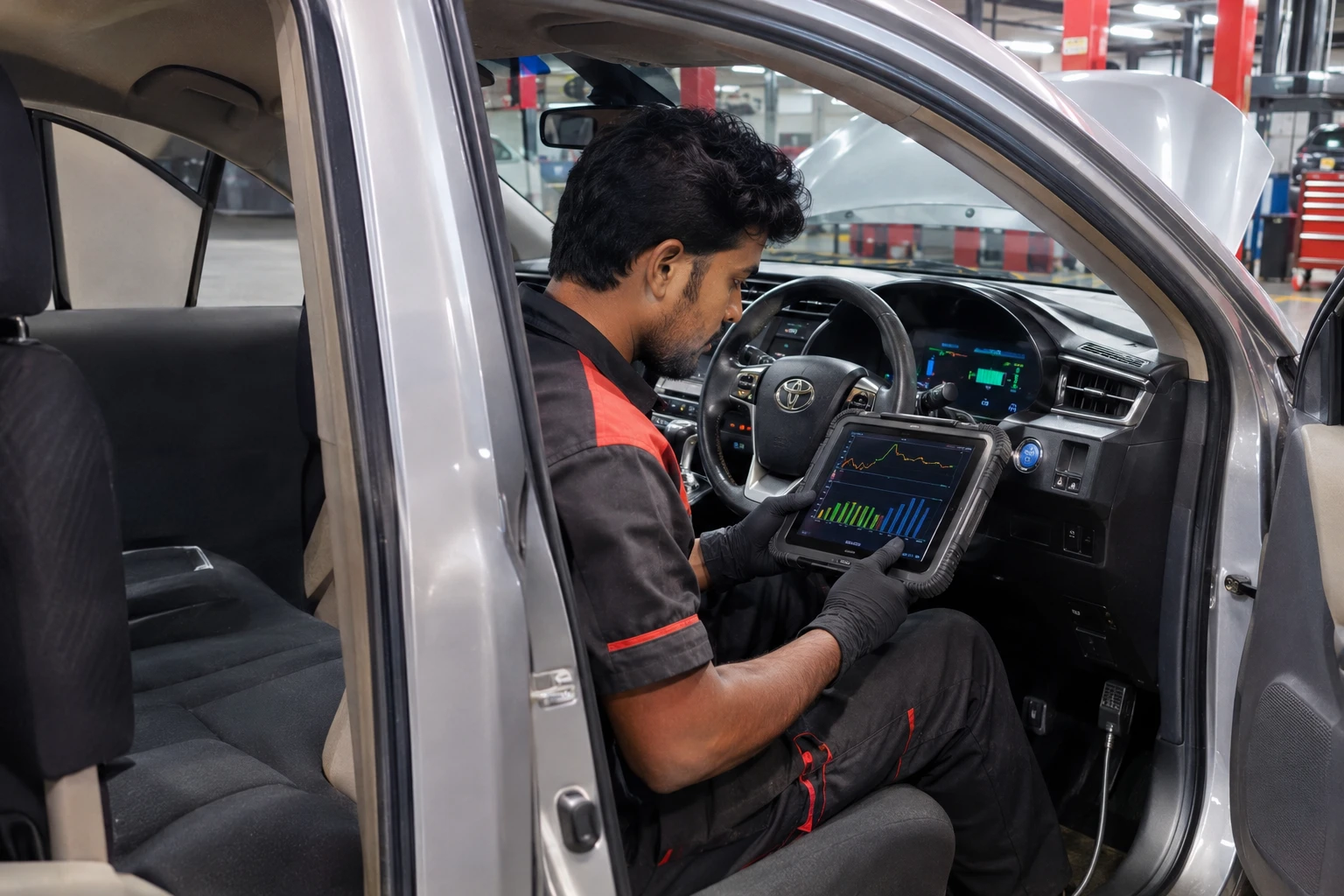
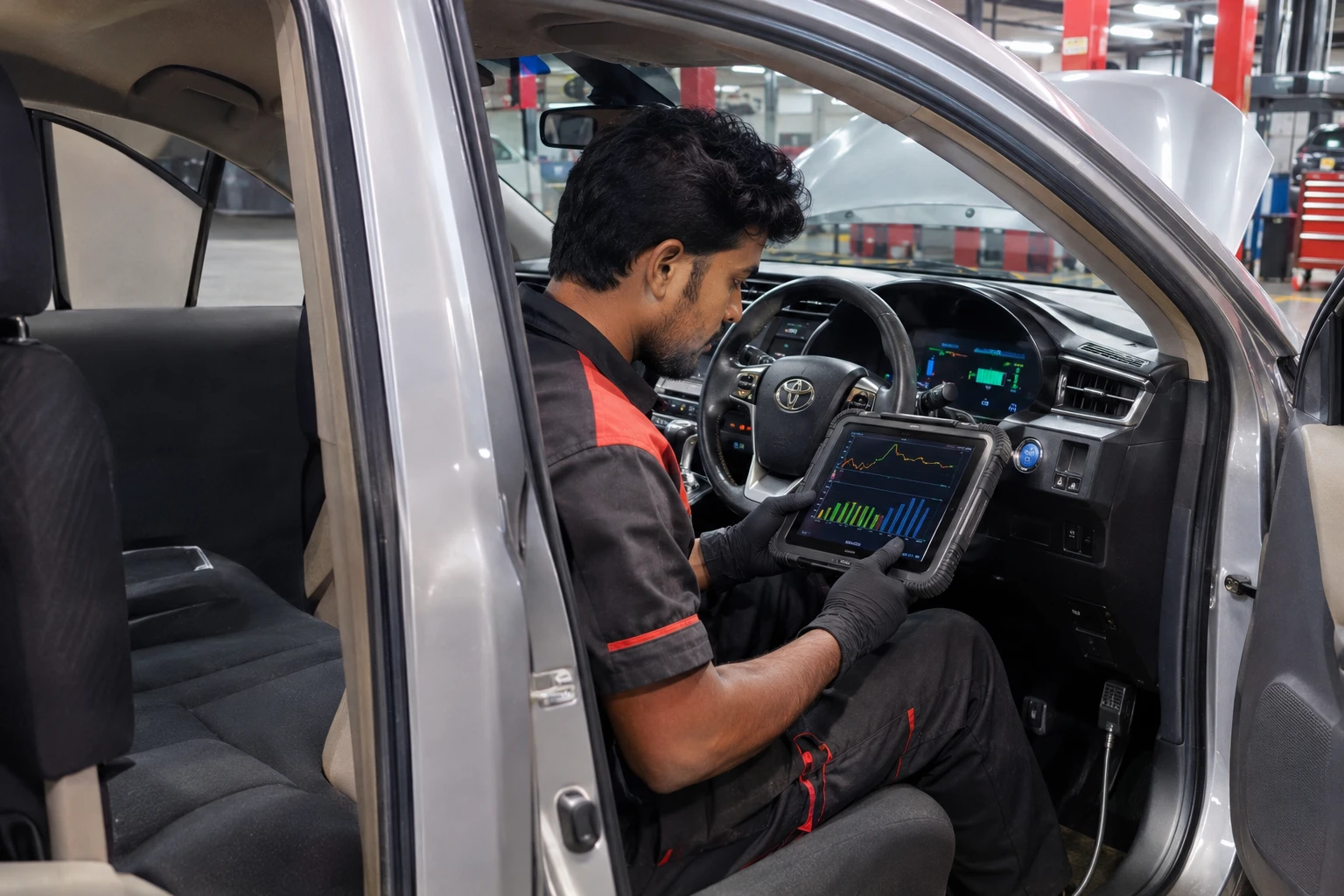
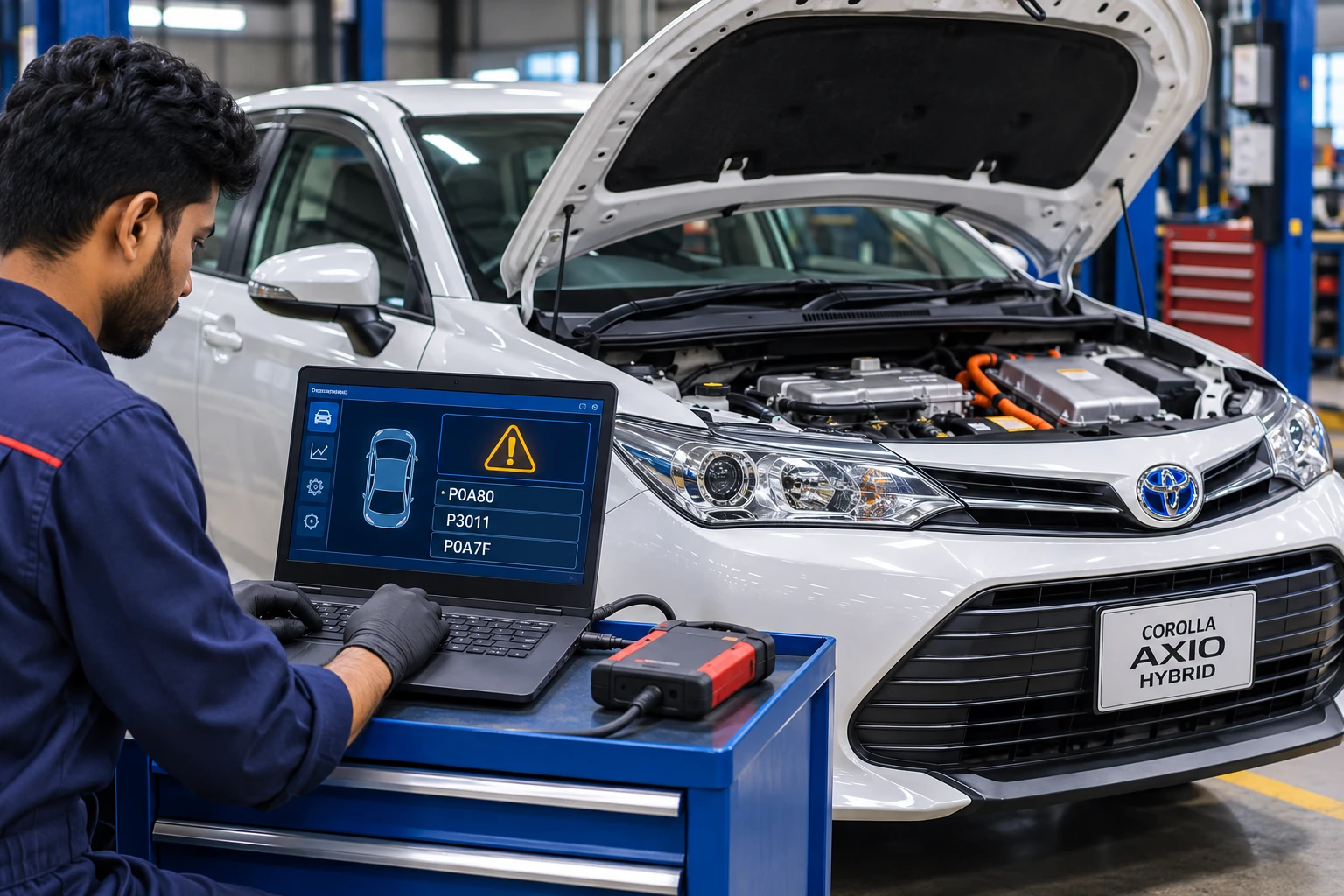
2. Computerized Hybrid System Diagnostics
Compatible automotive diagnostic equipment can provide information about the hybrid powertrain.
Potential checks include:
Hybrid control module fault codes
Battery control system data
Battery state-of-charge trends
Charge and discharge current information
Available battery temperature readings
Hybrid cooling system operation
Relevant vehicle control warnings
Diagnostic findings are assessed together rather than relying on a single measurement.
3. Hybrid Battery Cooling System Inspection
Where applicable, cooling system inspection may include:
Battery cooling air intake examination
Cooling fan condition assessment
Air duct inspection
Filter condition evaluation
Cooling fan operation testing
Relevant temperature sensor readings
Cleaning or servicing may be recommended when restrictions or contamination are identified.
4. Battery Deterioration Assessment
When diagnostic findings indicate possible battery deterioration, additional model-specific testing may be necessary.
The assessment aims to determine whether reduced battery capacity, abnormal electrical characteristics or other faults could explain the customer's symptoms.
A rapidly changing battery indicator alone is not sufficient to confirm that the complete battery pack requires replacement.
5. Hybrid Battery Repair or Replacement Evaluation
After the cause has been identified, appropriate options may include:
Battery cooling system maintenance
Electrical connector or sensor-related repairs
Correction of other hybrid system faults
Model-appropriate battery servicing
Specialized battery component repair where safe and technically suitable
Complete hybrid battery replacement when justified
Repair feasibility depends on battery design, condition, safety requirements and manufacturer procedures.
6. Post-Service System Verification
After an appropriate repair, relevant checks may include:
Diagnostic trouble code review
Battery temperature monitoring
Charging and discharging behavior assessment
Hybrid system operating data evaluation
Controlled road testing where appropriate
The objective is to confirm that the identified problem has been addressed and that no related faults remain apparent.
Compatible Hybrid Vehicle Models
This problem-based diagnostic solution may apply to compatible hybrid vehicles, including:
Toyota Corolla Axio Hybrid
Toyota Aqua Hybrid
Toyota Prius Hybrid
Toyota Corolla Fielder Hybrid
Toyota Camry Hybrid
Toyota Noah Hybrid
Toyota Esquire Hybrid
Other supported Toyota and non-Toyota hybrid models
Diagnostic procedures and battery technologies vary between models.
Benefits of Diagnosing Rapid Hybrid Battery Discharge
Helps distinguish normal battery behavior from actual faults
Identifies possible battery deterioration
Detects cooling system problems
Reduces unnecessary battery replacement
Helps investigate reduced fuel efficiency
Supports more informed repair decisions
Helps identify temperature-related performance restrictions
Supports reliable hybrid vehicle operation
Why Choose Rinors Motors?
With approximately 30 years of experience in the automotive market, Rinors Motors focuses on systematic vehicle diagnostics and practical repair recommendations.
For hybrid battery discharge problems, our approach emphasizes identifying the underlying cause before recommending major battery-related work.
Rather than assuming that every rapid charge fluctuation requires a new hybrid battery, the vehicle should be evaluated for battery condition, cooling performance, electrical faults and relevant operating conditions.
Related Hybrid Battery Service
For a broader overview of battery condition testing, maintenance and repair options, explore our Hybrid Battery Diagnostics & Repair service.
Related service page: /services/hybrid-battery-diagnostics-repair
Get Your Hybrid Battery Checked
If your hybrid vehicle's battery charge drops unusually quickly, the petrol engine runs more frequently than expected or fuel efficiency has declined, contact Rinors Motors for a hybrid battery diagnostic assessment.
A thorough inspection can help determine whether the problem involves normal hybrid operation, battery deterioration, cooling restrictions or another electrical fault.
Identify the cause of rapid hybrid battery discharge before replacing expensive battery components.
Safety Notice: Hybrid vehicles contain high-voltage electrical systems. Never dismantle or attempt to repair a traction battery without appropriate qualifications, safety equipment and manufacturer-approved procedures. If a serious hybrid warning appears, follow the vehicle manufacturer's instructions and arrange professional assistance.