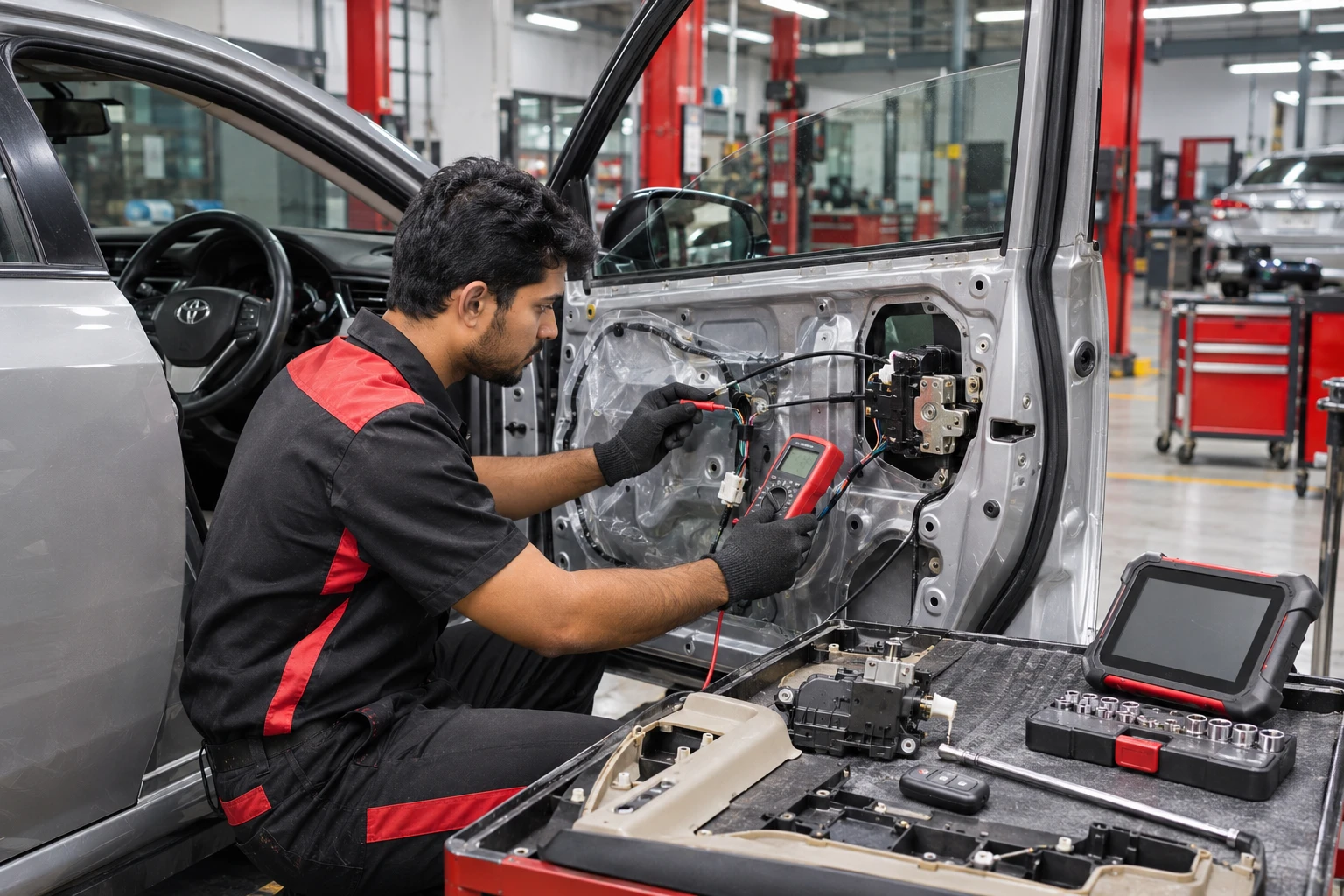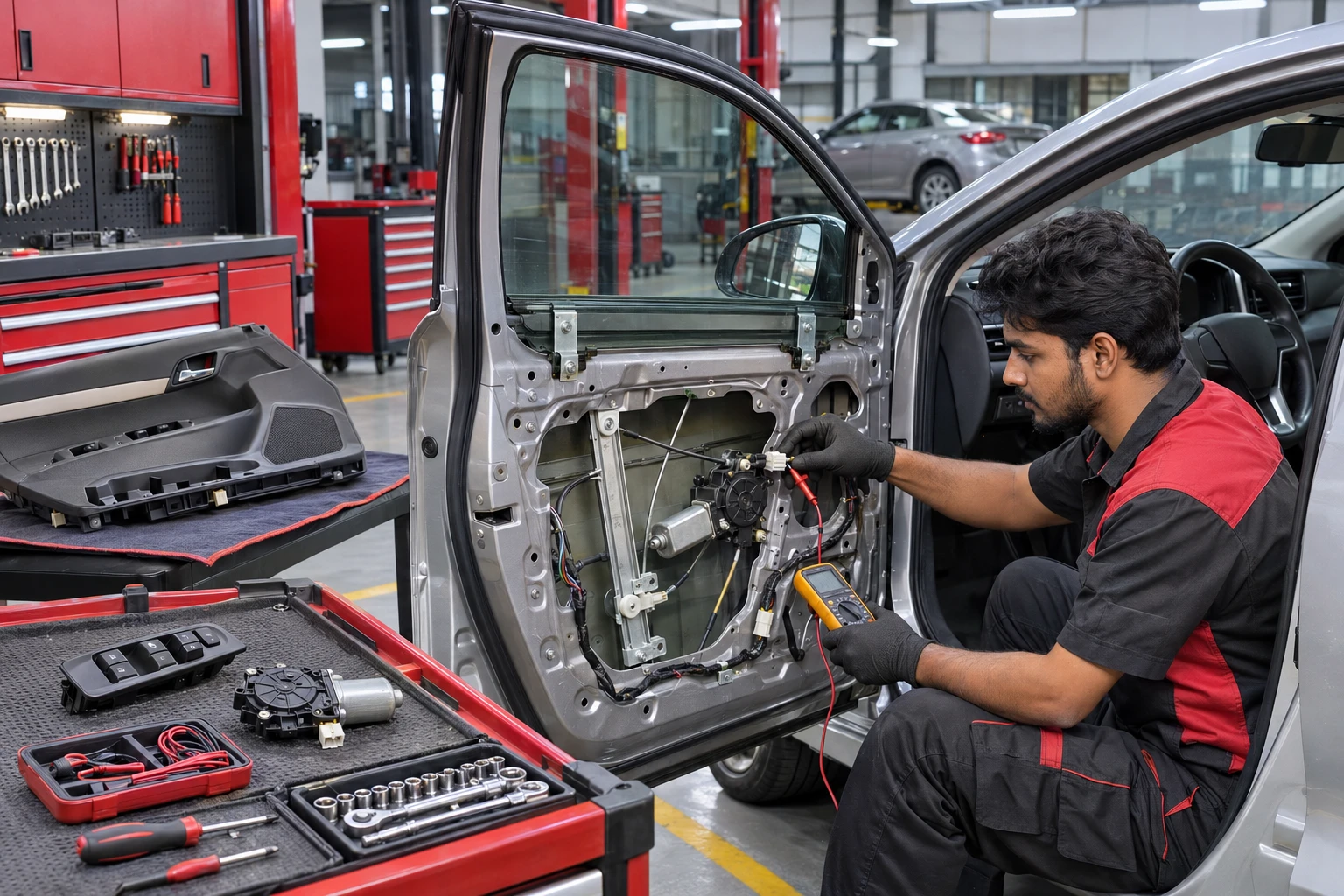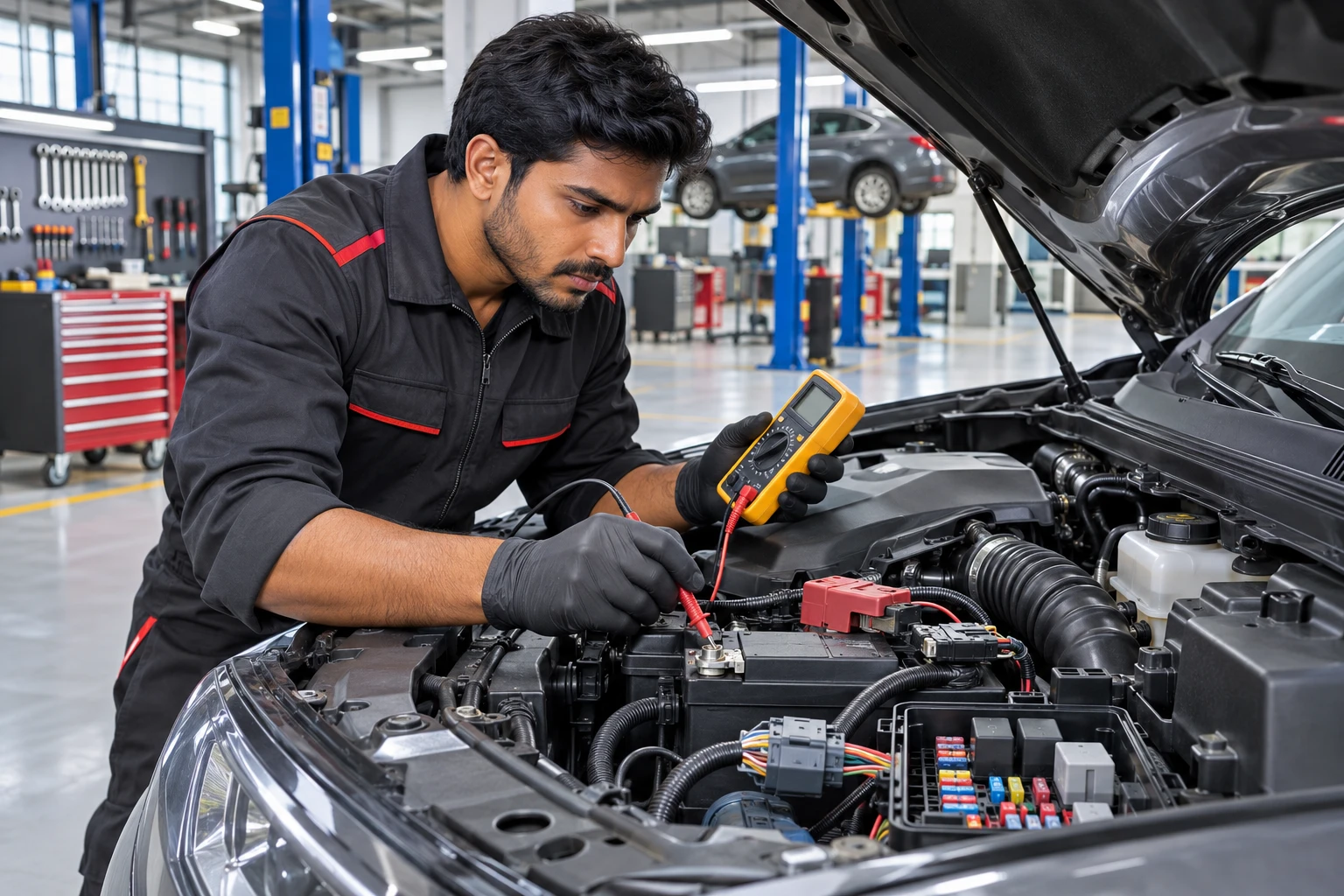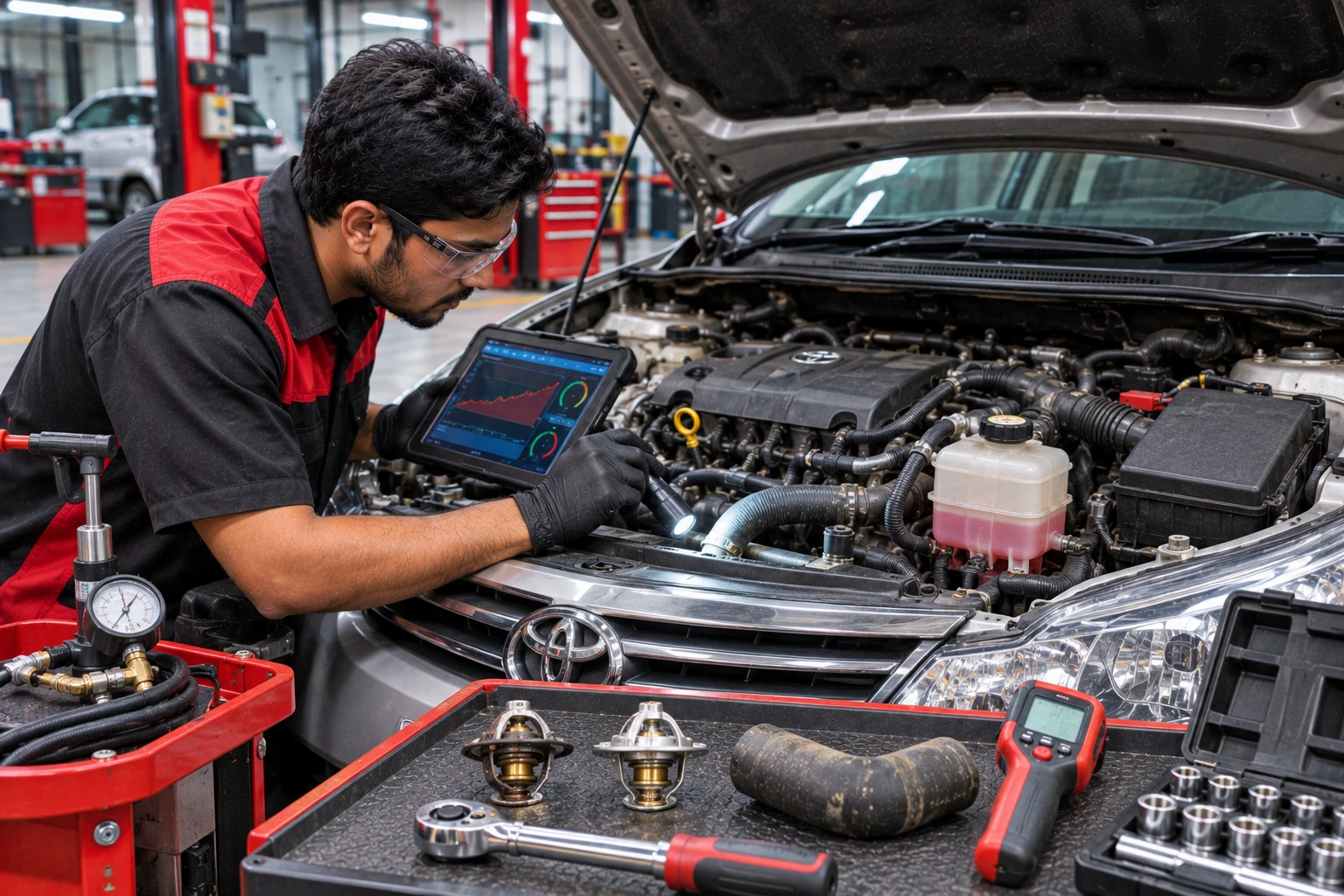
Car Electrical Services
Car Starter Motor And Alternator Repair
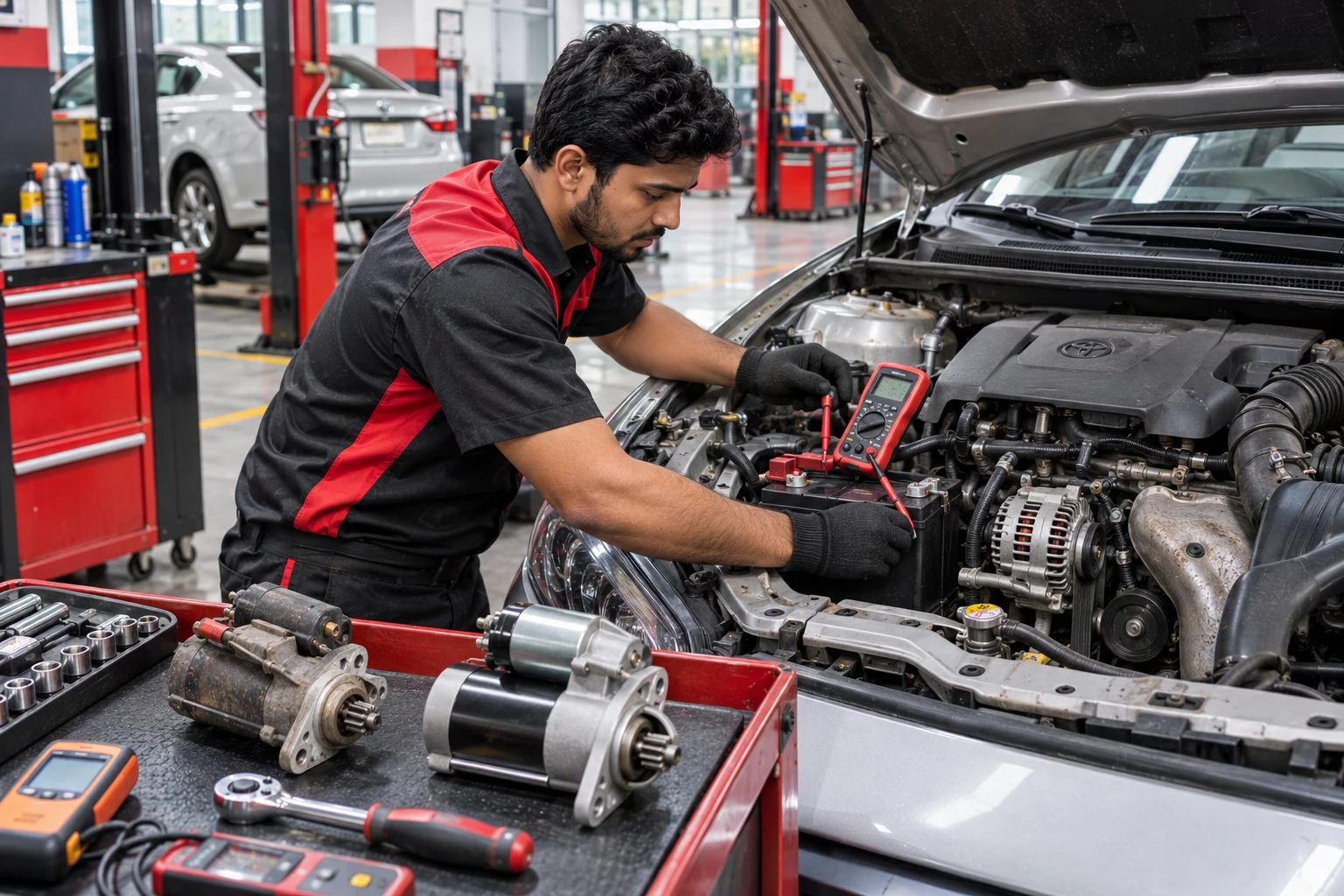
Professional car starter motor and alternator repair in Bangladesh. Rinors Motors provides starter motor diagnostics, alternator testing, charging system troubleshooting, starter solenoid inspection, battery charging fault diagnosis, and electrical component repair or replacement for Toyota, Honda, Nissan, and other vehicles.
About this service
Professional Car Starter Motor and Alternator Repair in Bangladesh
Is your car failing to start, producing clicking noises when you turn the key, showing a battery warning light, or experiencing repeated battery discharge?
At Rinors Motors, we provide professional car starter motor diagnostics, alternator inspection, charging system troubleshooting, and automotive electrical repair services for Japanese and other commonly driven vehicles in Bangladesh.
The starter motor and alternator perform different but equally important functions in conventional gasoline-powered vehicles.
The starter motor turns the engine during the starting process, while the alternator generates electrical power and helps recharge the battery when the engine is running.
A malfunctioning starter motor can prevent the engine from cranking. A defective alternator or charging system may cause the battery to discharge, leading to electrical problems and eventual starting failure.
Our diagnostic approach focuses on identifying the actual cause before recommending starter motor repair, alternator replacement, or related electrical maintenance.
Our Car Starter Motor and Alternator Services
1. Complete Starter Motor Diagnostics
The starter motor is an electrically operated component that turns the engine during the starting process.
When the starter motor or its control circuit develops a fault, the engine may crank slowly, make unusual noises, or fail to crank altogether.
Our diagnostic services include:
Starter motor operation testing
Starter electrical circuit inspection
Starter motor power supply checks
Starter ground connection testing
Starter relay and fuse inspection
Starter solenoid assessment
Starter motor wiring inspection
Slow engine cranking investigation
No-crank starting fault diagnosis
Starter-related mechanical noise assessment
A no-crank condition does not always indicate a faulty starter motor. Battery condition, electrical connections, control circuits, and engine-related faults must also be considered.
2. Starter Motor Repair and Replacement
Starter motors contain electrical and mechanical components that can deteriorate through repeated use.
Depending on the design and condition, certain starter motor problems may be repairable.
Our applicable services include:
Starter motor condition inspection
Starter motor removal and refitting
Starter solenoid testing
Internal electrical fault assessment
Starter drive mechanism inspection
Pinion gear condition checks
Starter motor replacement recommendations
Compatible starter motor installation
Post-repair starting system verification
Whether a starter motor can be repaired depends on the component design, availability of suitable replacement parts, and extent of the damage.
3. Starter Solenoid Inspection and Repair
The starter solenoid is responsible for controlling electrical current to the starter motor and, in many conventional starter designs, engaging the starter drive mechanism.
A faulty solenoid may cause clicking noises or prevent the starter motor from operating correctly.
Our services include:
Starter solenoid electrical testing
Solenoid activation assessment
Starter control circuit inspection
Electrical terminal condition checks
Solenoid-related clicking noise investigation
Starter solenoid replacement assessment
Starter motor and solenoid assembly inspection
The solenoid may be separately serviceable on some starter designs and integrated into the complete starter assembly on others.
4. Alternator Inspection and Diagnostics
The alternator supplies electrical power while a conventional gasoline engine is running.
It also helps maintain the battery's charge and supports the vehicle's electrical systems.
Our alternator diagnostic services include:
Alternator charging voltage testing
Alternator output performance assessment
Battery charging system inspection
Alternator electrical connector checks
Alternator wiring inspection
Alternator mounting condition assessment
Charging system warning light investigation
Voltage regulation fault diagnosis
Alternator-related electrical noise assessment
A battery warning light does not always mean the alternator itself has failed.
Battery connections, wiring, drive belt problems, control circuits, and other electrical faults can produce similar symptoms.
5. Alternator Repair and Replacement
Depending on its design, an alternator may contain serviceable components such as bearings, brushes, voltage regulation components, or other internal electrical parts.
However, not every alternator is suitable for component-level repair.
Our services include:
Alternator condition assessment
Charging system fault identification
Alternator removal and refitting
Alternator bearing noise investigation
Electrical terminal and connector inspection
Internal alternator fault assessment
Alternator repair suitability evaluation
Compatible alternator replacement
Post-installation charging system verification
The appropriate repair method depends on the alternator's design, condition, and vehicle specifications.
6. Car Battery Charging System Diagnostics
Repeated battery discharge may result from an alternator problem or another fault in the vehicle's charging system.
Our services include:
Battery voltage testing
Battery charging voltage measurement
Charging system performance assessment
Battery terminal and cable inspection
Alternator output investigation
Charging circuit voltage drop testing
Electrical connection troubleshooting
Battery warning light diagnostics
Testing the battery and charging system together helps distinguish battery deterioration from charging-related faults.
7. Alternator Belt and Pulley Inspection
Many conventional engines use a serpentine or accessory drive belt to operate the alternator.
A worn, loose, damaged, or incorrectly tensioned belt may affect alternator operation.
Our applicable services include:
Alternator drive belt inspection
Belt wear and cracking checks
Belt tension assessment
Belt tensioner condition inspection
Alternator pulley assessment
Belt-related noise investigation
Drive belt alignment checks
Belt replacement recommendations
A damaged belt may affect multiple vehicle systems if it drives other accessories.
8. Starter Relay, Fuse and Electrical Wiring Repair
Starting system problems may occur even when the starter motor itself is working correctly.
Electrical faults can interrupt the commands or power required for starter operation.
Our diagnostic services include:
Starter relay testing
Relevant fuse inspection
Starter control wire assessment
Power and ground circuit testing
Corroded connector inspection
Loose electrical connection checks
Ignition switch-related circuit assessment
Starting system wiring troubleshooting
Electrical repairs should follow the vehicle's wiring configuration and manufacturer-recommended procedures.
9. Car Starting Problems and No-Crank Diagnostics
When a vehicle fails to start, determining whether the engine cranks is an important diagnostic step.
Common starting-related complaints include:
Engine does not crank
Engine cranks slowly
Clicking sounds when starting
Intermittent starting failure
Starter motor spinning without engaging the engine
Engine starting only after repeated attempts
Battery voltage dropping excessively during cranking
These symptoms may originate from the battery, starter motor, solenoid, electrical circuits, control systems, or mechanical components.
An engine that cranks normally but does not start may require separate fuel, ignition, compression, or engine management diagnostics.
10. Alternator Voltage Regulator Diagnostics
A voltage regulator helps control alternator output according to the vehicle's electrical requirements.
Depending on the vehicle, regulation may be integrated into the alternator or coordinated with electronic control systems.
Our applicable services include:
Charging voltage fluctuation investigation
Overcharging symptom assessment
Undercharging diagnosis
Alternator voltage regulation testing
Charging control circuit inspection
Voltage regulator replacement assessment
Incorrect charging voltage can affect battery condition and vehicle electrical components.
11. Alternator Bearing and Unusual Noise Inspection
Alternator bearings and drive components may deteriorate over time.
Unusual sounds from the engine's accessory drive area should be investigated.
Our services include:
Alternator bearing noise assessment
Pulley condition inspection
Belt tensioner noise investigation
Accessory drive vibration checks
Alternator mounting inspection
Rotating component condition assessment
Repair or replacement recommendations
Not every engine-bay squealing or grinding noise is caused by the alternator. Other accessory drive components may produce similar sounds.
12. Starting and Charging System Diagnostics for Hybrid Vehicles
Hybrid vehicles may use a different starting and charging architecture from conventional gasoline vehicles.
For example, many Toyota full hybrid models use a motor-generator to start the gasoline engine instead of a separate conventional 12V starter motor.
These vehicles may also use a DC-DC converter to maintain the 12V electrical system instead of a belt-driven alternator.
Our applicable hybrid vehicle diagnostic support includes:
Hybrid 12V auxiliary battery assessment
Hybrid low-voltage electrical diagnostics
Hybrid READY-mode startup problem investigation
DC-DC converter-related charging fault assessment where supported
Relevant diagnostic trouble code scanning
12V electrical connection inspection
Hybrid charging system warning assessment
Compatible vehicle examples include:
Toyota Corolla Axio Hybrid
Toyota Prius
Toyota Aqua
Toyota Noah Hybrid
Toyota Voxy Hybrid
Honda Grace Hybrid
Honda Vezel Hybrid
Not every hybrid vehicle uses the same starting or charging technology.
Important: Hybrid high-voltage systems require specialist training, protective equipment, and manufacturer-specific safety procedures.
Common Signs of Starter Motor Problems
Your vehicle may require starter system inspection if you notice:
Clicking noises when attempting to start
Engine not cranking
Slow or inconsistent engine cranking
Starter motor operating intermittently
Grinding noise during starting
Starter spinning without turning the engine
Repeated starting attempts required
Starting failure despite an adequately charged battery
Unusual electrical or mechanical noises during cranking
These symptoms should be investigated before replacing the starter motor.
Common Signs of Alternator Problems
Possible alternator or charging system symptoms include:
Battery warning light on the dashboard
Battery repeatedly becoming discharged
Headlights becoming unusually dim or bright
Electrical accessories operating inconsistently
Charging voltage outside expected specifications
Unusual noise from the alternator area
Drive belt-related noise
Battery not maintaining charge
Electrical malfunctions while the engine is running
Some symptoms may also be caused by battery deterioration, wiring faults, or electronic charging controls.
Starter Motor vs Alternator: What's the Difference?
Although both components are part of the vehicle's electrical system, they perform different jobs.
Starter Motor
The starter motor uses electrical energy from the battery to turn the engine during startup.
A defective starter motor may prevent the engine from cranking.
Alternator
The alternator generates electrical energy when a conventional gasoline engine is running.
It supports electrical accessories and helps recharge the 12V battery.
Car Battery
The battery stores electrical energy and supplies the power needed to operate the starter and other electrical systems.
How They Work Together
In a conventional gasoline vehicle:
The battery supplies power to the starting system.
The starter motor turns the engine.
The engine begins running.
The engine drives the alternator.
The alternator supplies electrical power and maintains battery charging.
Because these systems interact, diagnosing only one component may not identify the actual problem.
Why Is My Car Not Starting?
A car that does not start may have several possible faults.
Weak or Discharged Battery
The battery may not have enough available power to operate the starting system.
Faulty Starter Motor
The starter motor may fail to engage or turn the engine.
Defective Starter Solenoid
The solenoid may fail to activate the starter correctly.
Electrical Wiring Problems
Loose terminals, corroded connectors, or damaged wiring may prevent the starter from receiving sufficient electrical power.
Starter Relay or Control Circuit Fault
The starting command may not reach the starter motor.
Engine Management or Mechanical Problems
If the engine cranks normally but does not start, the cause may involve fuel delivery, ignition, sensors, immobilizer operation, or engine mechanical condition.
Proper diagnosis helps avoid unnecessary component replacement.
Starter Motor Repair vs Replacement
Not every starter motor fault requires replacing the complete assembly.
When Repair May Be Suitable
Repair may be considered when:
The fault is limited to a serviceable internal component.
Electrical connections can be restored safely.
Suitable repair parts are available.
The starter housing and mounting points remain serviceable.
A reliable repair procedure is supported.
When Replacement May Be Necessary
Replacement may be recommended when:
The starter motor is severely worn.
Internal electrical damage is extensive.
Critical mechanical components are damaged.
The complete assembly is not reliably serviceable.
The manufacturer's procedure requires replacement.
Repair decisions depend on component condition, available parts, reliability, and total cost.
Alternator Repair vs Replacement
A faulty alternator may sometimes be repaired rather than replaced.
When Repair May Be Suitable
Repair may be appropriate when:
A serviceable bearing is worn.
An accessible regulator component has failed.
The fault is limited to a repairable connection.
Replacement parts are available.
The alternator can be restored to reliable operation.
When Replacement May Be Necessary
Replacement may be recommended when:
Internal electrical damage is extensive.
The alternator housing or mounting is damaged.
Multiple major components have deteriorated.
The alternator is not economically repairable.
A suitable replacement is more reliable than attempting repairs.
The charging system should be checked after any alternator repair or replacement.
Our Starter Motor and Alternator Repair Process
Step 1: Initial Vehicle Assessment
We review the customer's starting problems, battery discharge history, warning lights, electrical symptoms, and previous repair work.
Step 2: Battery Condition Inspection
Battery voltage, visible battery condition, and relevant terminal connections are checked.
Step 3: Starting System Diagnostics
The starter motor, solenoid, relays, wiring, and related electrical circuits are evaluated as appropriate.
Step 4: Charging System Diagnostics
For applicable vehicles, alternator output, charging voltage, battery charging behavior, and relevant electrical connections are assessed.
Step 5: Fault Identification
Diagnostic results are reviewed to determine whether the problem involves the starter motor, alternator, battery, control circuit, or another component.
Step 6: Repair Recommendation
We explain whether electrical repair, component servicing, starter replacement, alternator replacement, or additional diagnostics are appropriate.
Step 7: Approved Repair or Replacement
The agreed work is completed using suitable vehicle-specific procedures and compatible replacement parts.
Step 8: Final Verification
Relevant starting performance, charging system operation, electrical connections, and diagnostic concerns are checked after servicing.
Starter Motor and Alternator Services for Popular Car Brands
We provide applicable starting and charging system diagnostic support for vehicles commonly driven in Bangladesh.
Toyota
Toyota Corolla
Toyota Corolla Axio
Toyota Premio
Toyota Allion
Toyota Yaris
Toyota Rush
Toyota Hiace
Honda
Honda Civic
Honda Fit
Honda City
Honda CR-V
Honda Vezel
Nissan
Nissan X-Trail
Nissan Note
Nissan Sunny
Nissan Serena
Mitsubishi
Mitsubishi Outlander
Mitsubishi Lancer
Mitsubishi Pajero
Hyundai
Hyundai Tucson
Hyundai Elantra
Hyundai Sonata
The starting and charging system design varies by engine type, transmission, hybrid configuration, trim level, and production year.
Conventional starter and alternator replacement services apply only where those components are fitted to the vehicle.
Why Choose Rinors Motors?
Experience in automotive maintenance and electrical repair
Starter motor diagnostic support
Alternator and charging system inspection
Battery and starting circuit troubleshooting
Starter solenoid and relay assessment
Electrical connection and wiring checks
Japanese and other vehicle model support
Hybrid low-voltage diagnostic assistance where applicable
Inspection-based repair recommendations
Automotive replacement parts and maintenance assistance
How to Maintain Your Car's Starting and Charging System
Regular maintenance can help identify electrical problems before they cause unexpected starting failures.
Recommended practices include:
Keep battery terminals clean and securely connected.
Investigate slow engine cranking.
Check the battery condition when starting performance deteriorates.
Address charging system warning lights promptly.
Inspect accessory drive belts according to the manufacturer's schedule.
Avoid ignoring unusual alternator or starter noises.
Investigate repeated battery discharge.
Use replacement parts compatible with the vehicle.
Have damaged electrical connectors repaired.
Follow manufacturer-recommended maintenance procedures.
Avoid operating the starter repeatedly for extended periods when the engine fails to start, as excessive cranking may overheat or damage starting components.
Frequently Asked Questions
Why Does My Car Make a Clicking Sound but Not Start?
A clicking sound may result from a weak battery, poor electrical connection, faulty starter solenoid, or starter motor problem.
Battery and starting circuit testing can help identify the cause.
How Do I Know If My Starter Motor Is Bad?
Possible signs include no cranking, intermittent starting failure, abnormal starter noises, or poor starter performance despite adequate battery power.
A diagnostic test is necessary before confirming starter failure.
Can a Faulty Alternator Drain My Car Battery?
Yes. If the charging system cannot replenish the battery during driving, the battery may gradually discharge.
Some alternator faults may also contribute to electrical current drain while the vehicle is parked.
Can a Car Run With a Bad Alternator?
A vehicle may continue operating temporarily using stored battery energy, but electrical power can eventually become insufficient.
Continuing to drive with a charging system fault may result in vehicle shutdown or further electrical problems.
Is It Better to Repair or Replace an Alternator?
The decision depends on the type of fault, repairability, component condition, replacement parts availability, and expected reliability.
Can a Starter Motor Be Repaired?
Certain starter motors contain serviceable internal components, but others may require complete replacement.
Why Does My Battery Keep Dying After Replacement?
Possible causes include charging system faults, parasitic electrical drain, loose connections, or another unresolved electrical problem.
Does a Hybrid Car Have a Starter Motor?
Not necessarily. Many full hybrid vehicles use a motor-generator to start the gasoline engine rather than a separate conventional starter motor.
Do Hybrid Cars Have Alternators?
Many full hybrid vehicles use a DC-DC converter to support their 12V electrical systems instead of a conventional belt-driven alternator.
The exact architecture depends on the vehicle design.
Does Starter Motor Replacement Require Battery Disconnection?
Manufacturer-approved electrical isolation procedures are generally required before working on high-current starter circuits.
The exact procedure depends on the vehicle's design and electrical architecture.
Book Your Car Starter Motor and Alternator Repair Service
If your vehicle is experiencing starting failure, clicking noises, slow engine cranking, repeated battery discharge, or charging system warning lights, contact Rinors Motors for professional starter motor and alternator inspection and repair assistance in Bangladesh.
We help identify starting and charging system faults, evaluate damaged components, and recommend suitable repair or replacement solutions.
Maintain reliable engine starting, stable electrical operation, and dependable battery charging with appropriate automotive electrical diagnostics and servicing.