Engine Repair & Maintenance
Car Engine Oil Leak Detection And Repair
Professional car engine oil leak detection and repair in Bangladesh. Rinors Motors provides valve cover gasket replacement, oil pan leak inspection, crankshaft and camshaft seal diagnostics, timing cover leakage assessment, oil filter housing repair, and engine oil loss troubleshooting for Toyota, Honda, Nissan, hybrid, and other vehicles.
About this service
Professional Car Engine Oil Leak Detection and Repair in Bangladesh
Is your car leaking engine oil, leaving oil stains underneath the vehicle, producing a burning oil smell, or requiring frequent engine oil top-ups?
At Rinors Motors, we provide professional car engine oil leak detection, engine gasket inspection, oil seal replacement assessment, and engine oil leakage repair services for Japanese, hybrid, and other commonly driven vehicles in Bangladesh.
Engine oil is essential for lubricating moving engine components, reducing friction, managing heat, and protecting internal parts from excessive wear.
An engine oil leak can develop when a gasket, oil seal, housing, or other sealing component becomes damaged or deteriorated.
Even a relatively small leak can become more serious over time. Significant oil loss may result in insufficient lubrication, overheating of engine components, or costly mechanical damage.
Our diagnostic approach focuses on locating the actual source of the oil leak before recommending gasket replacement, oil seal repair, or other engine maintenance.
Our Car Engine Oil Leak Detection and Repair Services
1. Complete Engine Oil Leak Inspection
Engine oil can leak from several locations, including the top, front, rear, or bottom of the engine.
Identifying the original leak source is important because oil can travel across engine components before dripping onto the ground.
Our inspection services include:
Engine oil leakage assessment
Engine exterior visual inspection
Valve cover gasket inspection
Oil pan and sump leakage checks
Crankshaft and camshaft seal assessment
Timing cover leakage investigation
Oil filter and filter housing inspection
Oil pressure switch leakage checks
Engine oil level and condition assessment
Visible gasket and sealing surface inspection
The extent of inspection depends on engine accessibility, the severity of the leak, and whether additional disassembly is necessary.
2. Valve Cover Gasket Leak Repair
The valve cover gasket seals the connection between the valve cover and cylinder head.
Over time, the gasket can deteriorate due to heat, aging, or other operating conditions.
A damaged valve cover gasket may allow engine oil to seep around the upper portion of the engine.
Our applicable services include:
Valve cover gasket leakage inspection
Valve cover sealing surface assessment
Rubber gasket deterioration checks
Spark plug well oil contamination investigation
Valve cover mounting inspection
Compatible gasket replacement
Manufacturer-specified installation procedures
Post-replacement oil leakage verification
A leaking valve cover gasket may also allow oil to reach ignition coil boots or spark plug wells on certain engine designs.
3. Engine Oil Pan and Sump Gasket Repair
The engine oil pan, sometimes called the sump, stores engine oil beneath the engine.
Oil leakage may develop around the oil pan gasket, sealing compound, drain plug, or damaged pan surfaces.
Our services include:
Oil pan leakage inspection
Oil pan gasket condition assessment
Oil sump sealing joint inspection
Oil pan mounting bolt checks
Oil drain plug condition assessment
Oil pan structural damage inspection
Oil pan resealing or replacement assessment
Post-repair leakage verification
Some modern engines use manufacturer-specified liquid sealant rather than a conventional removable oil pan gasket.
The correct repair procedure depends on the engine design.
4. Crankshaft Oil Seal Inspection and Replacement
Crankshaft oil seals help prevent engine oil from escaping where the crankshaft passes through the engine housing.
These seals are commonly located at the front and rear of the engine.
Our applicable services include:
Front crankshaft seal leakage assessment
Rear crankshaft seal leakage investigation
Crankshaft sealing surface inspection
Oil contamination near the crankshaft pulley
Engine and transmission junction leakage assessment
Compatible seal replacement recommendations
Rear crankshaft seal replacement can require significant disassembly, including transmission removal on many vehicles.
A leak near the engine and transmission junction does not automatically confirm rear main seal failure. Other leak sources must be ruled out.
5. Camshaft Oil Seal Leakage Repair
Some engines use camshaft oil seals to prevent oil leakage around camshaft drive components.
Our applicable services include:
Camshaft oil seal condition assessment
Camshaft seal leakage inspection
Oil contamination around timing components
Seal mounting and seating inspection
Related timing cover leakage investigation
Camshaft oil seal replacement assessment
Not every engine uses separately replaceable camshaft oil seals.
Replacement requirements vary by engine design and timing system configuration.
6. Timing Cover Oil Leak Inspection
The timing cover encloses or protects timing-related engine components.
On certain engines, the cover is sealed against the engine block and cylinder head using gaskets or manufacturer-specified sealing compounds.
Our services include:
Timing cover exterior leakage assessment
Timing cover sealing joint inspection
Timing cover mounting condition checks
Oil leakage near timing system components
Related crankshaft seal inspection
Timing cover resealing recommendations
Post-repair leakage checks
Timing cover repairs may require removal of engine accessories, mounting components, or other assemblies.
Care must be taken to preserve engine timing and follow manufacturer procedures.
7. Engine Oil Filter and Oil Filter Housing Leak Repair
The engine oil filter removes contaminants from circulating engine oil.
Oil leaks can develop due to damaged seals, incorrectly fitted filters, cracked housings, or related component faults.
Our services include:
Oil filter leakage inspection
Oil filter sealing surface checks
Oil filter housing gasket assessment
Oil cooler adapter seal inspection
Oil filter installation condition checks
Damaged filter housing assessment
Compatible gasket or filter replacement
Post-service leakage verification
Oil filter seals must be installed according to the vehicle and filter manufacturer's instructions.
An incorrectly installed or unsuitable oil filter may cause significant leakage.
8. Engine Oil Drain Plug and Washer Repair
The oil drain plug seals the opening used to drain engine oil during maintenance.
A damaged washer, stripped thread, or incorrectly installed drain plug may allow oil to leak.
Our services include:
Oil drain plug leakage inspection
Drain plug washer condition checks
Oil pan drain thread assessment
Drain plug sealing surface inspection
Compatible washer replacement
Drain plug replacement assessment
Oil pan thread repair suitability evaluation
Post-service leak verification
Drain plugs must be tightened to the appropriate specification.
Overtightening can damage oil pan threads, while insufficient tightening can cause leakage.
9. Engine Oil Pressure Switch and Sensor Leak Inspection
Some engines use oil pressure switches or sensors installed in threaded openings connected to the lubrication system.
Oil leakage may occur around a sensor body or sealing connection.
Our services include:
Oil pressure sensor leakage inspection
Oil pressure switch condition assessment
Sensor mounting area inspection
Oil-contaminated connector checks
Sensor sealing component assessment
Compatible sensor replacement recommendations
Relevant engine oil pressure warning diagnostics
An oil pressure warning is not always caused by a faulty sensor.
Actual low oil pressure can indicate a serious lubrication problem and requires appropriate diagnostic testing.
10. Engine Oil Cooler and Oil Cooler Seal Inspection
Certain vehicles use an engine oil cooler to manage engine oil temperature.
Oil coolers may use separate housings, adapters, hoses, or sealing components.
Our applicable services include:
Engine oil cooler exterior inspection
Oil cooler gasket leakage assessment
Oil cooler adapter seal inspection
Oil line and connection checks
Oil cooler housing condition assessment
Engine oil and coolant cross-contamination investigation where applicable
Oil cooler replacement assessment
Repair requirements depend on the specific cooling and lubrication system design.
11. Engine Oil Leakage Near the Transmission
Oil visible near the transmission bell housing may originate from several possible locations.
These include:
Rear crankshaft oil seal
Upper engine gasket leaks
Oil pressure sensor connections
Engine sealing joints
Transmission fluid leaks
Oil traveling from another part of the engine
Our diagnostic approach focuses on identifying the fluid type and tracing the original source.
Distinguishing engine oil from transmission fluid is important before recommending repairs.
12. PCV System and Crankcase Pressure Inspection
The Positive Crankcase Ventilation (PCV) system helps manage gases and pressure inside the engine crankcase.
A malfunctioning PCV system or excessive crankcase pressure can contribute to oil seepage or other engine-related symptoms.
Our applicable services include:
PCV valve condition assessment
Crankcase ventilation hose inspection
Blocked ventilation system investigation
Excessive crankcase pressure-related diagnostic assessment
Oil leakage associated with ventilation faults
PCV component replacement recommendations
A PCV-related issue should be distinguished from worn engine seals or other internal mechanical problems.
13. Engine Oil Leak Detection Using UV Dye
Some oil leaks are difficult to locate because the source is hidden or the leakage is intermittent.
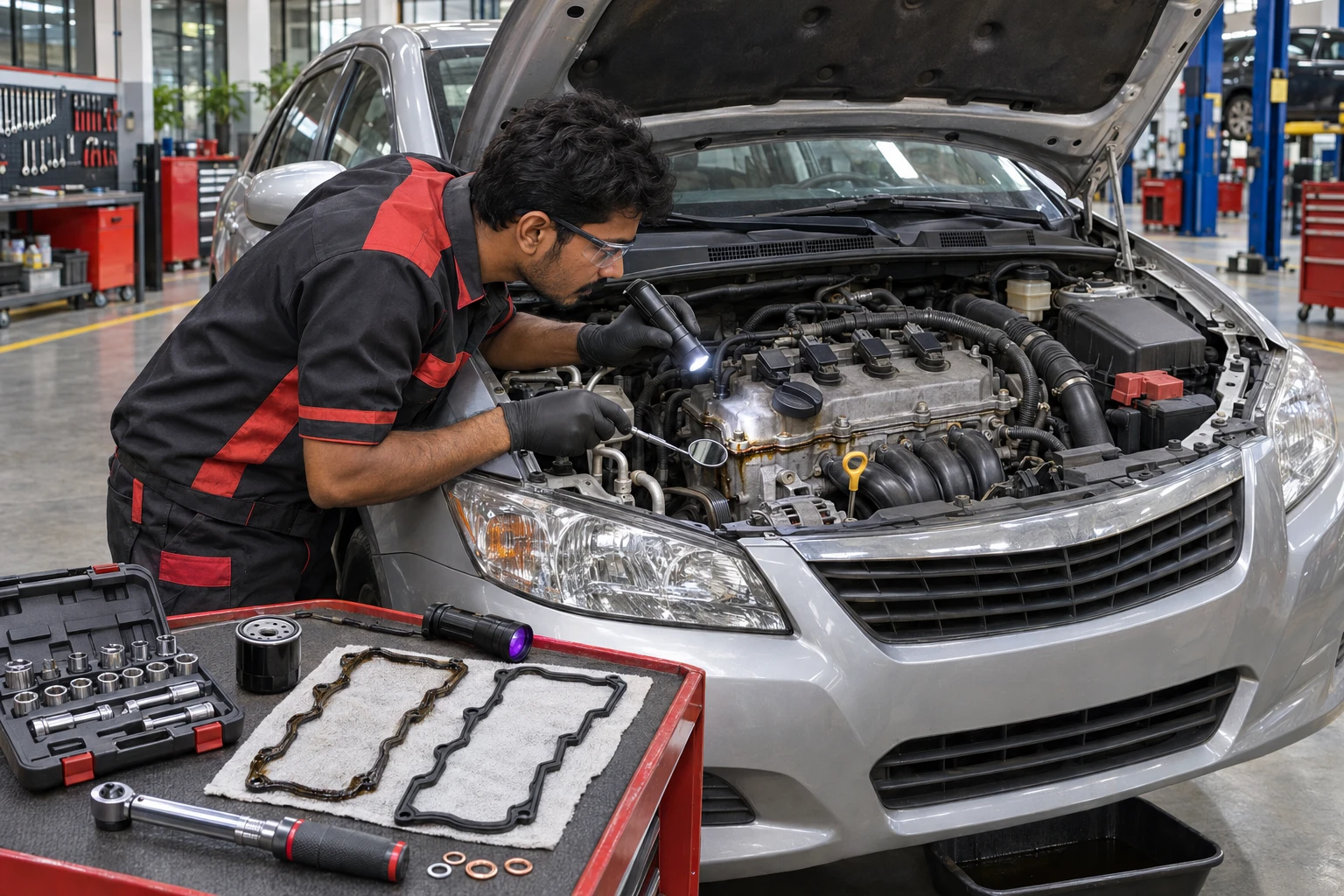
Where appropriate, compatible fluorescent leak detection dye and a UV inspection light may assist in identifying the source.
The general diagnostic process may include:
Initial visual inspection
Cleaning relevant external engine surfaces
Using approved leak detection dye where suitable
Operating the engine according to the diagnostic procedure
Inspecting suspected leakage areas with a compatible UV light
Identifying the original leak location
Confirming the repair requirement
UV dye testing is not necessary for every engine oil leak.
The method should be chosen according to the vehicle, leak severity, and manufacturer recommendations.
14. Engine Oil Leak Repair After Previous Servicing
Oil leaks can sometimes develop after maintenance if a sealing component or connection has not been installed correctly.
Our applicable inspection includes:
Recently replaced oil filter checks
Oil drain plug and washer inspection
Gasket seating assessment
Oil filler cap sealing inspection
Service-related oil residue identification
Oil pan sealing concerns
Relevant maintenance history review
Not every oil mark after a service indicates an active leak.
Oil spilled during maintenance may leave residue, but persistent fresh leakage requires investigation.
15. Hybrid Vehicle Engine Oil Leak Inspection
Hybrid vehicles equipped with gasoline engines also require engine oil for lubrication.
Although the gasoline engine may operate intermittently, oil seals, gaskets, and other engine components can still develop leaks.
Our applicable hybrid oil leak services include:
Hybrid gasoline engine exterior oil leak inspection
Valve cover gasket leakage assessment
Timing cover oil seepage investigation
Oil pan sealing inspection
Oil filter housing leak checks
Crankshaft seal-related diagnostics
Engine oil level and condition assessment
Compatible gasket and seal replacement recommendations
Common compatible hybrid models include:
Toyota Corolla Axio Hybrid
Toyota Prius
Toyota Aqua
Toyota Noah Hybrid
Toyota Voxy Hybrid
Honda Grace Hybrid
Honda Vezel Hybrid
Hybrid vehicles may start their gasoline engines automatically while in READY mode.
Manufacturer-specific procedures must be followed before inspecting or repairing engine components.
Common Signs of an Engine Oil Leak
Your vehicle may require an engine oil leakage inspection if you notice:
Oil stains beneath the parked vehicle
Frequent engine oil level reduction
Visible oil around the valve cover
Oil dripping from the bottom of the engine
Burning oil smell
Smoke from oil contacting hot engine components
Oil contamination around engine seals
Wet or oily areas near the oil filter
Oil residue around timing cover joints
Oil near the engine and transmission connection
Low engine oil level warnings
Fresh oil spots after engine servicing
Some leaks produce very little visible dripping because oil collects on engine components or protective underbody covers.
Engine Oil Leak vs Engine Oil Burning: What's the Difference?
A vehicle that loses engine oil may have an external leak, internal oil consumption, or both.
External Engine Oil Leak
Oil escapes from the engine through a damaged gasket, seal, housing, or connection.
Possible signs include:
Oil stains beneath the vehicle
Wet or oily engine components
Oil dripping from sealing joints
Burning smell when leaked oil contacts hot surfaces
Internal Engine Oil Consumption
Oil enters the combustion process or is consumed through another internal engine-related mechanism.
Possible causes include:
Worn piston rings
Valve stem seal problems
Crankcase ventilation faults
Certain turbocharger-related issues
Other engine mechanical conditions
Internal oil consumption may occur without any visible external oil leakage.
Why Proper Diagnosis Matters
Replacing engine gaskets will not correct internal oil consumption.
Similarly, investigating internal engine wear may be unnecessary when the actual problem is an external oil filter housing leak.
The correct repair depends on identifying how the oil is being lost.
What Causes Engine Oil Leaks?
Aging and Deteriorated Gaskets
Rubber and other gasket materials may deteriorate after prolonged exposure to heat, oil, and engine operation.
Worn Oil Seals
Crankshaft, camshaft, and other rotating shaft seals can wear or lose their sealing effectiveness.
Improper Component Installation
Incorrect tightening, damaged sealing surfaces, or unsuitable replacement components may create leaks.
Excessive Crankcase Pressure
Certain ventilation faults or engine mechanical conditions may contribute to pressure-related leakage.
Damaged Engine Components
Oil pans, covers, housings, or sealing surfaces can become damaged through impacts or improper repairs.
Incorrect Maintenance Procedures
An improperly installed oil filter, drain plug, or sealing washer may allow oil to escape.
Is It Safe to Drive With an Engine Oil Leak?
The risk depends on the severity and location of the leak.
A small seep may initially cause only minor oil residue.
However, a leak can become more serious or allow the oil level to fall below the engine's safe operating range.
A significant leak can cause:
Insufficient engine lubrication
Increased friction and wear
Engine overheating
Damage to internal engine components
Oil contamination of belts or other parts
Smoke or fire hazards if oil reaches hot exhaust components
Important: If the engine oil pressure warning light illuminates, stop as soon as it is safe and switch off the engine. Do not continue driving until the cause has been assessed.
If the vehicle is losing oil rapidly or oil is contacting hot exhaust components, arrange professional inspection or recovery rather than driving.
Engine Oil Leak Repair vs Gasket Replacement
Not every engine oil leak requires extensive engine disassembly.
When a Minor Repair May Be Suitable
A limited repair may be appropriate when the problem involves:
A damaged oil filter seal
A leaking oil drain plug washer
A serviceable oil pressure switch seal
An incorrectly seated external connection
A separately replaceable sealing component
When Gasket or Oil Seal Replacement Is Necessary
Component replacement may be recommended when:
A valve cover gasket has deteriorated.
A crankshaft oil seal is leaking.
An oil pan sealing joint has failed.
A timing cover requires resealing.
An oil filter housing gasket is damaged.
A sealing component cannot reliably maintain oil containment.
The appropriate method depends on the location of the leak, the vehicle's engine design, and the extent of component damage.
Should Engine Gaskets Be Replaced Together?
Not necessarily.
Replacing every engine gasket is usually unnecessary when a leak has been identified at one specific location.
The decision should consider:
Which gasket is actually leaking
The condition of accessible related seals
Manufacturer repair procedures
The amount of disassembly required
Parts availability
Repair cost and reliability
When a repair requires significant disassembly, inspecting associated sealing components may help determine whether additional preventive replacement is appropriate.
Our Engine Oil Leak Detection and Repair Process
Step 1: Initial Vehicle Assessment
We review the customer's complaints, visible oil stains, engine oil consumption, warning lights, and previous maintenance history.
Step 2: Engine Oil Level Inspection
The engine oil level and condition are checked using the appropriate vehicle-specific procedure.
Step 3: External Engine Inspection
Relevant gaskets, seals, oil filter connections, oil pan joints, and accessible engine surfaces are inspected.
Step 4: Leak Source Identification
Where necessary, engine surfaces may be cleaned or an approved leak detection method may be used to trace the source.
Step 5: Repair Recommendation
We explain which component appears responsible and whether gasket replacement, seal repair, housing replacement, or additional diagnostics are required.
Step 6: Approved Repair Work
The agreed repair is completed using compatible sealing components and manufacturer-specified procedures.
Step 7: Reassembly and Oil Level Verification
Relevant components are reassembled, and the engine oil level is checked or corrected as necessary.
Step 8: Final Leakage Assessment
The repaired area is inspected for continued leakage using appropriate engine operation and testing procedures.
Step 9: Follow-Up Recommendations
Where appropriate, further monitoring may be recommended if residual oil contamination or multiple possible leak sources were present.
Car Engine Oil Leak Repair for Popular Vehicle Brands
We provide applicable engine oil leak inspection and repair support for commonly driven vehicles in Bangladesh.
Toyota Engine Oil Leak Repair
Toyota Corolla
Toyota Corolla Axio
Toyota Premio
Toyota Allion
Toyota Prius
Toyota Aqua
Toyota Noah
Toyota Voxy
Honda Engine Oil Leak Repair
Honda Civic
Honda Grace
Honda Fit
Honda Vezel
Honda City
Nissan Engine Oil Leak Repair
Nissan X-Trail
Nissan Note
Nissan Serena
Nissan Sunny
Mitsubishi Engine Oil Leak Repair
Mitsubishi Outlander
Mitsubishi Lancer
Mitsubishi Pajero
Hyundai Engine Oil Leak Repair
Hyundai Tucson
Hyundai Elantra
Hyundai Sonata
Gasket design, oil seal location, engine configuration, and repair procedures vary according to the exact vehicle model, engine code, production year, and trim level.
Why Choose Rinors Motors?
Experience in automotive maintenance and engine repair
Engine oil leakage diagnostic support
Valve cover gasket leak assessment
Oil pan and timing cover leakage investigation
Crankshaft and camshaft oil seal inspection
Oil filter housing and drain plug troubleshooting
Engine oil loss and lubrication system assessment
Japanese and hybrid vehicle maintenance assistance
Vehicle-specific gasket and seal identification
Inspection-based repair recommendations
Automotive replacement parts and service support
How to Prevent Engine Oil Leaks
Although some gasket and seal deterioration occurs naturally with age, appropriate maintenance can help identify problems early.
Recommended practices include:
Use engine oil that meets the manufacturer's specifications.
Follow the recommended engine oil replacement schedule.
Check engine oil levels according to vehicle instructions.
Inspect unusual oil stains under the vehicle.
Investigate burning oil smells promptly.
Replace damaged gaskets or seals when necessary.
Use compatible oil filters and sealing washers.
Avoid overtightening drain plugs and engine fasteners.
Have crankcase ventilation problems inspected.
Address visible engine oil leakage before it becomes severe.
Keep records of engine maintenance and repairs.
Regular inspection can help reduce the risk of operating an engine with insufficient oil.
Frequently Asked Questions
What Are the Most Common Causes of Car Engine Oil Leaks?
Common causes include deteriorated valve cover gaskets, leaking oil pan seals, worn crankshaft or camshaft seals, damaged oil filter housing gaskets, and oil drain plug sealing problems.
The exact cause must be confirmed through inspection.
Why Is My Car Leaking Oil When Parked?
Engine oil may drip from a leaking gasket, seal, oil pan, or filter connection after the vehicle is parked.
Oil may also collect on engine surfaces during driving and drip later.
Can a Valve Cover Gasket Cause an Oil Leak?
Yes. A deteriorated valve cover gasket can allow oil to escape around the upper engine sealing joint.
Can a Bad Oil Filter Cause an Oil Leak?
Yes. An incorrectly installed, damaged, or incompatible oil filter may leak around its sealing connection.
Can an Engine Oil Leak Cause a Burning Smell?
Yes. Oil that reaches hot engine or exhaust surfaces may produce a burning smell or smoke.
This should be inspected promptly because of potential fire hazards.
Can an Engine Oil Leak Cause Overheating?
Severe oil loss may reduce lubrication and increase engine friction and heat.
However, engine overheating can also result from cooling system or other mechanical problems.
How Do I Know If My Rear Main Seal Is Leaking?
Oil near the engine and transmission connection may raise suspicion of a rear crankshaft seal leak.
However, oil traveling from upper engine components or a transmission fluid leak may produce a similar appearance.
Proper diagnosis is required.
Can I Drive With a Small Engine Oil Leak?
A small seep may not cause immediate engine damage, but its severity can change and the oil level must remain adequate.
Professional inspection is recommended to determine whether driving is safe.
Do not continue driving if the oil pressure warning appears or oil loss becomes significant.
Why Does My Engine Oil Keep Getting Low Without Visible Leaks?
Possible causes include internal engine oil consumption, hidden external leakage, or other lubrication system conditions.
The engine should be inspected to distinguish oil leakage from oil consumption.
Does Engine Oil Leak Repair Require Engine Removal?
Not always.
Some repairs involve accessible gaskets or oil filter connections.
Other repairs, such as certain rear crankshaft seal replacements, may require extensive disassembly.
How Much Does Engine Oil Leak Repair Cost?
Repair cost depends on the leak location, vehicle model, replacement components, labor requirements, and whether additional engine parts need attention.
A simple sealing washer replacement is generally much less complex than a rear crankshaft seal repair.
Can an Oil Leak Damage the Alternator or Drive Belt?
Yes. Oil contamination can affect certain rubber belts and electrical components, depending on the location and severity of leakage.
Can an Oil Leak Cause a Check Engine Light?
Some faults associated with oil leakage or oil pressure control may affect engine management and trigger warning lights.
However, many external oil leaks do not directly trigger the Check Engine Light.
Do Hybrid Cars Experience Engine Oil Leaks?
Yes. Hybrid vehicles with gasoline engines use oil seals, gaskets, and engine lubrication systems that can develop leaks.
Does a Timing Cover Oil Leak Mean the Timing Chain Is Damaged?
Not necessarily.
A timing cover oil leak may involve the cover's gasket or sealant without any internal timing chain damage.
Further inspection is necessary if timing-related symptoms are also present.
Book Your Car Engine Oil Leak Detection and Repair Service
If your vehicle is leaving oil stains, losing engine oil, producing a burning oil smell, or showing visible leakage around the engine, contact Rinors Motors for professional engine oil leak detection and repair assistance in Bangladesh.
We help identify engine oil leak sources, inspect gaskets and seals, assess lubrication-related concerns, and recommend appropriate repair or replacement solutions based on your vehicle's requirements.
Protect your engine from unnecessary oil loss, maintain proper lubrication, and reduce the risk of costly mechanical damage with professional engine oil leak inspection and repair.