Engine Diagnostics & Repair
Car Engine Overheating Diagnosis And Repair
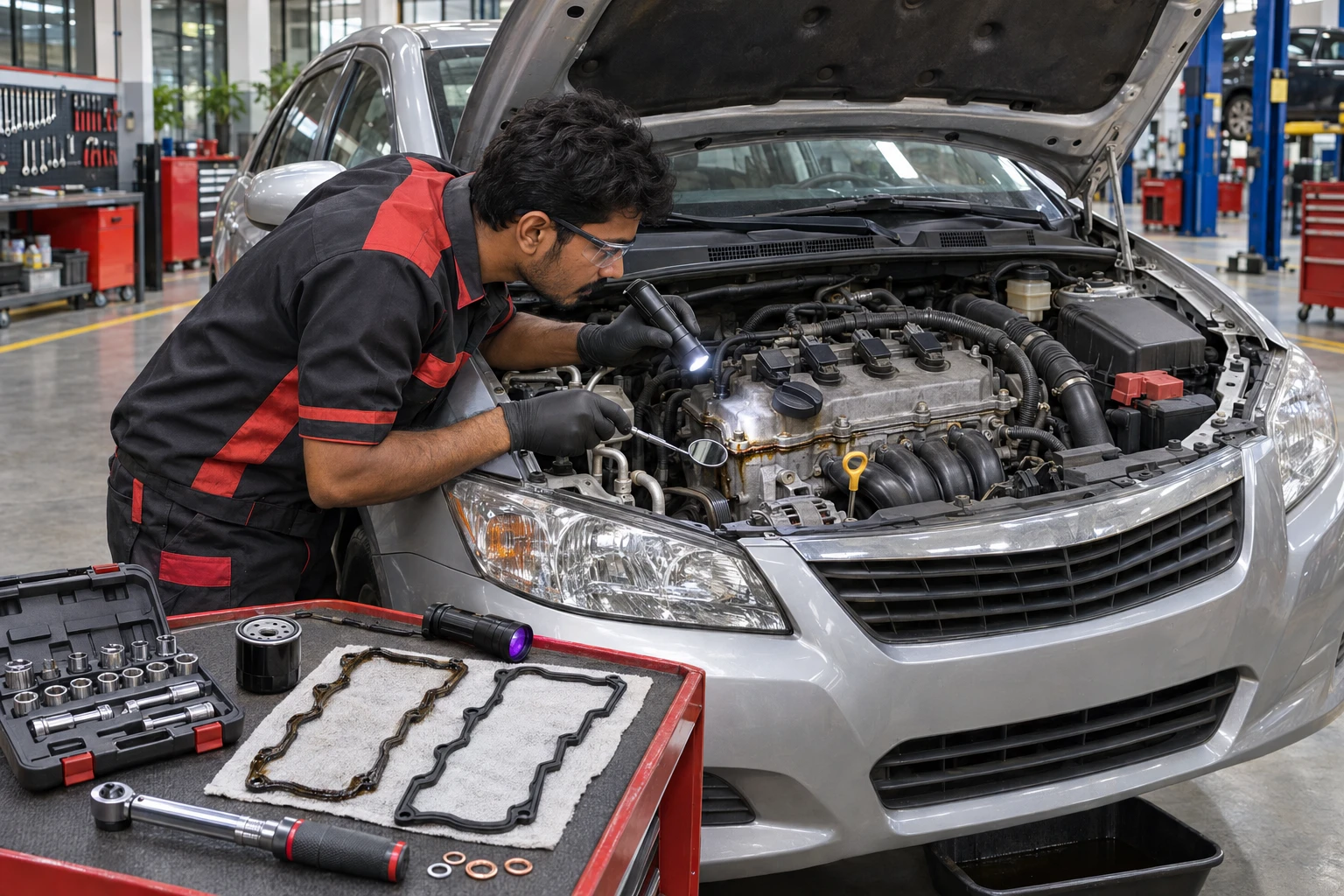
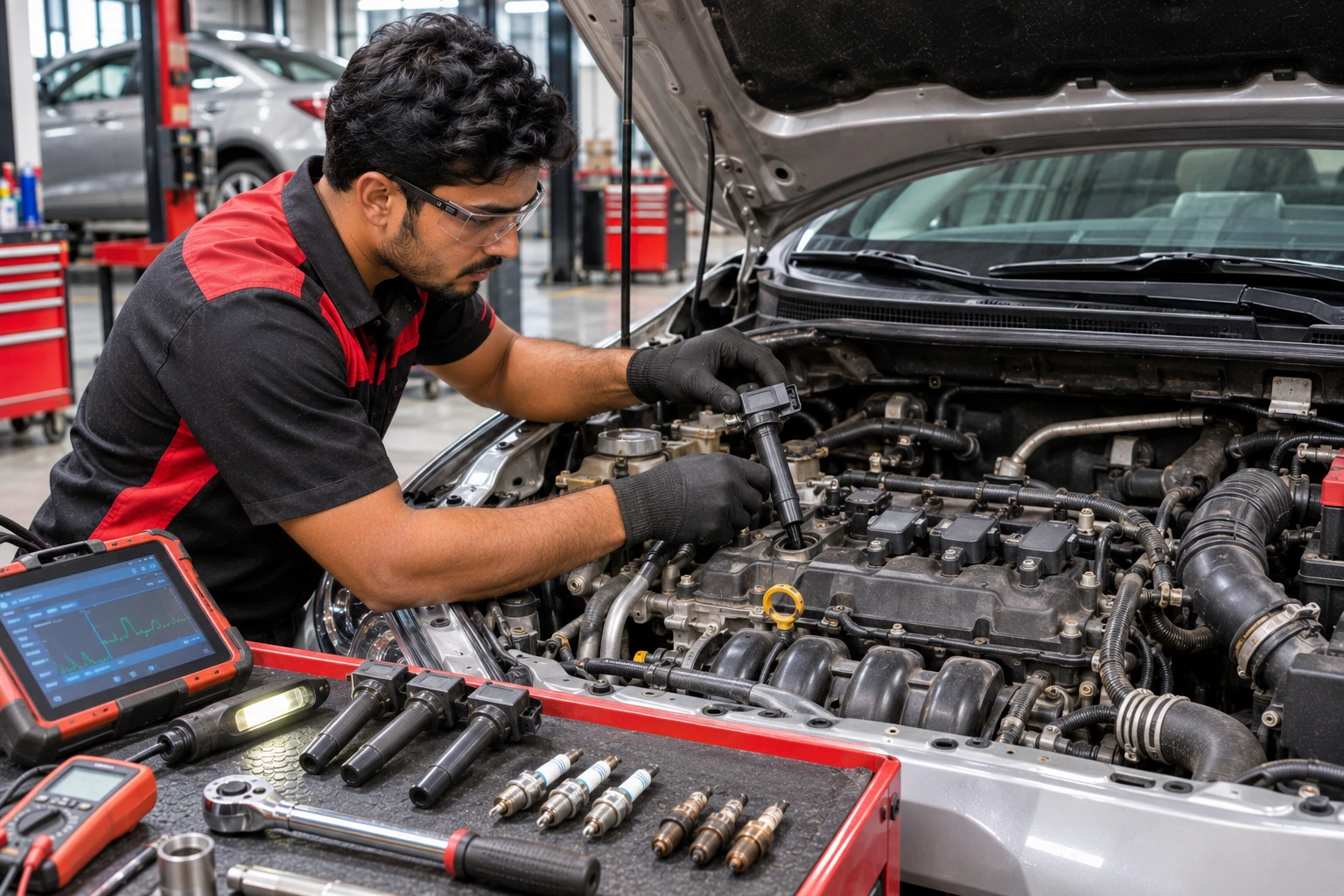
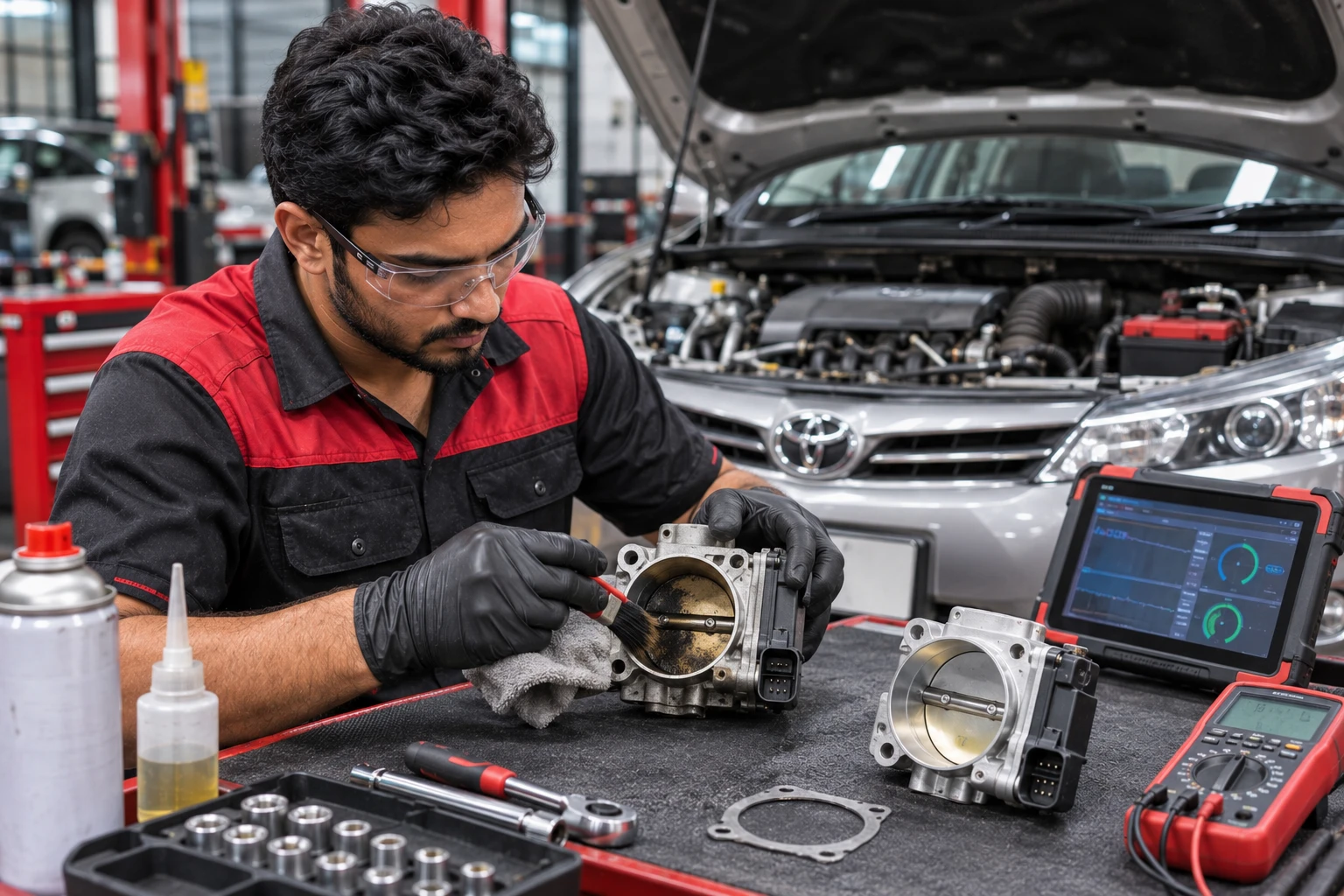
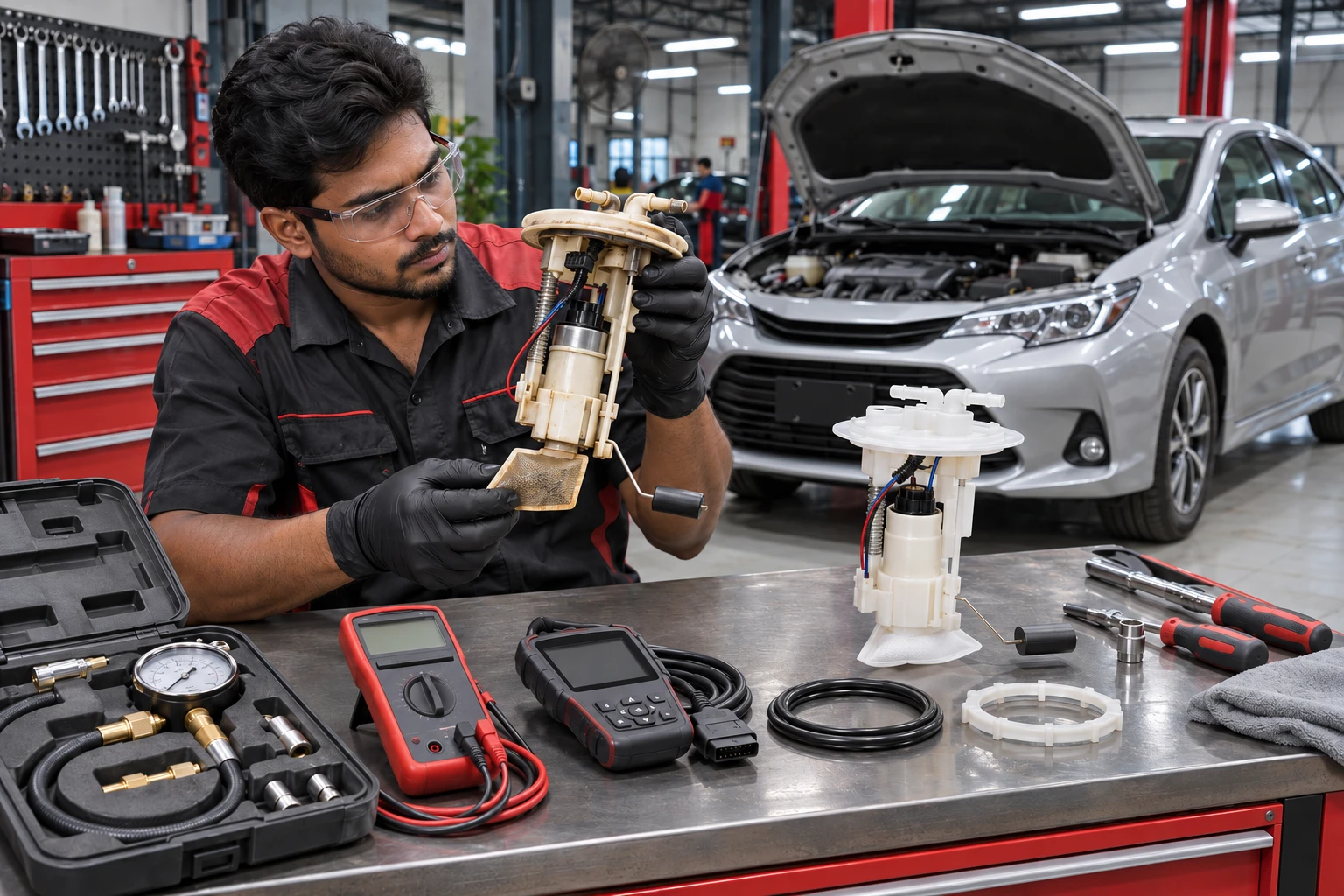
Professional car engine overheating diagnosis and repair in Bangladesh. Rinors Motors investigates high engine temperature warnings, coolant loss, thermostat failures, water pump problems, cooling fan faults, head gasket concerns, and temperature sensor malfunctions for Toyota, Honda, Nissan, hybrid, and other vehicles.
About this service
Professional Car Engine Overheating Diagnosis and Repair in Bangladesh
Is your car overheating in traffic, showing a high engine temperature warning, losing coolant, or becoming unusually hot during long drives?
At Rinors Motors, we provide professional car engine overheating diagnostics, high-temperature warning investigation, cooling performance assessment, and engine-related repair services for Japanese, hybrid, and other commonly driven vehicles in Bangladesh.
Engine overheating occurs when the engine's operating temperature rises beyond its intended range.
Although radiator problems are a common cause, engine overheating can also result from thermostat failure, water pump malfunction, cooling fan problems, coolant circulation restrictions, combustion gas leakage, temperature sensor faults, or other mechanical conditions.
Bangladesh's hot climate, traffic congestion, and demanding urban driving conditions make proper engine temperature management particularly important.
Our service focuses on identifying the underlying cause of engine overheating, evaluating possible engine damage, and recommending appropriate repairs rather than replacing cooling system components without diagnosis.
Our Car Engine Overheating Diagnosis and Repair Services
1. Complete Engine Overheating Diagnostics
Engine overheating can develop suddenly or gradually.
Some vehicles overheat while idling, while others experience temperature problems during highway driving or under increased engine load.
Our diagnostic services include:
Engine temperature warning investigation
Engine overheating symptom assessment
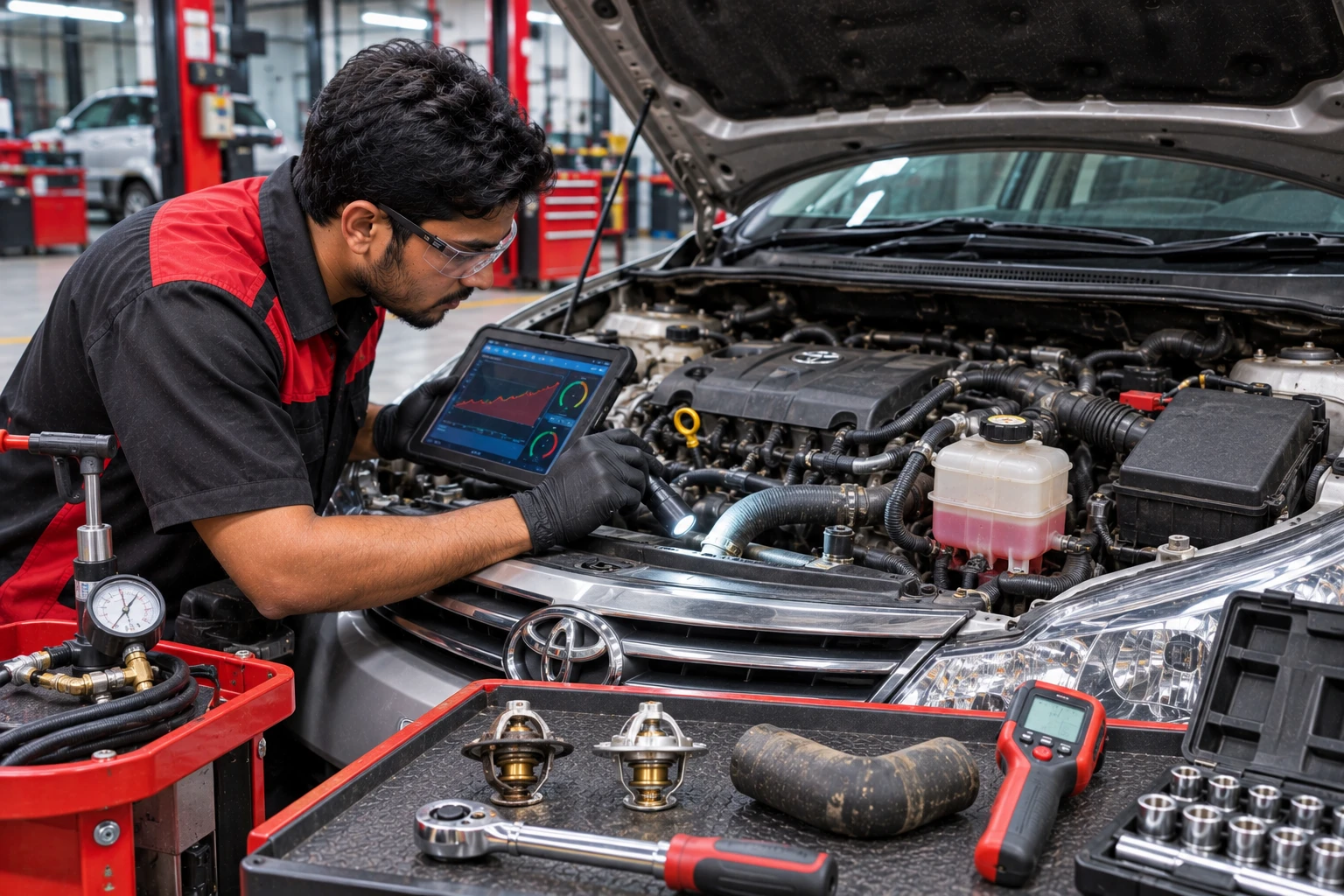
Cooling system operation checks
Coolant circulation evaluation
Radiator and cooling fan inspection
Thermostat operation assessment
Water pump performance investigation
Engine coolant temperature sensor diagnostics
Combustion gas leakage assessment where appropriate
Relevant engine fault code scanning
Overheating-related engine damage evaluation
Our diagnostic process helps distinguish cooling system faults from mechanical engine problems and inaccurate temperature readings.
2. Engine Overheating in Traffic Diagnosis
A car that overheats in traffic but maintains normal temperature while moving may have a problem related to low-speed cooling performance.
Possible causes include:
Cooling fan malfunction
Cooling fan relay or control problems
Restricted radiator airflow
Low coolant level
Thermostat problems
Other cooling system inefficiencies
Our applicable services include:
Cooling fan operation testing
Fan electrical circuit inspection
Radiator airflow assessment
Coolant temperature monitoring
Engine idle temperature investigation
Temperature sensor data analysis
Relevant cooling system diagnostic checks
Low-speed overheating should be investigated before it causes engine damage.
3. Engine Overheating During Highway Driving
Some vehicles maintain normal temperatures in city traffic but begin overheating at higher speeds or under sustained engine load.
Possible contributing factors include:
Insufficient coolant circulation
Restricted radiator performance
Water pump problems
Thermostat malfunction
Combustion gas leakage into the cooling system
Other engine or cooling system faults
Our diagnostic approach evaluates the vehicle's symptoms, cooling system performance, and engine operating conditions to identify the likely cause.
The underlying issue should be confirmed through appropriate testing rather than assumed from driving speed alone.
4. Coolant Loss and Repeated Overheating Investigation
Repeated coolant loss can reduce the cooling system's ability to regulate engine temperature.
Coolant may escape through external leaks or, in certain cases, enter areas where it should not be present.
Our applicable services include:
Coolant level assessment
Cooling system pressure testing
External coolant leakage inspection
Radiator hose connection checks
Coolant reservoir inspection
Water pump leakage assessment
Coolant circulation investigation
Internal coolant loss-related diagnostic assessment
Repeatedly topping up coolant without identifying the cause can allow an underlying problem to become more serious.
5. Thermostat Failure and Engine Temperature Problems
The thermostat regulates coolant flow according to engine operating temperature.
A thermostat stuck closed may restrict coolant flow and contribute to overheating.
A thermostat stuck open may cause slow engine warm-up or lower-than-expected operating temperatures.
Our services include:
Thermostat operation assessment
Engine temperature behavior analysis
Thermostat housing inspection
Coolant flow-related diagnostics
Thermostat leakage checks
Compatible thermostat replacement assessment
Post-replacement temperature verification
An overheating engine does not automatically mean the thermostat is defective.
Testing should determine whether thermostat operation is contributing to the problem.
6. Water Pump and Coolant Circulation Diagnostics
The water pump circulates coolant through the engine and cooling system.
A malfunctioning pump or restricted coolant flow can cause abnormal engine temperatures.
Our applicable services include:
Water pump operation assessment
Coolant circulation checks
Water pump leakage inspection
Pump bearing noise investigation
Water pump drive system inspection
Electrically driven coolant pump diagnostics where supported
Water pump replacement recommendations
Some engines use belt-driven mechanical water pumps, while others use electrically operated pumps.
The correct testing procedure depends on the engine design.
7. Radiator Cooling Fan and Fan Control Diagnostics
Cooling fans help maintain airflow through the radiator, especially while the vehicle is stationary or moving slowly.
Our diagnostic support includes:
Electric cooling fan motor testing
Cooling fan relay and fuse checks
Cooling fan wiring assessment
Fan control module diagnostics where applicable
Temperature-dependent fan operation verification
Relevant engine control system checks
Cooling fan replacement assessment
Some vehicles operate radiator fans through electronic control modules or variable-speed systems.
Fan testing must follow appropriate safety procedures because electric fans can start automatically.
8. Engine Coolant Temperature Sensor Diagnostics
The Engine Coolant Temperature (ECT) sensor provides temperature information to the engine management system.
Incorrect temperature information may affect engine operating strategies, fan control, or warning indications.
Our services include:
Coolant temperature sensor data inspection
Sensor-related fault code scanning
Temperature reading plausibility checks
Sensor wiring and connector inspection
Engine temperature gauge-related troubleshooting
Sensor replacement assessment
An inaccurate temperature reading should be distinguished from genuine engine overheating.
A temperature sensor fault does not automatically mean that the engine is physically overheating.
9. Head Gasket Failure and Overheating Diagnosis
A damaged cylinder head gasket may allow combustion gases, coolant, or engine oil to pass between areas that should remain sealed.
Certain head gasket failures can contribute to overheating, coolant loss, and abnormal cooling system pressure.
Our applicable diagnostic services include:
Head gasket-related symptom assessment
Unexplained coolant loss investigation
Abnormal cooling system pressure assessment
Combustion gas leakage testing where supported
Engine oil and coolant contamination inspection
Cylinder compression-related diagnostic recommendations
Engine performance and misfire evaluation
Cylinder head repair requirement assessment
Potential signs include persistent overheating, unexplained coolant loss, cooling system overpressure, or combustion-related symptoms.
Important: White exhaust vapor, coolant loss, or overheating does not automatically confirm head gasket failure. These symptoms require appropriate diagnostic confirmation.
Head gasket replacement is a significant engine repair and should only be recommended after the fault has been properly assessed.
10. Engine Overheating and Cylinder Head Damage Assessment
Severe overheating may affect engine components beyond the cooling system.
Depending on the temperature reached, operating duration, and engine design, possible damage may involve:
Cylinder head distortion
Head gasket deterioration
Sealing surface damage
Internal component wear
Engine oil degradation
Cooling system component damage
Our applicable service support includes:
Post-overheating engine condition assessment
Cylinder head-related diagnostic evaluation
Compression testing recommendations
Engine oil condition inspection
Coolant contamination investigation
Further engine disassembly assessment where necessary
Extensive internal engine damage may require specialized mechanical inspection or additional repair work.
11. Air Trapped Inside the Cooling System
Air trapped in the cooling system may interfere with proper coolant circulation or temperature regulation.
Air pockets can sometimes develop after coolant replacement or cooling system repairs if the correct bleeding procedure is not followed.
Our services include:
Cooling system air pocket assessment
Coolant circulation evaluation
Cooling system bleeding requirements
Manufacturer-specific air removal procedures
Coolant level verification
Post-service engine temperature monitoring
Some modern cooling systems require vacuum filling equipment, dedicated bleeding procedures, or electronically controlled pump activation.
12. Radiator Cap and Cooling System Pressure Problems
Cooling systems are designed to operate within specified pressure ranges.
A malfunctioning pressure cap or damaged expansion reservoir can contribute to coolant loss or abnormal cooling system behavior.
Our applicable services include:
Radiator pressure cap assessment
Coolant reservoir cap inspection
Cooling system pressure-related diagnostics
Coolant overflow investigation
Coolant expansion behavior assessment
Pressure cap replacement recommendations
A pressure cap should match the vehicle's specified requirements.
A cap with an incorrect pressure rating may create additional cooling system problems.
13. Engine Oil and Lubrication-Related Overheating Assessment
Engine oil helps lubricate moving components and carries away some engine heat.
Severe lubrication problems can increase friction and mechanical temperatures.
Our relevant diagnostic services include:
Engine oil level inspection
Oil condition assessment
Engine oil pressure-related warning investigation
Oil leakage assessment
Relevant lubrication system diagnostics
Engine mechanical fault evaluation
An oil pressure warning is a separate serious concern that requires immediate attention.
Low engine oil and engine overheating may occur together, but one should not automatically be assumed to be the cause of the other.
14. Air Conditioning and Engine Overheating Investigation
Some customers notice that their engine temperature rises when the air conditioner is operating.
Air conditioning adds mechanical or electrical load and may increase cooling system demand.
Possible contributing factors include:
Cooling fan performance problems
Restricted airflow through heat exchangers
Cooling system inefficiency
Engine operating condition problems
Air conditioning-related mechanical faults
Our diagnostic support includes:
Engine temperature behavior assessment with A/C operation
Radiator and condenser airflow inspection
Cooling fan control checks
Relevant engine load-related diagnostics
Cooling system performance evaluation
A properly functioning cooling system should manage normal operating loads within the vehicle manufacturer's intended conditions.
15. Engine Temperature Warning and Check Engine Light Diagnostics
Some vehicles display a dedicated high-temperature warning, while others provide temperature gauges, messages, or diagnostic fault codes.
Our applicable services include:
Engine temperature warning investigation
Relevant OBD-II scanning
ECT sensor-related fault assessment
Thermostat performance-related diagnostic checks
Cooling fan control fault investigation
Engine operating data review
Temperature reading verification
Examples of potentially relevant diagnostic trouble codes include:
P0115: Engine Coolant Temperature Sensor Circuit Malfunction
P0116: Engine Coolant Temperature Circuit Range/Performance
P0117: Engine Coolant Temperature Circuit Low
P0118: Engine Coolant Temperature Circuit High
P0128: Coolant Thermostat — Coolant Temperature Below Thermostat Regulating Temperature
P0217: Engine Coolant Over Temperature Condition
These are general diagnostic code descriptions. Their applicability and interpretation depend on the vehicle.
A fault code does not necessarily identify the exact defective component.
16. Hybrid Vehicle Engine Overheating Diagnostics
Hybrid vehicles equipped with gasoline engines also require proper engine temperature management.
Many hybrid models have separate cooling circuits for the gasoline engine and hybrid power electronics.
These circuits serve different purposes and may use different components or diagnostic procedures.
Our applicable hybrid overheating services include:
Hybrid gasoline engine overheating assessment
Engine coolant temperature monitoring
Hybrid engine cooling system inspection
Coolant pump operation checks
Temperature-related fault code scanning
Engine cooling fan-related diagnostics
Hybrid cooling circuit fault assessment where supported
Compatible vehicle examples may include:
Toyota Corolla Axio Hybrid
Toyota Prius
Toyota Aqua
Toyota Noah Hybrid
Toyota Voxy Hybrid
Honda Grace Hybrid
Honda Vezel Hybrid
Hybrid vehicles may automatically start the gasoline engine when operating in READY mode.
High-voltage components and hybrid-specific cooling circuits require appropriate specialist training and manufacturer-approved safety procedures.
Common Signs of Car Engine Overheating
Your vehicle may require overheating diagnostics if you notice:
Engine temperature warning light
Temperature gauge rising above normal
Engine temperature increasing during traffic
Overheating during highway driving
Repeated coolant loss
Steam coming from the engine compartment
Coolant overflowing from the reservoir
Unusual engine performance when hot
Engine temperature fluctuating abnormally
Cooling fan not operating as expected
Burning or unusual odors from the engine compartment
Reduced engine power accompanied by high-temperature warnings
These symptoms may have several possible causes.
A proper diagnostic inspection helps determine whether the problem originates from the cooling system, engine, sensors, or related mechanical components.
What Should You Do If Your Car Engine Overheats?
Engine overheating should be taken seriously because continued operation may cause extensive damage.
Step 1: Stop Driving Safely
If your vehicle displays a high-temperature warning, pull over and stop as soon as it is safe.
Step 2: Switch Off the Engine
Turn off the engine if it is overheating. Avoid unnecessary continued operation.
Step 3: Allow the Engine to Cool
Do not immediately open the radiator cap, pressurized coolant reservoir, or hot cooling system connections.
Hot coolant can cause severe burns.
Step 4: Avoid Repeated Engine Starting
If the vehicle has overheated severely, restarting may increase the risk of damage.
Step 5: Arrange Professional Inspection
Have the vehicle inspected to identify the cause before returning it to normal use.
If overheating was severe or the engine cannot maintain safe operating temperature, recovery or towing may be more appropriate than driving.
Why Does My Car Overheat in Traffic but Not on the Highway?
A vehicle that overheats while stationary or moving slowly may not be receiving sufficient radiator airflow.
Possible causes include:
Cooling fan failure
Fan control problems
Restricted airflow
Inadequate cooling system performance
Low coolant level
At higher speeds, natural airflow through the radiator may improve cooling.
However, this pattern does not conclusively identify the fault. Proper testing is required.
Why Does My Car Overheat on the Highway but Not in Traffic?
Overheating during sustained driving may indicate that the cooling system cannot manage increased engine heat.
Possible factors include:
Coolant circulation restrictions
Thermostat malfunction
Radiator performance issues
Water pump problems
Combustion gas leakage
Other engine-related faults
The actual cause should be determined through appropriate diagnosis.
Engine Overheating vs Faulty Temperature Sensor
Not every temperature warning reflects a genuine high-temperature condition.
Genuine Engine Overheating
The engine coolant or other components reach temperatures beyond the intended operating range.
This may result from a mechanical or cooling system fault.
Incorrect Temperature Reading
A defective sensor, wiring problem, or instrument-related fault may produce an inaccurate temperature reading.
Why Correct Diagnosis Matters
Replacing cooling components will not necessarily resolve an inaccurate temperature signal.
Similarly, replacing a sensor will not correct genuine overheating caused by inadequate coolant circulation.
The engine's actual operating condition must be evaluated.
Can Engine Overheating Damage the Head Gasket?
Yes.
Severe or repeated overheating can contribute to cylinder head and head gasket damage.
Depending on the engine, excessive heat can cause thermal distortion or sealing problems.
A damaged head gasket may then contribute to further overheating or coolant loss.
However, not every overheating incident results in head gasket failure.
The severity of the incident and engine condition should be evaluated before recommending major repair.
Can a Bad Thermostat Cause Engine Overheating?
Yes.
A thermostat stuck closed or failing to open correctly may restrict coolant circulation.
However, overheating can also occur due to other cooling system or engine faults.
Diagnosis should confirm thermostat malfunction before replacement.
Can Low Coolant Cause Engine Overheating?
Yes.
Insufficient coolant may reduce heat transfer and allow engine temperatures to rise.
However, coolant loss should not be treated as a normal recurring condition.
A cooling system that repeatedly requires coolant top-ups should be inspected for leaks or other faults.
Why Does My Engine Overheat After Coolant Replacement?
Potential causes include:
Trapped air in the cooling system
Incorrect coolant filling procedure
Coolant level problems
A pre-existing thermostat or circulation fault
An unresolved cooling system leak
Other engine cooling problems
The cooling system should be inspected using the manufacturer's specified procedures.
Engine Overheating Repair vs Radiator Replacement
Engine overheating does not automatically mean the radiator needs replacing.
When Radiator Repair or Replacement May Be Necessary
Radiator work may be appropriate when testing identifies:
Significant coolant leakage
Damaged radiator construction
Severe airflow obstruction
Internal restrictions affecting cooling
Other confirmed radiator faults
When Other Repairs May Be Necessary
Different diagnosed problems may require:
Thermostat replacement
Water pump repair
Cooling fan replacement
Sensor or wiring repair
Coolant hose repair
Cooling system air bleeding
Engine gasket or mechanical repairs
Other appropriate maintenance
The purpose of overheating diagnostics is to identify the correct repair rather than replace multiple components based on assumptions.
Our Car Engine Overheating Diagnosis and Repair Process
Step 1: Initial Vehicle Assessment
We review when the overheating occurs, including traffic conditions, highway driving, air conditioning use, and previous repair history.
Step 2: Engine Temperature Evaluation
Relevant warning indications and temperature data are assessed using suitable diagnostic procedures.
Step 3: Cooling System Inspection
The coolant level, radiator, reservoir, hoses, cooling fans, and accessible components are inspected.
Step 4: Diagnostic Testing
Where appropriate, pressure testing, temperature data analysis, electrical checks, and coolant circulation assessment are performed.
Step 5: Mechanical Engine Assessment
If symptoms indicate possible internal engine problems, appropriate head gasket, combustion leakage, or mechanical diagnostic tests may be recommended.
Step 6: Fault Identification
The results are reviewed to identify the likely source of overheating.
Step 7: Repair Recommendation
We explain whether component replacement, electrical repair, cooling system maintenance, or further mechanical investigation is appropriate.
Step 8: Approved Repair
The agreed repair is completed using suitable components and manufacturer-specific procedures.
Step 9: Final Verification
The vehicle's temperature behavior, relevant cooling system operation, coolant level, and original symptoms are reassessed.
Engine Overheating Services for Popular Car Brands
Rinors Motors provides relevant overheating diagnostic and repair support for vehicles commonly driven in Bangladesh.
Toyota Engine Overheating Services
Toyota Corolla
Toyota Corolla Axio
Toyota Premio
Toyota Allion
Toyota Prius
Toyota Aqua
Toyota Noah
Toyota Voxy
Honda Engine Overheating Services
Honda Civic
Honda Grace
Honda Fit
Honda Vezel
Honda City
Nissan Engine Overheating Services
Nissan X-Trail
Nissan Note
Nissan Serena
Nissan Sunny
Mitsubishi Engine Overheating Services
Mitsubishi Outlander
Mitsubishi Lancer
Mitsubishi Pajero
Hyundai Engine Overheating Services
Hyundai Tucson
Hyundai Elantra
Hyundai Sonata
Cooling system configuration, temperature control strategies, water pump design, and repair procedures vary by engine, model, trim level, and production year.
Why Choose Rinors Motors?
Experience in automotive maintenance and engine repair
Engine overheating diagnostic support
High-temperature warning investigation
Coolant circulation problem assessment
Thermostat and water pump troubleshooting
Cooling fan and temperature sensor diagnostics
Head gasket-related symptom investigation
Japanese and hybrid vehicle servicing assistance
Vehicle-specific repair recommendations
Automotive replacement parts and maintenance support
How to Help Prevent Engine Overheating
Appropriate engine maintenance can reduce the likelihood of certain overheating problems.
Recommended practices include:
Follow the manufacturer's coolant maintenance schedule.
Use the specified coolant formulation.
Check coolant levels using the correct procedure.
Investigate coolant leaks promptly.
Keep the cooling system in suitable condition.
Address cooling fan problems.
Maintain the correct engine oil level.
Investigate engine temperature warnings.
Avoid ignoring repeated coolant loss.
Have the engine inspected after severe overheating.
Follow manufacturer-recommended maintenance procedures.
Preventive maintenance can reduce certain risks but cannot eliminate every possible mechanical failure.
Frequently Asked Questions
Why Is My Car Engine Overheating?
Common causes include low coolant, coolant leakage, thermostat problems, cooling fan malfunction, water pump issues, radiator restrictions, and certain engine mechanical faults.
Proper testing is necessary to determine the cause.
Why Does My Car Overheat When the AC Is On?
Air conditioning increases engine or electrical load and may increase cooling system demand.
Cooling fan issues, airflow restrictions, and other cooling system problems can become more noticeable when the AC is operating.
Can a Bad Water Pump Cause Overheating?
Yes. A malfunctioning water pump may reduce coolant circulation and cause abnormal engine temperatures.
Can a Blown Head Gasket Cause Overheating?
Yes. Some head gasket failures allow combustion gases to enter the cooling system or cause coolant loss.
However, overheating alone does not confirm head gasket failure.
Is It Safe to Drive an Overheating Car?
No. Continued driving while the engine is overheating can cause serious mechanical damage.
Stop safely, switch off the engine, and arrange inspection.
Can an Overheated Engine Be Repaired?
Many overheating-related problems can be repaired, depending on the cause and whether internal engine damage has occurred.
Severe overheating may require extensive mechanical repairs.
Does Engine Overheating Always Mean the Radiator Is Bad?
No. Overheating can result from several different cooling system, electrical, or engine mechanical faults.
Can a Temperature Sensor Cause an Overheating Warning?
Yes. A sensor or electrical circuit fault may produce an inaccurate temperature indication.
Actual engine temperature should be assessed before determining the repair.
Why Does My Coolant Keep Disappearing?
Coolant may be escaping through a hose, radiator, reservoir, water pump, gasket, or another leak point.
Certain internal engine problems may also cause coolant loss.
Can Low Engine Oil Cause Overheating?
Severe oil loss or lubrication problems can increase engine friction and temperatures.
However, low oil and coolant overheating symptoms must be evaluated separately.
Does Engine Overheating Affect Fuel Economy?
Overheating-related faults and abnormal engine operating conditions can affect performance and efficiency.
The effect depends on the underlying problem.
Can I Add Water to the Radiator When the Engine Is Hot?
Do not open a hot pressurized radiator or coolant reservoir. Hot coolant can cause serious burns.
Allow the system to cool and follow manufacturer guidance. The correct coolant mixture is preferable for normal service.
Do Hybrid Cars Experience Engine Overheating?
Yes. Hybrid vehicles equipped with gasoline engines can experience overheating and cooling system faults.
Some hybrid vehicles also have separate cooling circuits for power electronics.
Why Does My Engine Overheat After Replacing the Thermostat?
Possible causes include trapped air, coolant circulation problems, incorrect installation, an unsuitable replacement component, or another unresolved fault.
Further inspection is necessary.
Can Overheating Damage the Engine Permanently?
Severe overheating can damage cylinder heads, gaskets, pistons, and other internal components.
The extent of damage depends on the temperature, duration, engine design, and operating conditions.
Book Your Car Engine Overheating Diagnosis and Repair Service
If your car is overheating in traffic, displaying a high engine temperature warning, repeatedly losing coolant, or showing abnormal engine temperature behavior, contact Rinors Motors for professional engine overheating diagnostics and repair assistance in Bangladesh.
We help investigate cooling performance problems, temperature control faults, coolant circulation issues, and possible engine mechanical damage to identify appropriate repair solutions.
Protect your engine from excessive heat and reduce the risk of costly mechanical damage through accurate overheating diagnostics and timely repairs.