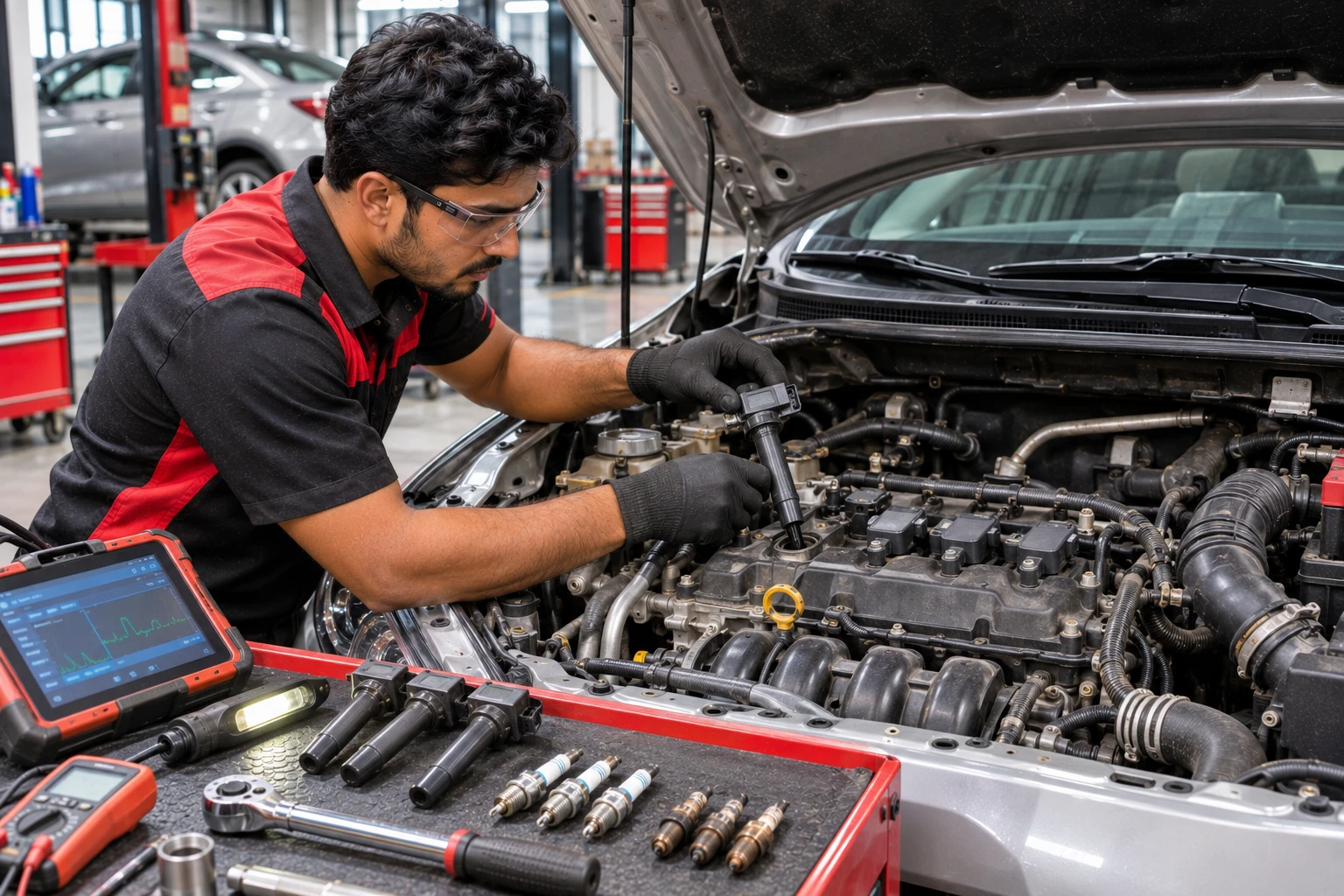
Engine Ignition Services
Car Spark Plug And Ignition Coil Replacement
Professional car spark plug and ignition coil replacement in Bangladesh. Rinors Motors provides spark plug inspection, ignition coil diagnostics, engine misfire troubleshooting, coil-on-plug replacement, spark plug gap and specification checks, and ignition system maintenance for Toyota, Honda, Nissan, hybrid, and other gasoline vehicles.
About this service
Professional Car Spark Plug and Ignition Coil Replacement in Bangladesh
Is your car experiencing engine misfires, rough idling, difficulty starting, weak acceleration, or an illuminated Check Engine Light?
At Rinors Motors, we provide car spark plug inspection, ignition coil diagnostics, spark plug replacement, and ignition system repair services for Japanese, hybrid, and other commonly driven gasoline vehicles in Bangladesh.
Spark plugs and ignition coils are essential components of a gasoline engine's ignition system. They work together to produce the electrical spark required to ignite the compressed air-fuel mixture inside the engine cylinders.
When a spark plug becomes worn, an ignition coil fails, or an electrical connection develops a problem, the engine may experience incomplete combustion, misfires, reduced performance, and increased fuel consumption.
However, these symptoms can also result from fuel injector faults, engine sensor problems, compression issues, or other mechanical conditions.
Our diagnostic approach focuses on identifying the actual cause before recommending ignition system repair or replacement.
Our Car Spark Plug and Ignition Coil Services
1. Complete Ignition System Inspection
A professional ignition system inspection helps identify worn spark plugs, defective ignition coils, damaged wiring, and other ignition-related faults.
Our applicable services include:
Spark plug condition assessment
Ignition coil operation checks
Ignition system electrical diagnostics
Spark plug specification verification
Ignition coil connector inspection
Engine misfire troubleshooting
Ignition-related fault code scanning
Ignition component compatibility checks
Electrical wiring and connection assessment
Ignition system replacement recommendations
Different gasoline engines use different ignition system designs, so inspection procedures must follow the vehicle's configuration.
2. Professional Spark Plug Replacement
Spark plugs ignite the compressed air-fuel mixture inside gasoline engine cylinders.
Over time, spark plug electrodes can wear, deposits can accumulate, and ignition performance may deteriorate.
Our spark plug replacement services include:
Existing spark plug condition inspection
Spark plug type identification
Manufacturer-specified spark plug selection
Worn spark plug removal
Spark plug thread and seating assessment
Replacement spark plug installation
Manufacturer-specified tightening procedures
Ignition coil boot inspection
Post-replacement engine operation assessment
Using the correct spark plug type, heat range, dimensions, and electrode specifications is essential.
Improper spark plug installation can damage cylinder head threads or create combustion sealing problems.
3. Ignition Coil Testing and Diagnostics
Ignition coils transform low-voltage electrical energy into the high voltage required for spark generation.
Modern gasoline engines commonly use individual ignition coils mounted directly above each spark plug.
Our applicable services include:
Ignition coil function assessment
Coil-on-plug system inspection
Ignition coil electrical connector checks
Coil power supply and control circuit assessment
Ignition-related fault code analysis
Coil boot condition inspection
Cylinder-specific misfire investigation
Ignition coil failure assessment
Ignition coil replacement recommendations
A cylinder misfire does not automatically confirm ignition coil failure.
Further testing may be necessary to distinguish ignition faults from injector, compression, or other engine problems.
4. Ignition Coil Replacement
A failed ignition coil can prevent reliable spark generation in the affected cylinder.
Our applicable replacement services include:
Faulty ignition coil identification
Vehicle-compatible coil selection
Ignition coil part number verification
Damaged coil removal
Electrical connector inspection
Coil boot and sealing assessment
Replacement ignition coil installation
Ignition circuit verification
Post-installation engine performance testing
Some vehicles use individual coils, while others use multi-output coil packs.
Replacement requirements depend on the specific ignition system.
5. Engine Misfire Diagnostics
An engine misfire occurs when combustion in one or more cylinders does not take place as expected.
Common symptoms include engine vibration, unstable idle, weak acceleration, and Check Engine Light warnings.
Our diagnostic services include:
Cylinder misfire identification
Relevant OBD-II fault code scanning
Spark plug condition inspection
Ignition coil-related testing
Ignition circuit assessment
Fuel injector-related fault consideration
Engine compression-related diagnostic recommendations
Relevant engine operating data analysis
Misfires may result from ignition, fuel delivery, air intake, or mechanical engine faults.
Replacing spark plugs or coils without confirming the cause may not resolve the problem.
6. Iridium, Platinum and Conventional Spark Plug Replacement
Different vehicles use spark plugs with different electrode materials and designs.
Common types include:
Iridium spark plugs
Platinum spark plugs
Double platinum spark plugs
Conventional nickel-alloy spark plugs
Manufacturer-specific long-life spark plugs
Our services include:
Existing spark plug type verification
Correct replacement specification assessment
Electrode condition inspection
Spark plug compatibility checks
Appropriate replacement recommendations
Iridium and platinum spark plugs may offer longer service intervals in suitable applications.
However, spark plug replacement intervals must follow the vehicle manufacturer's recommendations.
7. Spark Plug Gap and Electrode Inspection
The spark plug gap is the distance between the center and ground electrodes.
The correct gap is important for reliable ignition performance.
Our applicable services include:
Spark plug electrode condition assessment
Manufacturer gap specification verification
Suitable gap measurement where required
Electrode wear inspection
Incorrect spark plug identification
Replacement spark plug specification checks
Many modern fine-wire iridium and platinum plugs are supplied pre-gapped and should not be adjusted unless the manufacturer explicitly permits it.
Incorrect adjustment may damage delicate electrodes.
8. Ignition Coil Boot and Insulation Inspection
Coil-on-plug ignition systems use insulated boots to connect the ignition coil to the spark plug.
Damaged boots or insulation can contribute to ignition leakage and misfires.
Our services include:
Ignition coil boot condition inspection
Visible insulation damage assessment
Carbon tracking investigation
Spark plug well contamination checks
Coil boot sealing assessment
Ignition leakage-related troubleshooting
Damaged boot replacement assessment
If oil or water has entered a spark plug well, the underlying source should also be investigated.
9. Ignition Wiring and Connector Diagnostics
Modern ignition systems rely on suitable electrical power, control signals, grounding, and secure connections.
Our diagnostic services include:
Ignition coil wiring inspection
Electrical connector condition checks
Damaged terminal investigation
Relevant power supply testing
Control circuit assessment
Wiring continuity checks where appropriate
Corrosion and connection fault diagnosis
Electrical repair recommendations
Ignition systems generate high voltage and require safe diagnostic procedures.
10. Rough Idle and Engine Vibration Diagnosis
Engine vibration while idling may indicate an ignition-related combustion problem.
However, vibration may also originate from engine mounts, fuel delivery problems, or mechanical faults.
Our assessment may include:
Ignition-related misfire investigation
Spark plug condition checks
Ignition coil operation assessment
Relevant engine fault code scanning
Fuel delivery-related diagnostic recommendations
Engine running condition evaluation
Engine mount-related vibration consideration
A proper diagnosis helps distinguish combustion-related vibration from mechanical vibration.
11. Engine Hesitation and Acceleration Problems
A weak or inconsistent ignition spark can contribute to poor engine response.
Possible symptoms include:
Hesitation during acceleration
Reduced engine power
Jerking under load
Unstable throttle response
Engine misfire during acceleration
Inconsistent engine performance
We investigate whether worn spark plugs, defective coils, or related ignition faults contribute to the symptoms.
Other causes, including fuel pressure problems, air intake faults, and engine management issues, may require separate testing.
12. Spark Plug Oil Contamination Inspection
Oil contamination around spark plugs may result from an engine oil leak or other mechanical issues.
Our relevant inspection includes:
Spark plug well oil contamination checks
Valve cover gasket leakage assessment
Spark plug tube seal inspection
Ignition coil boot contamination assessment
Related engine sealing recommendations
Replacing spark plugs alone may not resolve repeated ignition problems if oil leakage remains uncorrected.
Oil deposits on the firing end of a spark plug may indicate different engine-related conditions and require further diagnosis.
13. Spark Plug Carbon Deposit and Fouling Inspection
Spark plug deposits can provide useful information about engine operating conditions.
Depending on the deposit type, possible contributing factors include:
Incorrect air-fuel mixture
Incomplete combustion
Extended idling
Ignition system faults
Oil consumption
Incorrect spark plug specification
Engine operating temperature issues
Spark plug appearance should be considered alongside diagnostic testing rather than used as the sole basis for identifying an engine fault.
14. Ignition-Related Check Engine Light Diagnostics
Modern vehicles may record diagnostic trouble codes when the engine control system detects misfires or ignition circuit problems.
Examples include:
P0300: Random or Multiple Cylinder Misfire Detected
P0301: Cylinder 1 Misfire Detected
P0302: Cylinder 2 Misfire Detected
P0303: Cylinder 3 Misfire Detected
P0304: Cylinder 4 Misfire Detected
P0351: Ignition Coil A Primary/Secondary Circuit Malfunction
P0352: Ignition Coil B Primary/Secondary Circuit Malfunction
P0353: Ignition Coil C Primary/Secondary Circuit Malfunction
P0354: Ignition Coil D Primary/Secondary Circuit Malfunction
Code descriptions and diagnostic procedures may vary by vehicle.
A misfire code does not automatically mean that a spark plug or ignition coil must be replaced.
Important: A flashing Check Engine Light can indicate a serious misfire that may damage the catalytic converter. Stop driving as soon as it is safe and arrange professional inspection.
15. Ignition System Services for Hybrid Vehicles
Hybrid vehicles equipped with gasoline engines also require properly functioning spark plugs and ignition systems.
The gasoline engine may automatically stop and restart during normal hybrid operation.
Our applicable hybrid ignition services include:
Hybrid gasoline engine spark plug inspection
Ignition coil diagnostics
Engine misfire-related fault scanning
Spark plug replacement assessment
Hybrid engine rough idle investigation
Ignition system electrical checks
Compatible coil replacement
Manufacturer-recommended spark plug maintenance
Common compatible models include:
Toyota Corolla Axio Hybrid
Toyota Prius
Toyota Aqua
Toyota Noah Hybrid
Toyota Voxy Hybrid
Honda Grace Hybrid
Honda Vezel Hybrid
High-voltage hybrid components are separate from the conventional spark ignition system.
Hybrid servicing must follow manufacturer-specific procedures to prevent unintended engine starting.
Common Signs of Bad Spark Plugs
Your car may require spark plug inspection if you notice:
Rough engine idling
Engine misfires
Difficulty starting
Reduced acceleration
Increased fuel consumption
Engine hesitation
Unstable engine operation
Check Engine Light illumination
Reduced performance under load
Spark plugs exceeding their recommended service interval
These symptoms are not exclusive to spark plug problems.
Proper inspection is necessary to confirm the cause.
Common Signs of a Bad Ignition Coil
A defective ignition coil may contribute to:
Cylinder-specific engine misfires
Strong engine vibration
Rough idle
Engine hesitation
Reduced engine power
Intermittent engine misfires
Check Engine Light illumination
Ignition coil circuit trouble codes
Poor performance under acceleration
Difficulty starting in some circumstances
Electrical wiring, spark plugs, and other engine systems should also be checked when appropriate.
Spark Plug vs Ignition Coil: What's the Difference?
Although spark plugs and ignition coils work together, they perform different functions.
Spark Plug
A spark plug creates an electrical spark inside the combustion chamber to ignite the compressed air-fuel mixture.
Ignition Coil
An ignition coil increases electrical voltage to the level required to produce a spark at the spark plug.
How They Work Together
In a conventional modern gasoline engine:
The engine control system determines when ignition should occur.
The ignition coil is energized and controlled.
The coil produces a high-voltage electrical output.
The spark plug creates a spark across its electrodes.
The spark ignites the compressed air-fuel mixture.
The exact ignition architecture varies between engines.
What Causes Spark Plugs to Wear Out?
Normal Electrode Wear
Repeated ignition cycles gradually wear spark plug electrodes.
Carbon Deposits
Combustion deposits may accumulate on the plug under certain engine operating conditions.
Oil Contamination
Oil entering the combustion chamber or spark plug well may contribute to ignition problems.
Incorrect Spark Plug Specification
Using an unsuitable plug may affect combustion performance or engine durability.
Overheating
Abnormal combustion temperatures or incorrect plug heat range may damage spark plugs.
Improper Installation
Incorrect tightening, damaged threads, or unsuitable handling can create additional problems.
What Causes Ignition Coils to Fail?
Heat Exposure
Repeated engine temperature cycles may contribute to insulation deterioration.
Electrical Insulation Breakdown
Aging or damaged insulation can affect high-voltage output.
Moisture Contamination
Water entering coil connections or spark plug wells may cause electrical faults.
Worn Spark Plugs
In some ignition system designs, deteriorated spark plugs or excessive gap can increase ignition voltage demand and stress the coils.
Wiring Problems
Damaged connectors or power supply faults may interrupt coil operation.
Normal Component Aging
Internal coil components can deteriorate over time.
Spark Plug Cleaning vs Replacement
Some older conventional spark plug designs may permit limited cleaning or servicing.
However, many modern iridium and platinum spark plugs are intended to be replaced when worn or damaged.
When Inspection May Be Enough
Replacement may not be necessary when:
The plug is within its recommended service interval.
Its condition is acceptable.
The plug matches manufacturer specifications.
No relevant ignition fault is identified.
When Replacement Is Recommended
Replacement may be appropriate when:
Electrodes are excessively worn.
The plug is cracked or damaged.
Significant fouling cannot be reliably corrected.
The spark plug is the wrong specification.
The recommended replacement interval has been reached.
Manufacturer procedures require replacement.
Using an unsuitable cleaning method can damage modern spark plug electrodes or protective surfaces.
Should All Spark Plugs Be Replaced Together?
Spark plugs are commonly replaced as a complete set during scheduled engine maintenance.
This helps maintain consistent ignition component condition across the cylinders.
However, the appropriate decision depends on:
The vehicle manufacturer's maintenance schedule
Spark plug condition
Engine configuration
Plug type and service history
Inspection results
Replacing one damaged spark plug may be appropriate in certain repair situations, but the condition and age of the remaining plugs should also be considered.
Should All Ignition Coils Be Replaced Together?
Not necessarily.
Unlike routine spark plug replacement, ignition coils are generally replaced based on condition and confirmed faults rather than a universal scheduled replacement interval.
Replacing all coils may not be required when only one has failed.
The decision should consider:
Diagnostic test results
Age and condition of the remaining coils
Manufacturer recommendations
Parts compatibility
Repair reliability
Overall cost
Inspection-based recommendations can help avoid unnecessary expenses.
Our Spark Plug and Ignition Coil Replacement Process
Step 1: Initial Vehicle Assessment
We review the customer's complaints, including engine misfires, rough idle, hard starting, reduced performance, and warning lights.
Step 2: Engine Diagnostic Scan
Relevant diagnostic trouble codes and available engine operating data are checked where appropriate.
Step 3: Ignition System Inspection
Spark plugs, ignition coils, electrical connectors, and accessible ignition components are inspected.
Step 4: Fault Identification
The diagnostic findings are evaluated to determine whether the problem involves spark plug wear, a failed ignition coil, an electrical fault, or another engine condition.
Step 5: Replacement Recommendation
We identify the appropriate spark plug or ignition coil specifications and explain the recommended work.
Step 6: Component Removal
The ignition components are removed using suitable procedures while the engine is safely switched off and cooled.
Step 7: Replacement and Installation
Compatible spark plugs and ignition coils are installed according to manufacturer specifications, including appropriate tightening requirements.
Step 8: Final Verification
Engine operation, idle stability, relevant diagnostic codes, and the original symptoms are reassessed after servicing.
Spark Plug and Ignition Coil Services for Popular Car Brands
We provide applicable ignition system inspection and replacement support for gasoline and gasoline-hybrid vehicles commonly driven in Bangladesh.
Toyota Spark Plug and Ignition Coil Services
Toyota Corolla
Toyota Corolla Axio
Toyota Premio
Toyota Allion
Toyota Prius
Toyota Aqua
Toyota Noah
Toyota Voxy
Honda Spark Plug and Ignition Coil Services
Honda Civic
Honda Grace
Honda Fit
Honda Vezel
Honda City
Nissan Spark Plug and Ignition Coil Services
Nissan X-Trail
Nissan Note
Nissan Serena
Nissan Sunny
Mitsubishi Spark Plug and Ignition Coil Services
Mitsubishi Outlander
Mitsubishi Lancer
Mitsubishi Pajero
Hyundai Spark Plug and Ignition Coil Services
Hyundai Tucson
Hyundai Elantra
Hyundai Sonata
Spark plug type, ignition coil design, replacement interval, and installation procedure depend on the exact engine, model, trim level, and production year.
Diesel engines use compression ignition and generally do not have gasoline-style spark plugs or ignition coils.
Why Choose Rinors Motors?
Experience in automotive maintenance and repair
Spark plug condition inspection
Ignition coil diagnostic support
Engine misfire troubleshooting
Ignition-related Check Engine Light diagnostics
Manufacturer-specific spark plug selection
Vehicle-compatible ignition coil replacement
Japanese and hybrid vehicle maintenance assistance
Inspection-based replacement recommendations
Automotive parts and service support
How to Maintain Your Car's Ignition System
Regular maintenance can help reduce the risk of ignition-related problems.
Recommended practices include:
Replace spark plugs according to the manufacturer's maintenance schedule.
Use the specified spark plug type and heat range.
Investigate persistent engine misfires promptly.
Address oil leakage into spark plug wells.
Have damaged ignition connectors inspected.
Avoid ignoring a flashing Check Engine Light.
Maintain the engine's fuel and air intake systems.
Use compatible ignition coils and spark plugs.
Follow manufacturer-approved installation procedures.
Arrange diagnostic inspection when engine performance deteriorates.
Spark plug replacement is a routine maintenance requirement for many gasoline engines.
Ignition coil replacement, however, is generally based on fault diagnosis and component condition.
Frequently Asked Questions
What Are the Symptoms of Bad Spark Plugs?
Common symptoms include rough idle, engine misfires, hard starting, hesitation, and reduced engine performance.
These problems can also have other causes.
How Often Should Car Spark Plugs Be Replaced?
Replacement intervals vary by vehicle, engine, and spark plug technology.
Follow the manufacturer's specified mileage or time-based maintenance schedule.
Can Bad Spark Plugs Increase Fuel Consumption?
Yes. Worn or malfunctioning spark plugs may cause incomplete combustion or misfires that affect engine efficiency.
However, poor fuel economy may also result from unrelated problems.
How Do I Know If My Ignition Coil Is Bad?
A defective ignition coil may cause cylinder-specific misfires, rough idle, engine vibration, and ignition-related fault codes.
Proper testing is needed before confirming coil failure.
Can a Bad Ignition Coil Damage the Engine?
A persistent ignition-related misfire can affect engine operation and may cause unburned fuel to overheat or damage the catalytic converter.
Prompt diagnosis is recommended.
Should I Replace All Ignition Coils at Once?
Not always. Ignition coils can often be replaced individually based on confirmed faults.
The appropriate decision depends on the vehicle and inspection results.
Should All Spark Plugs Be Replaced Together?
During scheduled maintenance, spark plugs are commonly replaced as a complete set.
The manufacturer's recommendations and the condition of the plugs should guide the decision.
Can an Ignition Coil Cause a Check Engine Light?
Yes. Ignition coil faults can cause misfire codes or ignition circuit-related trouble codes.
Does a P0301 Code Mean My Ignition Coil Is Faulty?
Not necessarily. P0301 indicates a misfire detected in cylinder 1.
Possible causes include a spark plug, ignition coil, fuel injector, compression issue, or another engine-related fault.
Can I Drive With a Misfiring Engine?
Continued driving with a serious misfire can damage the catalytic converter and create drivability or safety problems.
If the Check Engine Light is flashing, stop driving as soon as it is safe and arrange professional inspection.
Do Hybrid Cars Have Spark Plugs?
Gasoline-powered hybrid vehicles generally have spark plugs and ignition components in their combustion engines.
Fully electric vehicles do not use gasoline engine spark plugs.
Can Spark Plug Replacement Improve Acceleration?
Replacing worn or faulty spark plugs may restore performance when ignition problems are responsible for poor acceleration.
Replacement does not guarantee improved performance when the existing spark plugs are functioning correctly.
Are Iridium Spark Plugs Better Than Conventional Spark Plugs?
Iridium spark plugs can provide long service life and suitable performance in engines designed for them.
However, the correct plug is the one specified for the vehicle. An expensive plug is not automatically a better choice for every engine.
Book Your Car Spark Plug and Ignition Coil Replacement Service
If your vehicle is experiencing engine misfires, rough idling, weak acceleration, starting difficulties, or ignition-related Check Engine Light warnings, contact Rinors Motors for professional spark plug and ignition coil inspection and replacement assistance in Bangladesh.
We help assess spark plug condition, investigate ignition coil faults, diagnose engine misfires, and recommend suitable replacement components according to your vehicle's requirements.
Maintain reliable ignition, smoother engine operation, and consistent driving performance with appropriate spark plug and ignition coil diagnostics and replacement services.