Exhaust System Services
Car Exhaust System Inspection And Repair
Professional car exhaust system inspection and repair in Bangladesh. Rinors Motors provides exhaust leak detection, muffler inspection, exhaust pipe repair, catalytic converter diagnostics, oxygen sensor troubleshooting, heat shield maintenance, and exhaust noise investigation for Toyota, Honda, Nissan, hybrid, and other vehicles.
About this service
Professional Car Exhaust System Inspection and Repair in Bangladesh
Is your car making unusually loud exhaust noises, producing a rattling sound underneath, experiencing reduced engine performance, or showing a Check Engine Light related to the exhaust or emission control system?
At Rinors Motors, we provide professional car exhaust system inspection, diagnostics, maintenance, and repair services for Japanese, hybrid, and other commonly driven vehicles in Bangladesh.
Your vehicle's exhaust system carries combustion gases away from the engine and passenger compartment, helps reduce engine noise, and supports emission control through components such as catalytic converters and oxygen sensors.
A damaged exhaust pipe, leaking exhaust manifold, deteriorated muffler, or malfunctioning emission control component can affect vehicle performance, driving comfort, and safety.
Our approach focuses on identifying the underlying cause of exhaust system problems before recommending repairs or replacement components.
Our Car Exhaust System Services
1. Complete Car Exhaust System Inspection
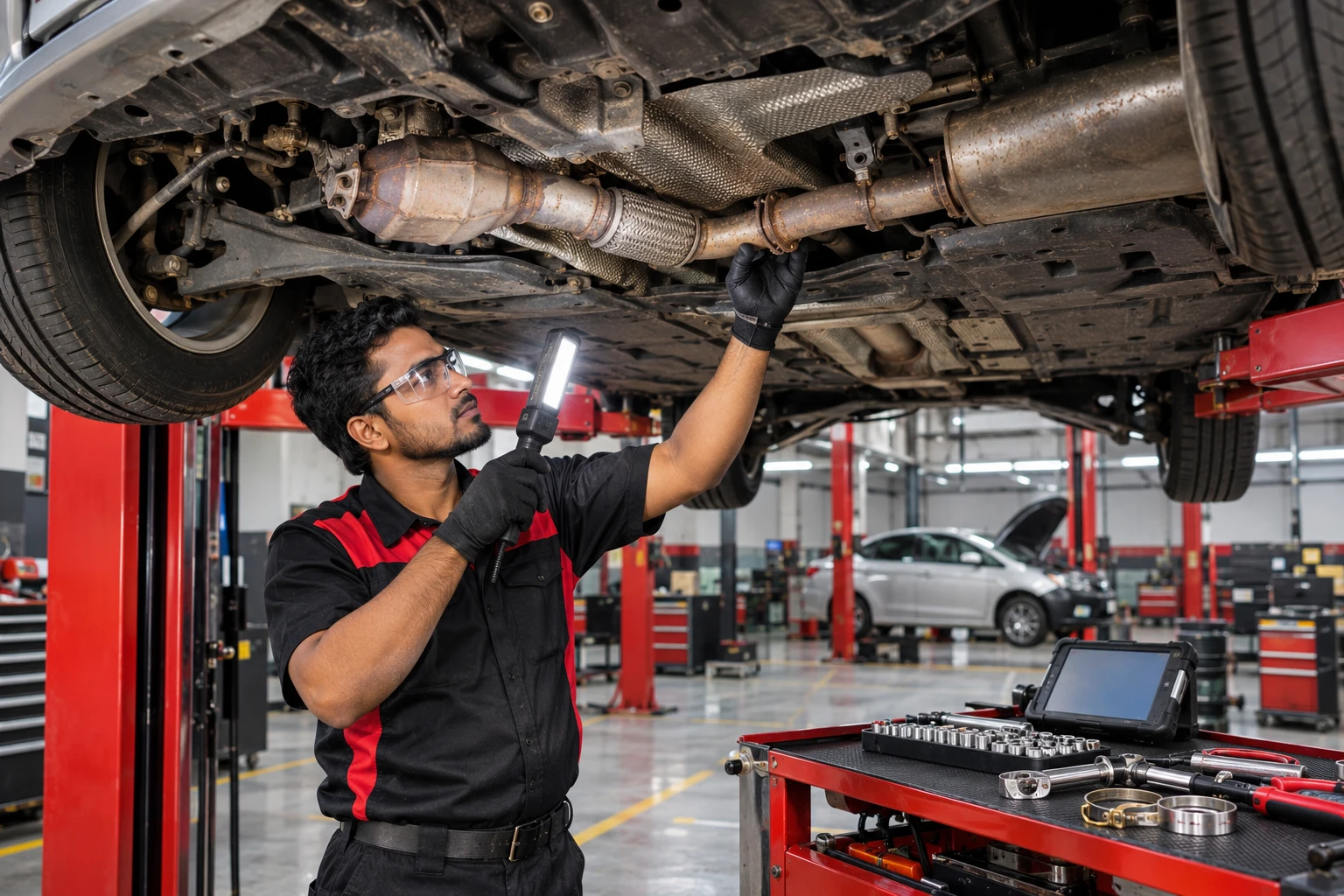
A professional exhaust inspection helps identify damaged, leaking, corroded, or loose components.
Our exhaust system inspection services include:
Exhaust pipe condition assessment
Exhaust manifold connection inspection
Exhaust gasket and joint checks
Catalytic converter exterior inspection
Muffler and resonator condition assessment
Exhaust mounting and hanger inspection
Heat shield inspection
Visible corrosion and physical damage checks
Exhaust-related noise investigation
Exhaust leakage assessment
The extent of inspection depends on vehicle accessibility, system condition, and available diagnostic equipment.
2. Exhaust Leak Detection and Repair
Exhaust leaks may develop due to damaged pipes, deteriorated gaskets, cracked connections, or corrosion.
A leaking exhaust system can produce unusual noises and may allow harmful exhaust gases to enter areas where they should not be present.
Our services include:
Exhaust gas leakage investigation
Exhaust manifold gasket inspection
Exhaust pipe joint leakage checks
Damaged exhaust connection assessment
Flex pipe leakage diagnosis
Exhaust flange and gasket inspection
Exhaust clamp and connection troubleshooting
Exhaust component repair or replacement assessment
Important: Exhaust fumes contain hazardous gases, including carbon monoxide. Suspected exhaust leakage into the passenger cabin requires immediate attention.
3. Exhaust Muffler Inspection and Replacement
The muffler helps reduce engine exhaust noise and contributes to quieter vehicle operation.
Over time, corrosion, impact damage, or internal deterioration can affect muffler performance.
Our services include:
Rear muffler condition inspection
Excessive exhaust noise investigation
Muffler corrosion assessment
Muffler mounting inspection
Internal muffler rattling diagnosis
Muffler pipe connection checks
Damaged muffler replacement assessment
A damaged muffler may cause unusually loud exhaust noise, vibration, or rattling while driving.
4. Exhaust Pipe Repair and Replacement
Exhaust pipes transport gases through the vehicle's exhaust system toward the tailpipe.
Our inspection and repair services include:
Exhaust pipe corrosion inspection
Cracked or damaged pipe assessment
Exhaust joint and flange inspection
Damaged pipe section replacement assessment
Exhaust mounting bracket checks
Exhaust pipe alignment inspection
Exhaust pipe clearance assessment
Exhaust leakage troubleshooting
Repairs should maintain appropriate exhaust routing, secure mounting, adequate clearance from nearby components, and applicable emission control functionality.
5. Catalytic Converter Diagnostics and Inspection
A catalytic converter helps reduce harmful pollutants in vehicle exhaust gases.
Catalytic converter problems may contribute to warning lights, emission-related faults, or reduced engine performance.
Our diagnostic services include:
Catalytic converter efficiency-related fault investigation
Check Engine Light diagnostics
Relevant OBD-II trouble code scanning
Catalytic converter exterior condition inspection
Exhaust restriction assessment where appropriate
Oxygen sensor data analysis
Catalyst-related performance troubleshooting
Catalytic converter replacement assessment
A catalytic converter fault code does not always mean the catalytic converter itself needs replacement.
Problems involving oxygen sensors, exhaust leaks, ignition misfires, or fuel mixture control may also contribute to catalyst-related diagnostic faults.
We recommend diagnosing the underlying cause before replacing expensive exhaust emission components.
6. Oxygen Sensor and Air-Fuel Sensor Diagnostics
Modern gasoline vehicles use oxygen sensors or air-fuel ratio sensors to monitor exhaust conditions and help regulate engine operation.
Our services include:
Oxygen sensor-related fault code scanning
Upstream and downstream sensor investigation
Air-fuel ratio sensor troubleshooting
Sensor wiring and connector inspection
Exhaust-related sensor data analysis
Oxygen sensor replacement assessment
Engine fuel mixture-related fault investigation
Faulty sensors or related wiring can affect fuel control and trigger engine warning indicators.
Sensor diagnosis should consider the complete engine management system rather than relying on a single fault code.
7. Exhaust Flex Pipe Inspection and Repair
The exhaust flex pipe is designed to accommodate movement and vibration between exhaust system components.
A damaged flex pipe may produce exhaust leakage, increased noise, or vibration.
We inspect:
Flex pipe condition
Cracks and deterioration
Exhaust leakage around flexible connections
Flex pipe mounting and alignment
Exhaust system movement
Related vibration concerns
Flex pipe replacement requirements
8. Exhaust Heat Shield and Mounting Repair
Heat shields help protect nearby components and vehicle structures from excessive exhaust heat.
Exhaust hangers and mounting brackets help keep the system securely positioned.
Our services include:
Exhaust heat shield inspection
Loose heat shield rattling diagnosis
Heat shield mounting checks
Exhaust rubber hanger inspection
Damaged exhaust bracket assessment
Exhaust pipe clearance checks
Mounting-related vibration investigation
Loose component repair or replacement assessment
Loose heat shields can create metallic rattling noises, particularly during acceleration or at certain engine speeds.
9. Exhaust Manifold and Gasket Inspection
The exhaust manifold collects exhaust gases from the engine cylinders and directs them toward the exhaust system.
Problems may include cracked manifolds, damaged gaskets, or loose mounting connections.
Our services include:
Exhaust manifold condition assessment
Manifold gasket leakage investigation
Exhaust manifold mounting inspection
Engine-bay exhaust noise diagnosis
Related exhaust leak troubleshooting
Exhaust manifold repair or replacement assessment
10. Exhaust Noise and Vibration Diagnostics
Unusual exhaust noises can originate from several different components.
Our diagnostic services include:
Loud exhaust noise investigation
Metallic rattling diagnosis
Exhaust vibration assessment
Noise during acceleration
Exhaust-related knocking sounds
Loose hanger and bracket inspection
Muffler and resonator condition assessment
Exhaust pipe contact with surrounding components
Accurate inspection helps distinguish exhaust system faults from engine, suspension, or drivetrain noises.
11. Engine Warning Light and Emission System Diagnostics
Some exhaust system problems can trigger the vehicle's Check Engine Light.
Our applicable services include:
OBD-II diagnostic trouble code scanning
Exhaust-related fault identification
Catalytic converter efficiency fault investigation
Oxygen sensor and air-fuel sensor assessment
Exhaust leak-related diagnostic checks
Relevant engine management data analysis
Emission control component troubleshooting
Common exhaust-related diagnostic trouble codes may include:
P0420: Catalyst System Efficiency Below Threshold — Bank 1
P0430: Catalyst System Efficiency Below Threshold — Bank 2
P0130: Oxygen Sensor Circuit Malfunction — Bank 1 Sensor 1
P0135: Oxygen Sensor Heater Circuit Malfunction — Bank 1 Sensor 1
The presence of a diagnostic trouble code does not by itself confirm which component is defective.
Further testing may be needed to determine the actual cause.
12. Hybrid Vehicle Exhaust System Inspection
Hybrid vehicles with gasoline engines also have exhaust systems and emission control components.
Although the combustion engine may stop and restart during normal operation, the exhaust system still requires appropriate inspection and maintenance.
Our applicable hybrid exhaust services include:
Hybrid vehicle exhaust pipe inspection
Muffler and exhaust joint checks
Catalytic converter-related diagnostics
Oxygen sensor fault investigation
Exhaust mounting and heat shield inspection
Engine emission-related warning light assessment
Exhaust leakage troubleshooting
We provide relevant inspection support for compatible hybrid models such as:
Toyota Corolla Axio Hybrid
Toyota Prius
Toyota Aqua
Toyota Noah Hybrid
Toyota Voxy Hybrid
Honda Grace Hybrid
Honda Vezel Hybrid
Hybrid vehicles may start the gasoline engine automatically while in READY mode. Manufacturer-specific procedures must be followed before inspecting or working around the exhaust system.
Common Signs of Car Exhaust System Problems
Your vehicle may need exhaust inspection if you notice:
Unusually loud engine or exhaust noise
Exhaust rattling underneath the vehicle
Metallic vibration during acceleration
Exhaust gas smell inside the cabin
Visible exhaust pipe corrosion
Damaged or hanging exhaust components
Reduced engine performance
Check Engine Light illumination
Increased exhaust noise while idling
Exhaust leakage around pipe connections
Unusual exhaust system vibration
Exhaust-related emission control faults
Important: If you notice exhaust fumes entering the passenger cabin, stop driving as soon as it is safe and arrange professional inspection. Carbon monoxide exposure can be dangerous even when no strong odor is present.
Exhaust System Components and Their Functions
Understanding the main components of a car exhaust system can help identify potential problems.
Exhaust Manifold
The exhaust manifold collects combustion gases from the engine cylinders and directs them into the exhaust system.
Catalytic Converter
The catalytic converter uses chemical reactions to reduce certain harmful exhaust pollutants.
Oxygen Sensors
Oxygen sensors help the engine control system monitor exhaust conditions and regulate fuel delivery.
Exhaust Flex Pipe
A flex pipe helps accommodate movement and vibration between connected exhaust components.
Resonator
A resonator helps manage certain exhaust sound frequencies and reduce undesirable noise characteristics.
Muffler
The muffler reduces exhaust noise before gases leave through the tailpipe.
Exhaust Pipes
Exhaust pipes carry gases through the system and toward the vehicle's exhaust outlet.
Heat Shields and Mounting Components
Heat shields protect nearby components from excessive heat, while hangers and brackets support the exhaust assembly.
Car Exhaust Repair vs Replacement: Which Is Better?
Not every damaged exhaust component requires complete replacement.
When Exhaust Repair May Be Suitable
Repair may be appropriate when:
Damage is minor and localized.
The affected component remains structurally sound.
A suitable repair procedure is available.
Mounting points are serviceable.
Exhaust sealing and routing can be properly restored.
Applicable safety and emission control requirements can be maintained.
When Replacement May Be Necessary
Replacement may be recommended when:
An exhaust component is severely corroded.
A pipe or muffler has extensive structural damage.
A catalytic converter has been confirmed defective and is unsuitable for repair.
Exhaust mounting points are severely damaged.
Repairs cannot provide a durable and safe seal.
Manufacturer procedures require component replacement.
Removing or disabling required emission control equipment is not an appropriate substitute for diagnosing and repairing a fault.
Our Car Exhaust System Inspection and Repair Process
Step 1: Initial Vehicle Assessment
We review customer complaints, exhaust noises, warning lights, performance concerns, and previous repair history.
Step 2: Visual Exhaust Inspection
Relevant exhaust pipes, connections, mufflers, mounting brackets, heat shields, and accessible components are inspected.
Step 3: Diagnostic Testing
Where required, appropriate exhaust leak checks, electronic diagnostics, or sensor-related assessments are performed.
Step 4: Problem Identification
The inspection results are reviewed to determine the likely cause of exhaust noise, leakage, vibration, or emission-related faults.
Step 5: Repair Recommendation
We explain whether component servicing, localized repair, further diagnostics, or replacement is appropriate.
Step 6: Approved Repair Work
The agreed repair or replacement is completed using suitable procedures and compatible components.
Step 7: Final Verification
The repaired system is checked for secure mounting, leakage, abnormal noise, and applicable operational concerns.
Exhaust System Services for Popular Car Brands
We provide relevant exhaust system inspection and repair support for commonly driven vehicle models in Bangladesh.
Toyota
Toyota Corolla
Toyota Corolla Axio
Toyota Premio
Toyota Allion
Toyota Prius
Toyota Aqua
Toyota Noah
Toyota Voxy
Honda
Honda Civic
Honda Grace
Honda Fit
Honda Vezel
Nissan
Nissan X-Trail
Nissan Note
Nissan Serena
Mitsubishi
Mitsubishi Outlander
Mitsubishi Lancer
Mitsubishi Pajero
Hyundai
Hyundai Tucson
Hyundai Elantra
Hyundai Sonata
Exhaust component design, catalytic converter configuration, oxygen sensor arrangements, and replacement part compatibility depend on the vehicle model, engine type, trim, and production year.
Why Choose Rinors Motors?
Experience in automotive maintenance and repair
Exhaust system inspection and troubleshooting
Exhaust pipe and muffler repair assessment
Exhaust leakage investigation
Catalytic converter-related diagnostic support
Oxygen sensor and engine warning light diagnostics
Japanese and hybrid vehicle servicing assistance
Inspection-based repair recommendations
Automotive replacement parts and maintenance support
How to Maintain Your Car's Exhaust System
Regular inspection can help identify exhaust system problems before they become more serious.
Recommended practices include:
Investigate unusual exhaust noises promptly.
Have visible exhaust leaks inspected.
Avoid ignoring loose or rattling exhaust components.
Inspect exhaust mounting brackets after significant road impacts.
Address engine misfires that could damage the catalytic converter.
Investigate exhaust-related Check Engine Light warnings.
Avoid driving through deep water where possible.
Have corroded exhaust components assessed.
Follow manufacturer-recommended vehicle maintenance procedures.
Never ignore suspected exhaust fumes inside the passenger cabin.
Bangladesh's humid conditions, road debris, standing water, and uneven roads can contribute to deterioration or physical damage of exposed underbody components.
Frequently Asked Questions
Why Is My Car Exhaust Suddenly Louder?
A sudden increase in exhaust noise may result from a leaking pipe, damaged muffler, broken exhaust joint, or other exhaust component failure.
An inspection is necessary to identify the source.
Can an Exhaust Leak Affect Engine Performance?
Yes. Depending on the leak location and severity, an exhaust leak may affect sensor readings, engine management behavior, or vehicle performance.
What Causes a Rattling Noise Under My Car?
Possible causes include loose heat shields, damaged exhaust hangers, internal muffler deterioration, or contact between exhaust components and the vehicle body.
Does a P0420 Code Always Mean the Catalytic Converter Is Bad?
No. P0420 indicates catalyst efficiency below the expected threshold for Bank 1.
Possible contributing causes include exhaust leaks, oxygen sensor problems, fuel mixture faults, or engine misfires.
Can I Drive With a Damaged Muffler?
It depends on the severity and location of the damage.
However, exhaust leaks, loose components, or excessive noise should be inspected promptly. Suspected cabin exhaust gas exposure makes continued driving unsafe.
Do Hybrid Cars Have Exhaust Systems?
Yes. Hybrid vehicles equipped with gasoline engines have exhaust systems and emission control components.
Can a Broken Exhaust Pipe Be Repaired?
Some localized pipe damage may be repairable, depending on the material, corrosion, and structural condition.
Severely damaged sections may need replacement.
Book Your Car Exhaust System Inspection and Repair Service
If your vehicle is making unusual exhaust noises, experiencing muffler problems, showing exhaust-related warning lights, or developing exhaust leaks, contact Rinors Motors for professional exhaust system inspection and repair assistance in Bangladesh.
We help identify exhaust system faults, assess damaged components, and recommend suitable repair or replacement solutions.
Maintain a quieter, safer, and properly functioning exhaust system through accurate inspection, appropriate repairs, and regular vehicle maintenance.