Tire Services
Car Tire Inspection Repair And Replacement
Professional car tire inspection, puncture repair, and tire replacement services in Bangladesh. Rinors Motors provides tire condition checks, tread depth inspection, tire pressure testing, safe puncture repair assessment, damaged tire replacement, valve maintenance, and tire fitting for Toyota, Honda, Nissan, hybrid, and other vehicles.
About this service
Professional Car Tire Inspection, Repair and Replacement in Bangladesh
Are your car tires wearing unevenly, losing air pressure, making unusual road noise, or showing visible cracks and damage?
At Rinors Motors, we provide professional car tire inspection, puncture repair assessment, tire replacement, and tire maintenance services for Japanese, hybrid, and other commonly driven vehicles in Bangladesh.
Your vehicle's tires are the only components that directly contact the road. Their condition affects braking, steering, acceleration, ride comfort, fuel efficiency, and overall driving safety.
Damaged, worn, improperly inflated, or unsuitable tires can reduce road grip and increase the risk of driving problems, particularly during rainy weather or emergency braking.
Our service approach focuses on evaluating tire condition, identifying the cause of tire-related problems, and recommending appropriate maintenance, repair, or replacement solutions.
Our Car Tire Inspection and Replacement Services
1. Complete Car Tire Inspection
Regular tire inspection can help identify wear, damage, and other safety-related concerns before they become more serious.
Our tire inspection services include:
Front and rear tire condition assessment
Tire tread depth measurement
Tire sidewall inspection
Visible tire cracking and damage checks
Uneven tire wear investigation
Tire pressure assessment
Tire age and manufacturing date inspection
Tire size and specification verification
Tire valve condition checks
Visible wheel and tire fitment inspection
Tire condition should be evaluated using applicable manufacturer recommendations and established tire safety guidelines.
2. Tire Puncture Inspection and Repair
Tire punctures may result from nails, screws, sharp metal objects, or road debris.
Some punctures can be repaired safely, while others require complete tire replacement.
Our services include:
Tire air leakage detection
Puncture location identification
Tire tread puncture inspection
Tire removal for internal inspection where necessary
Puncture repair suitability assessment
Appropriate internal repair procedures
Tire pressure verification after servicing
Post-repair leakage checks
A puncture repair must be limited to damage permitted under applicable tire repair guidelines.
Important: Tire sidewall or shoulder damage, excessive puncture size, internal structural damage, or damage caused by driving while severely underinflated may make a tire unsuitable for repair.
An external plug alone should not be treated as a substitute for a properly performed permanent tire repair.
3. Car Tire Replacement and Installation
Tires that are excessively worn, structurally damaged, or unsuitable for safe operation may need replacement.
Our tire replacement services include:
Existing tire condition assessment
Compatible replacement tire identification
Tire size verification
Load index and speed rating checks
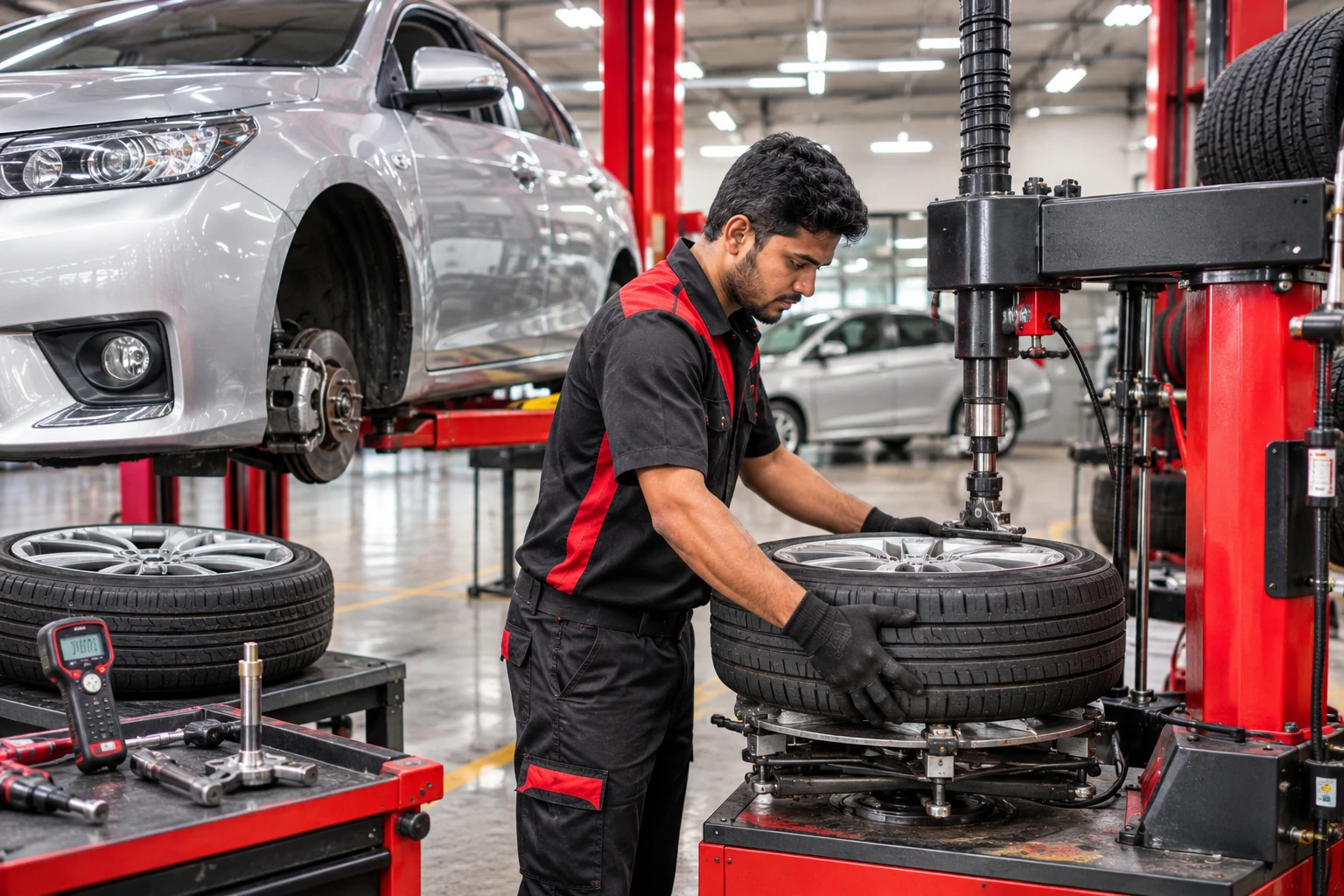
Old tire removal
New tire mounting
Tire inflation according to vehicle requirements
Tire and wheel fitment checks
Installation and final safety inspection
Replacement tires should meet the vehicle manufacturer's requirements for size, load capacity, speed rating, and other applicable specifications.
4. Tire Tread Depth and Wear Assessment
Tire tread patterns are designed to help maintain traction and disperse water from the road surface.
As tread wears down, wet-road performance may deteriorate.
Our services include:
Tire tread depth measurement
Inner-edge and outer-edge wear inspection
Center tread wear assessment
Tire wear indicator checks
Irregular tread pattern analysis
Tire replacement recommendations
Tire wear-related maintenance assessment
Tires must be evaluated against applicable legal requirements and tire manufacturer recommendations.
A tire may require replacement before reaching the minimum legal tread depth if it has serious damage or other unsafe conditions.
5. Tire Pressure Testing and Adjustment
Incorrect tire pressure can affect vehicle handling, tire wear, and fuel consumption.
Both underinflation and overinflation can create problems.
Our services include:
Tire pressure inspection
Cold inflation pressure verification
Pressure adjustment according to the vehicle placard
Uneven tire pressure investigation
Slow air leakage diagnosis
Tire valve inspection
Inflation-related tire wear assessment
The recommended inflation pressure should generally be taken from the vehicle manufacturer's tire information placard or owner's manual, not the maximum pressure printed on the tire sidewall.
6. Tire Sidewall and Structural Damage Inspection
Tire sidewalls provide important structural support and help absorb road impacts.
We inspect for:
Sidewall cuts and tears
Visible bulges or bubbles
Impact damage
Excessive cracking
Exposed cords
Tire bead damage
Signs of severe underinflation
Other indications of structural deterioration
A tire with a sidewall bulge, exposed cords, or significant structural damage should not remain in service.
7. Tire Valve and Air Leakage Inspection
A damaged or deteriorated tire valve may cause gradual air pressure loss.
Our applicable services include:
Tire valve condition inspection
Valve stem leakage testing
Valve core inspection
Damaged valve replacement
Wheel-to-tire bead sealing assessment
Slow air leakage troubleshooting
Post-repair tire pressure verification
Some vehicles have Tire Pressure Monitoring System (TPMS) sensors integrated with the valve assembly.
These components must be handled using appropriate procedures.
8. Tire Pressure Monitoring System (TPMS) Diagnostics
Modern vehicles may use direct or indirect tire pressure monitoring systems to warn drivers about abnormal tire pressure.
Our diagnostic support may include:
Tire pressure warning light assessment
Tire pressure sensor inspection
Relevant TPMS fault investigation
Tire pressure calibration checks
TPMS reset procedures where supported
Sensor-related replacement assessment
Not all vehicles use the same TPMS technology.
Some systems use pressure sensors inside the wheels, while others estimate tire pressure changes using wheel speed information.
9. Tire Rotation and Preventive Maintenance
Tire rotation involves changing tire positions according to the vehicle manufacturer's recommended pattern.
When performed correctly, tire rotation may help maintain more consistent tread wear.
Our relevant services include:
Tire wear pattern inspection
Tire rotation suitability assessment
Front-to-rear tire rotation where appropriate
Directional tire installation checks
Tire pressure verification
Tire condition assessment after rotation
The appropriate rotation pattern depends on the vehicle's drivetrain, tire dimensions, directional design, and wheel configuration.
10. Tire Services for Hybrid Vehicles
Hybrid vehicles require tires that meet the manufacturer's size, load, speed, and other applicable specifications.
Some hybrid vehicles may use tires designed with rolling resistance, efficiency, or noise characteristics in mind.
Our relevant tire service support includes:
Hybrid vehicle tire condition inspection
Tire size and load specification checks
Tire pressure assessment
Tire wear evaluation
Compatible tire replacement assessment
Tire installation and fitting
Tire-related vibration investigation
Common compatible models include:
Toyota Corolla Axio Hybrid
Toyota Prius
Toyota Aqua
Toyota Noah Hybrid
Toyota Voxy Hybrid
Honda Grace Hybrid
Honda Vezel Hybrid
Tire selection should follow the specific vehicle manufacturer's recommendations rather than assuming that all hybrid vehicles require the same tire type.
Common Signs Your Car Tires Need Inspection or Replacement
Your vehicle may need tire servicing if you notice:
Tires losing air pressure repeatedly
Visible punctures or embedded objects
Excessive tread wear
Uneven tire wear patterns
Cracks in the tire sidewall
Tire bulges or unusual deformation
Reduced wet-road traction
Unusual vibration while driving
Tire pressure warning lights
Unusual road noise
Visible tire or wheel damage after hitting a pothole
Important: If a tire has a visible bulge, severe structural damage, or rapid air loss, avoid continued driving and arrange safe inspection or recovery.
Tire Repair vs Tire Replacement: Which Is Better?
Not every damaged tire can or should be repaired.
When Tire Repair May Be Suitable
A repair may be appropriate when:
The puncture is within the permitted tread repair area.
The damage is within the applicable repair size limit.
The tire has not suffered internal structural damage.
The tire has sufficient remaining tread depth.
The tire is otherwise in suitable condition.
The required internal inspection and repair procedure can be performed correctly.
When Tire Replacement Is Recommended
Replacement may be necessary when:
Damage occurs in a non-repairable sidewall or shoulder area.
The tire has a sidewall bulge.
Internal structural damage is present.
The tire has exposed cords.
Tread wear exceeds acceptable limits.
There are signs of serious heat or underinflation damage.
The tire cannot be safely repaired under applicable guidelines.
Safety and tire integrity should always take priority over the cost of repair.
Understanding Car Tire Size and Specifications
Car tire sidewalls contain important information about tire dimensions and performance ratings.
For example, a tire marked 205/55 R16 91V has several specifications.
Tire Width — 205
The nominal tire section width is 205 millimeters.
Aspect Ratio — 55
The sidewall height is nominally 55% of the tire's section width.
Construction — R
The letter R indicates radial tire construction.
Rim Diameter — 16
The tire is designed for a 16-inch wheel rim diameter.
Load Index — 91
The load index identifies the tire's maximum rated load capacity under specified conditions.
Speed Rating — V
The speed rating indicates the tire's rated speed capability under specified conditions.
These values are examples and should not be treated as recommendations for every vehicle.
Correct tire selection must follow the manufacturer's specifications.
Our Car Tire Inspection and Replacement Process
Step 1: Initial Vehicle Assessment
We review tire-related complaints, pressure loss, unusual wear, vibration, and previous tire maintenance.
Step 2: Tire and Wheel Inspection
The tire tread, sidewalls, valve, wheel, and visible mounting areas are inspected.
Step 3: Tire Pressure and Damage Assessment
Tire pressure is checked, and relevant punctures, leaks, or structural concerns are investigated.
Step 4: Repair or Replacement Recommendation
We explain whether the tire is suitable for repair or requires replacement.
Step 5: Tire Selection and Compatibility Check
Where replacement is necessary, appropriate tire dimensions, ratings, and vehicle requirements are reviewed.
Step 6: Approved Tire Repair or Replacement
The agreed service is performed using suitable tire service equipment and procedures.
Step 7: Final Verification
Tire pressure, visible fitment, valve sealing, and relevant installation requirements are checked after servicing.
Wheel balancing may be recommended after tire installation, depending on the service performed.
Tire Services for Popular Vehicle Brands
Our tire inspection and replacement support covers various commonly driven vehicles in Bangladesh.
Toyota
Toyota Corolla
Toyota Corolla Axio
Toyota Premio
Toyota Allion
Toyota Prius
Toyota Aqua
Toyota Noah
Toyota Voxy
Honda
Honda Civic
Honda Grace
Honda Fit
Honda Vezel
Nissan
Nissan X-Trail
Nissan Note
Nissan Serena
Mitsubishi
Mitsubishi Outlander
Mitsubishi Lancer
Mitsubishi Pajero
Hyundai
Hyundai Tucson
Hyundai Elantra
Hyundai Sonata
Tire size, load rating, speed rating, and wheel fitment requirements differ by model, trim level, wheel option, and production year.
Why Choose Rinors Motors?
Experience in automotive maintenance and repair
Tire inspection and damage assessment
Tire puncture repair suitability checks
Tire replacement and fitment assistance
Tire pressure and valve troubleshooting
Japanese and hybrid vehicle servicing support
Inspection-based repair recommendations
Automotive parts and workshop maintenance assistance
How to Extend the Life of Your Car Tires
Regular tire maintenance can help improve tire performance and reduce premature wear.
Recommended practices include:
Check tire pressure regularly when the tires are cold.
Follow the vehicle manufacturer's inflation pressure recommendations.
Inspect tires for cuts, cracks, and bulges.
Monitor tread depth and irregular wear.
Avoid driving on severely underinflated tires.
Follow appropriate tire rotation intervals.
Investigate unusual vehicle vibration.
Inspect tires after significant pothole impacts.
Avoid exceeding tire load ratings.
Replace tires when their condition no longer meets safety requirements.
Driving habits, tire quality, vehicle load, alignment, and road conditions all influence tire life.
Frequently Asked Questions
Can a Punctured Car Tire Be Repaired?
Some tread-area punctures may be repairable after proper tire removal and internal inspection.
Sidewall or structural damage generally requires replacement.
How Do I Know When My Car Tires Need Replacement?
Tires may need replacement due to insufficient tread depth, structural damage, sidewall bulges, exposed cords, or other unsafe conditions.
Age and service history should also be considered alongside a physical inspection.
Why Does My Car Tire Keep Losing Air?
Possible causes include a puncture, damaged valve, wheel rim damage, bead sealing problems, or other leakage points.
Inspection is needed to determine the actual cause.
Should All Four Tires Be Replaced Together?
Replacement requirements depend on tire condition, vehicle drivetrain, manufacturer specifications, and differences in tire dimensions or tread depth.
Some all-wheel-drive vehicles have stricter tire matching requirements.
Does Tire Replacement Require Wheel Balancing?
Wheel balancing is generally recommended when a tire is mounted or replaced to help ensure proper rotating balance.
Can Incorrect Tire Pressure Damage Tires?
Yes. Incorrect tire inflation can contribute to excessive heat, premature wear, reduced traction, and other tire-related problems.
Do Hybrid Cars Require Special Tires?
Some hybrid vehicles may benefit from specific tire performance characteristics, but replacement tires must primarily meet the manufacturer's required specifications.
Book Your Car Tire Inspection, Repair and Replacement Service
If your car has worn tires, repeated air pressure loss, puncture damage, unusual tire noise, or other tire-related problems, contact Rinors Motors for professional tire inspection and replacement assistance in Bangladesh.
We help identify tire damage, assess repair suitability, and recommend compatible replacement options based on your vehicle's requirements.
Maintain reliable road grip, driving comfort, and tire performance through appropriate tire inspection, maintenance, and replacement.