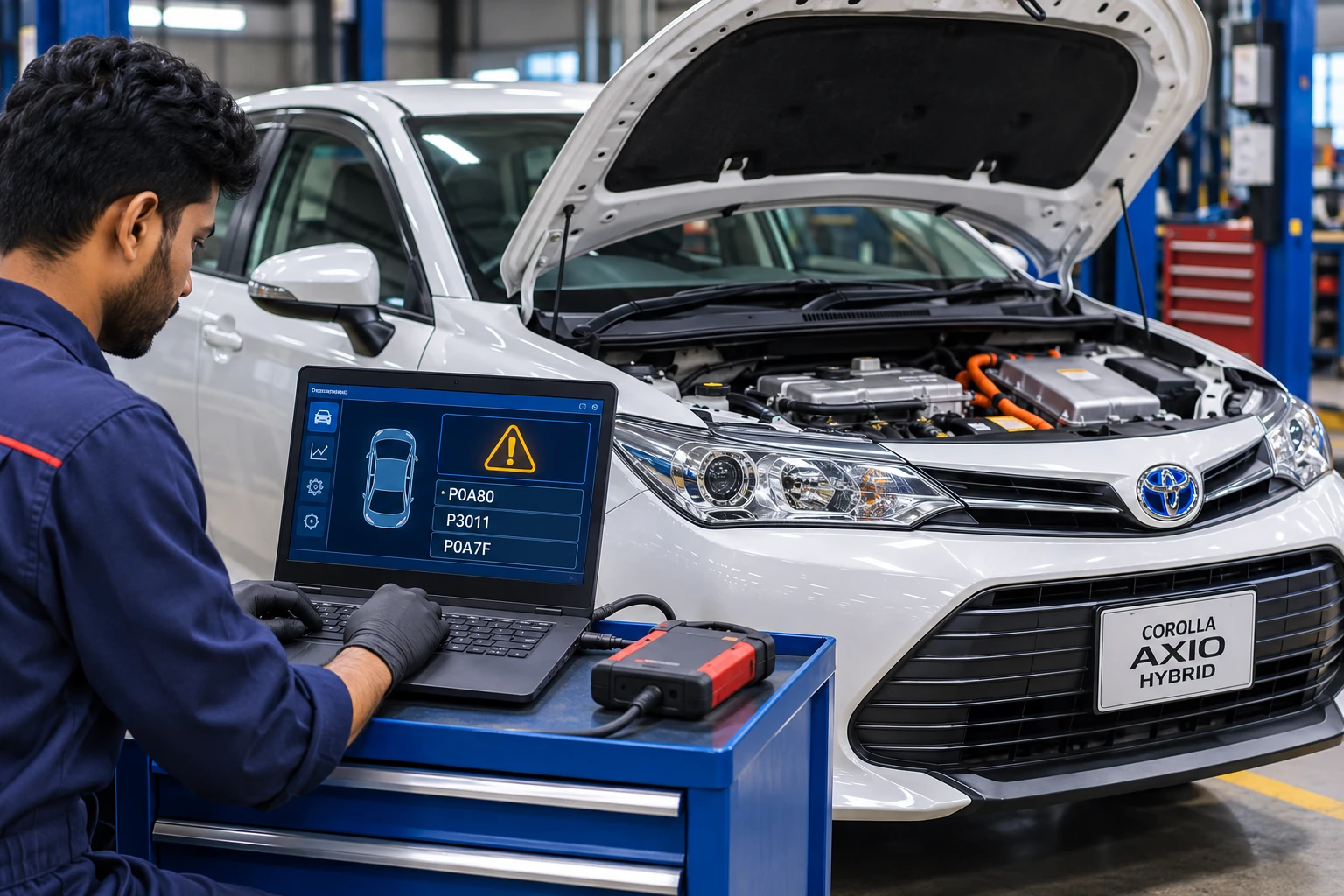
Hybrid Battery Overheating: Causes, Symptoms, Diagnosis and Solutions in Bangladesh
Is your Toyota hybrid battery getting too hot? Have you noticed reduced hybrid performance, unusual battery cooling fan noise, frequent engine operation or a warning related to hybrid battery temperature?
Hybrid batteries operate within a controlled temperature range to maintain performance, safety and reliability. When the battery becomes excessively hot, the vehicle's control system may limit charging and discharging to protect the battery and associated components.
Rinors Motors provides hybrid battery overheating diagnostics and cooling system troubleshooting solutions in Bangladesh, helping vehicle owners investigate temperature-related faults and determine whether the problem involves restricted airflow, cooling fan malfunction, battery deterioration or electronic control issues.
Our approach focuses on identifying the actual cause of overheating before recommending expensive hybrid battery repairs or replacement.
How Does a Hybrid Battery Cooling System Work?
Hybrid vehicles use high-voltage traction batteries to store electrical energy for the electric drive system.
During charging, discharging and normal vehicle operation, internal electrical resistance produces heat within the battery.
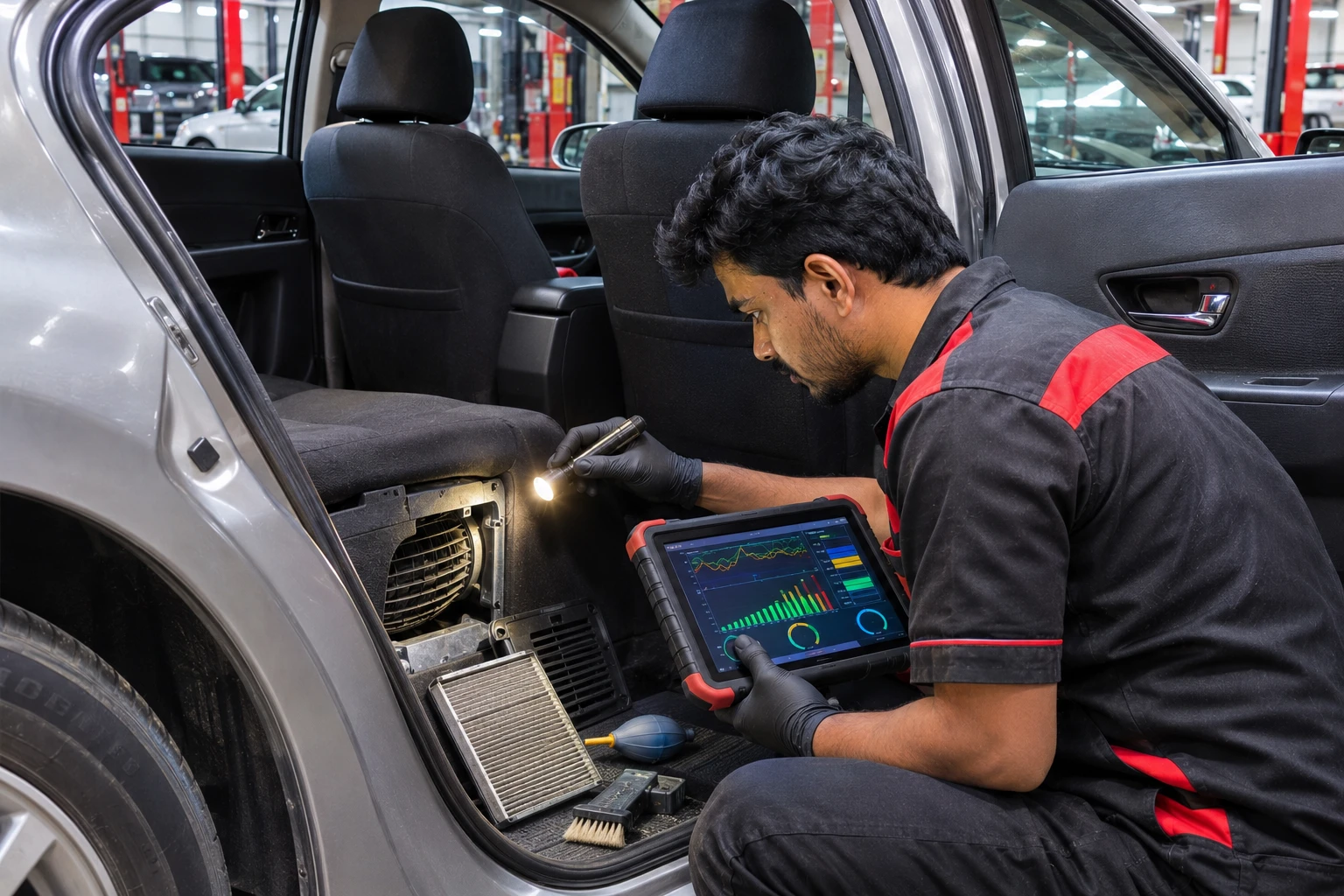
To maintain suitable operating temperatures, many Toyota hybrid vehicles use a dedicated air-cooling system.
Depending on the model, this system may include:
Hybrid battery cooling air intake vent
Battery cooling fan or blower
Air intake filter
Ventilation ducts
Battery temperature sensors
Electronic cooling fan controls
Battery management system
The cooling fan draws air through the designated intake and directs it along the battery cooling passages.
The exact cooling arrangement varies between hybrid models, and not every hybrid battery uses the same ventilation design.
If airflow becomes restricted or cooling components malfunction, battery temperatures may increase.
Common Symptoms of Hybrid Battery Overheating
1. Hybrid Battery Temperature Warning
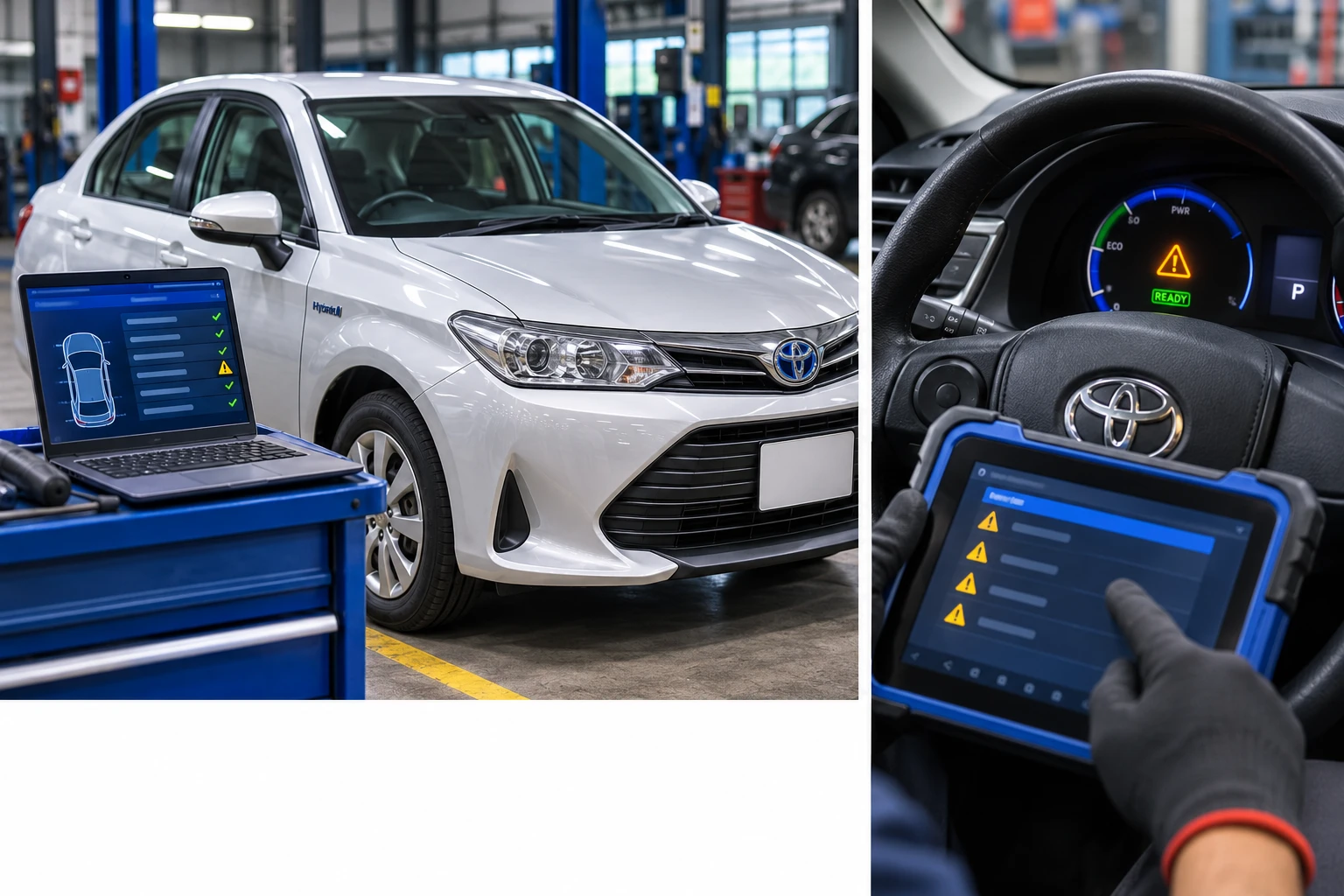
Some vehicles may display a battery cooling maintenance message, hybrid system warning or temperature-related diagnostic code.
Depending on the model, the warning may indicate restricted cooling airflow, abnormal battery temperature or another hybrid system fault.
A warning should be investigated rather than automatically attributed to a failed battery pack.
2. Battery Cooling Fan Running Frequently
The battery cooling fan may operate more frequently or at a higher speed when battery temperatures increase.
Some fan noise is normal during hybrid operation.
However, an unusually loud fan or a significant change in operating behavior may indicate increased cooling demand or a fault requiring inspection.
3. Reduced Hybrid Battery Performance
When battery temperature exceeds the system's preferred operating range, the vehicle may limit charging or discharging.
Possible effects include:
Reduced electric motor assistance
Restricted battery power output
Changes in regenerative braking behavior
More frequent gasoline engine operation
Reduced hybrid driving efficiency
The exact behavior depends on the vehicle's hybrid control strategy.
4. Rapid Battery Charge Fluctuations
Some vehicles experiencing temperature-related performance restrictions may show changes in battery charging and discharging behavior.
However, rapid charge fluctuations are not necessarily caused by overheating.
Battery aging, driving conditions and other hybrid system faults can produce similar symptoms.
5. Reduced Fuel Efficiency
When the hybrid system restricts electrical assistance, the gasoline engine may be required to provide more power.
This can contribute to reduced fuel efficiency under certain conditions.
Fuel consumption is also influenced by traffic, driving style, air conditioning usage and engine condition.
6. Unusual Performance in Hot Weather
Some hybrid vehicles may behave differently during extremely hot weather or prolonged stop-and-go driving.
High ambient temperatures can increase cooling demand and influence battery management.
These changes do not automatically indicate mechanical or electrical failure.
What Causes a Hybrid Battery to Overheat?
1. Blocked Hybrid Battery Cooling Air Intake
A blocked battery air intake is an important cause of cooling restrictions in vehicles that use air-cooled traction batteries.
Depending on the vehicle, the intake may be located near the rear seat, beneath the seating area or in another designated cabin location.
Common restrictions include:
Dust accumulation
Seat covers blocking ventilation openings
Clothing or bags placed against the vent
Pet hair
Interior debris
Obstructed ventilation grilles
Toyota advises keeping hybrid battery cooling intake openings unobstructed because restricted airflow can interfere with battery cooling and may reduce battery performance.
2. Dirty Hybrid Battery Cooling Fan
Dust and debris may accumulate on the cooling fan and nearby ventilation components.
A contaminated fan may not provide the intended airflow.
Depending on the system, potential issues include:
Inspection and appropriate cleaning may be necessary when contamination is identified.
3. Clogged Battery Cooling Air Filter
Some hybrid vehicles have a filter associated with the traction battery cooling air intake.
Over time, dust and debris may restrict airflow through this filter.
Depending on the model, the vehicle may display a message indicating that traction battery cooling parts require maintenance.
Filter cleaning or replacement should follow the relevant manufacturer's service procedure.
4. Battery Cooling Fan Electrical Failure
Even when the ventilation passages are clear, the cooling fan may not operate correctly.
Possible causes include:
Cooling fan motor malfunction
Fan power supply problems
Damaged electrical connectors
Wiring faults
Control circuit problems
Fan speed control abnormalities
Professional electrical testing can help determine whether the fan and its control system are operating as intended.
5. High Ambient Temperature and Cabin Heat
Bangladesh's climate can expose vehicles to high ambient temperatures, especially during hot weather and prolonged parking in direct sunlight.
In hybrid vehicles that use cabin air for battery cooling, the temperature of the available cooling air can affect cooling performance.
Potential contributing conditions include:
High outdoor temperatures
Excessively hot vehicle interiors
Prolonged stop-and-go traffic
Heavy electrical power demand
Restricted cabin ventilation
High temperatures alone do not confirm that the battery has failed.
6. Hybrid Battery Aging and Internal Resistance
Battery characteristics can change over time due to age, mileage, temperature exposure and operating conditions.
As battery cells deteriorate, electrical resistance may increase.
Under certain operating conditions, increased resistance can contribute to greater heat generation during charging and discharging.
Diagnostic testing is necessary to determine whether battery deterioration is contributing to abnormal temperature behavior.
7. Battery Temperature Sensor Problems
Hybrid battery management systems use temperature measurements to regulate battery operation.
Faulty sensors, damaged wiring or abnormal signal readings may interfere with temperature monitoring or cooling control.
Depending on the vehicle, diagnostic assessment may include:
Battery temperature sensor data
Temperature reading comparisons
Sensor-related fault codes
Wiring and connector inspection
Cooling fan control response
A sensor fault may produce abnormal readings without actual battery overheating. Proper diagnosis is essential.
8. Cooling Duct Damage or Airflow Leakage
Damaged or improperly installed ventilation ducts may reduce effective cooling airflow.
Possible problems include:
Disconnected air ducts
Damaged ventilation passages
Incorrectly installed cooling components
Air intake restrictions
Missing or incorrectly fitted filter components
These conditions should be evaluated according to the specific cooling system design.
Hybrid Battery Overheating vs. Engine Overheating
Hybrid battery overheating and engine overheating are different problems.
The hybrid traction battery uses its own temperature management arrangement, while the gasoline engine uses a conventional engine cooling system.
Some hybrids also have separate cooling circuits for their inverter or power electronics.
Therefore, a hybrid system temperature warning should not automatically be treated as a radiator, engine coolant or traction battery problem.
The correct system must be identified using the warning message and diagnostic information.
Our Hybrid Battery Overheating Diagnostic Solutions
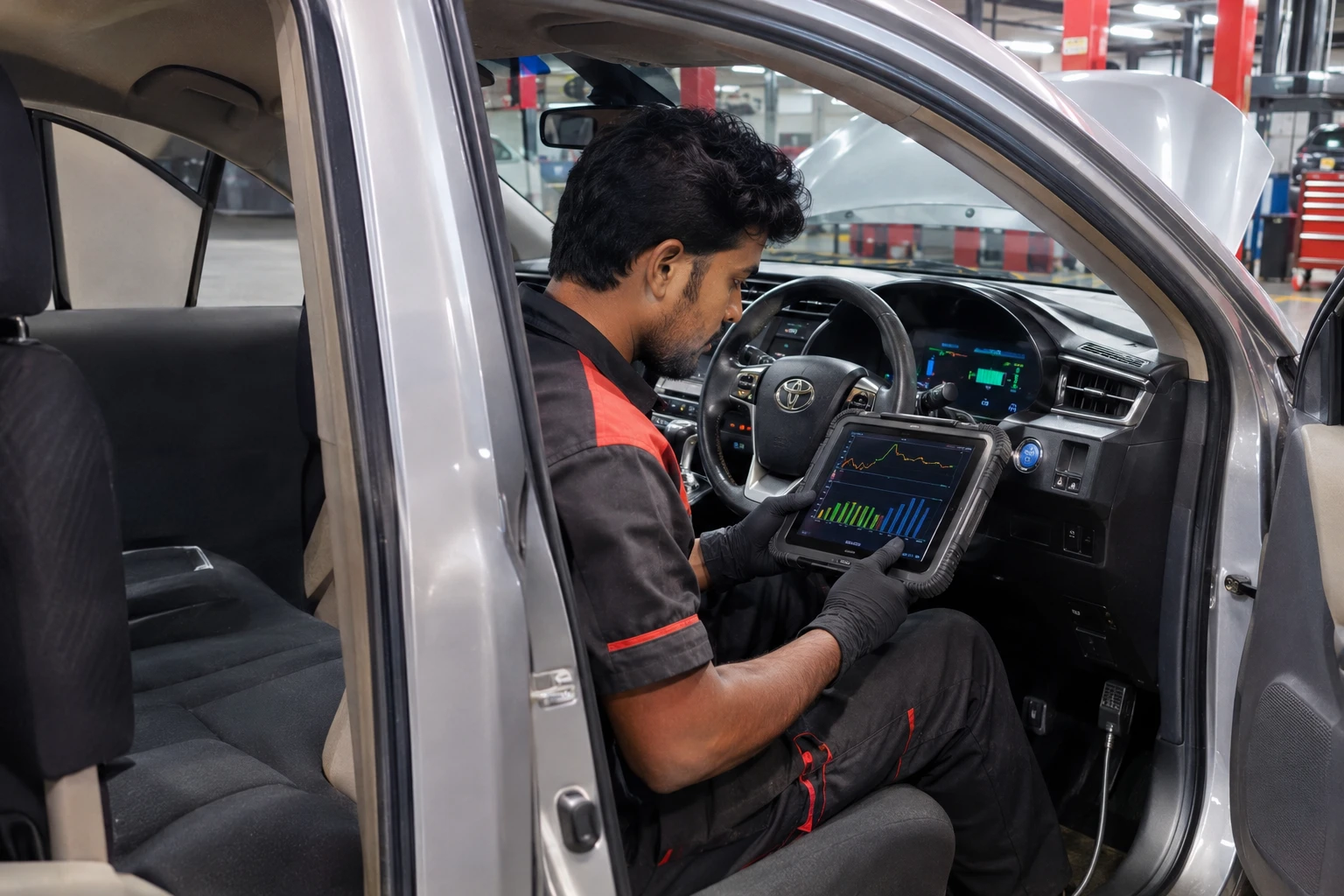
1. Hybrid Battery Temperature Monitoring
We focus on evaluating available battery temperature information through compatible diagnostic equipment.
Depending on the vehicle, diagnostic assessment may include:
Hybrid battery temperature readings
Temperature changes during operation
Available battery sensor data
Battery charging and discharging behavior
Relevant diagnostic trouble codes
Temperature-related performance restrictions
2. Battery Cooling Air Intake Inspection
Where applicable, inspection may include:
Battery cooling intake grille condition
Dust and debris accumulation
Air intake blockage
Seat cover or accessory interference
Ventilation duct condition
Filter contamination
The purpose is to determine whether normal cooling airflow is being restricted.
3. Cooling Fan Condition and Operation Assessment
A cooling fan inspection may include:
Fan operation testing
Fan motor condition assessment
Fan speed control evaluation
Electrical connection inspection
Fan housing contamination checks
Abnormal noise investigation
Corrective action depends on the inspection findings.
4. Cooling Fan and Filter Maintenance
When contamination is identified, appropriate maintenance may include:
Cleaning accessible cooling intake areas
Inspecting and servicing cooling filters
Cleaning suitable cooling fan components
Removing accumulated dust and debris
Checking ventilation duct connections
Verifying cooling system operation after maintenance
Cleaning procedures must follow the vehicle manufacturer's instructions.
Water, cleaning chemicals and foreign materials must not be introduced into high-voltage battery components or ventilation passages.
5. Hybrid Battery Health Assessment
If overheating persists despite normal cooling system operation, further battery assessment may be necessary.
Depending on available diagnostic data, evaluation may include:
Battery voltage behavior
Available battery block comparisons
Temperature differences
Battery current information
Battery charging and discharging response
Relevant hybrid battery fault codes
These measurements help determine whether battery deterioration or another internal fault requires further investigation.
6. Battery Cooling Electrical System Troubleshooting
If cooling fan operation or sensor data appears abnormal, related electrical controls may need inspection.
Possible checks include:
Fan electrical power supply
Grounding and connector condition
Relevant control circuit operation
Battery temperature sensor data
Diagnostic trouble code analysis
High-voltage battery components must remain protected and must only be accessed by appropriately trained personnel.
7. Repair or Replacement Assessment
After diagnosis, appropriate recommendations may include:
Battery cooling intake maintenance
Cooling fan cleaning or replacement
Filter cleaning or replacement
Ventilation duct repair
Sensor or electrical circuit repair
Further battery deterioration assessment
Specialized hybrid battery repair or replacement evaluation when justified
Not every overheating problem requires hybrid battery replacement.
8. Post-Service Cooling Performance Verification
After suitable maintenance or repair, relevant verification may include:
Cooling fan operation checks
Battery temperature data review
Diagnostic trouble code assessment
Cooling airflow inspection
Battery performance evaluation
Controlled operating tests where appropriate
The objective is to confirm that the identified cooling problem has been addressed.
How to Help Prevent Hybrid Battery Overheating
Keep Battery Air Intake Vents Clear
Avoid placing bags, seat covers, clothing or other objects in front of designated battery ventilation openings.
Maintain a Clean Vehicle Interior
Dust, pet hair and debris can accumulate around cooling intake areas.
Keeping these areas clean can help maintain adequate airflow.
Inspect Cooling Filters When Required
Some Toyota hybrid models include cooling filters that require inspection or cleaning according to the manufacturer's recommendations.
Pay Attention to Warning Messages
Battery cooling maintenance warnings should not be ignored.
Prompt inspection may help identify restrictions or component problems before performance is affected further.
Maintain the Cooling System
When servicing a hybrid vehicle, include relevant battery cooling components in the inspection schedule where applicable.
Avoid Unqualified Battery Repairs
Hybrid traction batteries contain high-voltage electrical components.
Never attempt to dismantle a battery pack or access high-voltage wiring without appropriate training and safety equipment.
Compatible Hybrid Vehicle Models
This problem-based solution may apply to compatible hybrid vehicles, including:
Toyota Corolla Axio Hybrid
Toyota Aqua Hybrid
Toyota Prius Hybrid
Toyota Corolla Fielder Hybrid
Toyota Camry Hybrid
Toyota Noah Hybrid
Toyota Esquire Hybrid
Other supported Toyota and non-Toyota hybrid models
The cooling system design, intake position, filter configuration and available diagnostics vary between models.
Benefits of Professional Hybrid Battery Cooling Diagnostics
Helps identify causes of abnormal battery temperature
Detects restricted battery cooling airflow
Identifies cooling fan and electrical faults
Helps prevent unnecessary hybrid battery replacement
Supports proper battery temperature management
Helps investigate reduced hybrid performance
Provides clearer maintenance and repair recommendations
Supports reliable hybrid vehicle operation
Why Choose Rinors Motors?
With approximately 30 years of experience in the automotive market, Rinors Motors emphasizes systematic vehicle diagnostics, identifying the underlying cause of problems and recommending practical repair options.
A hybrid battery overheating problem may be caused by restricted airflow, cooling fan malfunction, electrical faults, battery deterioration or environmental conditions.
Our solution-based approach focuses on evaluating these possibilities before recommending costly component replacement.
Related Services and Solutions
For general hybrid battery testing and repair options, refer to the Hybrid Battery Diagnostics & Repair service at Rinors Motors.
Related problem-based solutions include:
These topics address different symptoms that may sometimes be associated with hybrid battery cooling problems.
Get Your Hybrid Battery Cooling System Inspected
If your Toyota Axio, Aqua, Prius, Fielder or another compatible hybrid vehicle shows a battery cooling warning, experiences unusually loud cooling fan operation or develops temperature-related performance problems, contact Rinors Motors for a diagnostic assessment.
Proper inspection can help determine whether maintenance, cooling fan servicing, electrical repair or further battery testing is necessary.
Identify the cause of hybrid battery overheating before replacing expensive battery components.
Safety Notice: Hybrid traction batteries contain dangerous high-voltage components. Do not dismantle battery assemblies or disconnect high-voltage wiring without appropriate qualifications and equipment. If the vehicle displays a serious hybrid warning, reduced-power condition or instruction to stop, follow the manufacturer's guidance and arrange professional assistance.