Engine & Fuel System Services
Car Throttle Body Cleaning And Repair
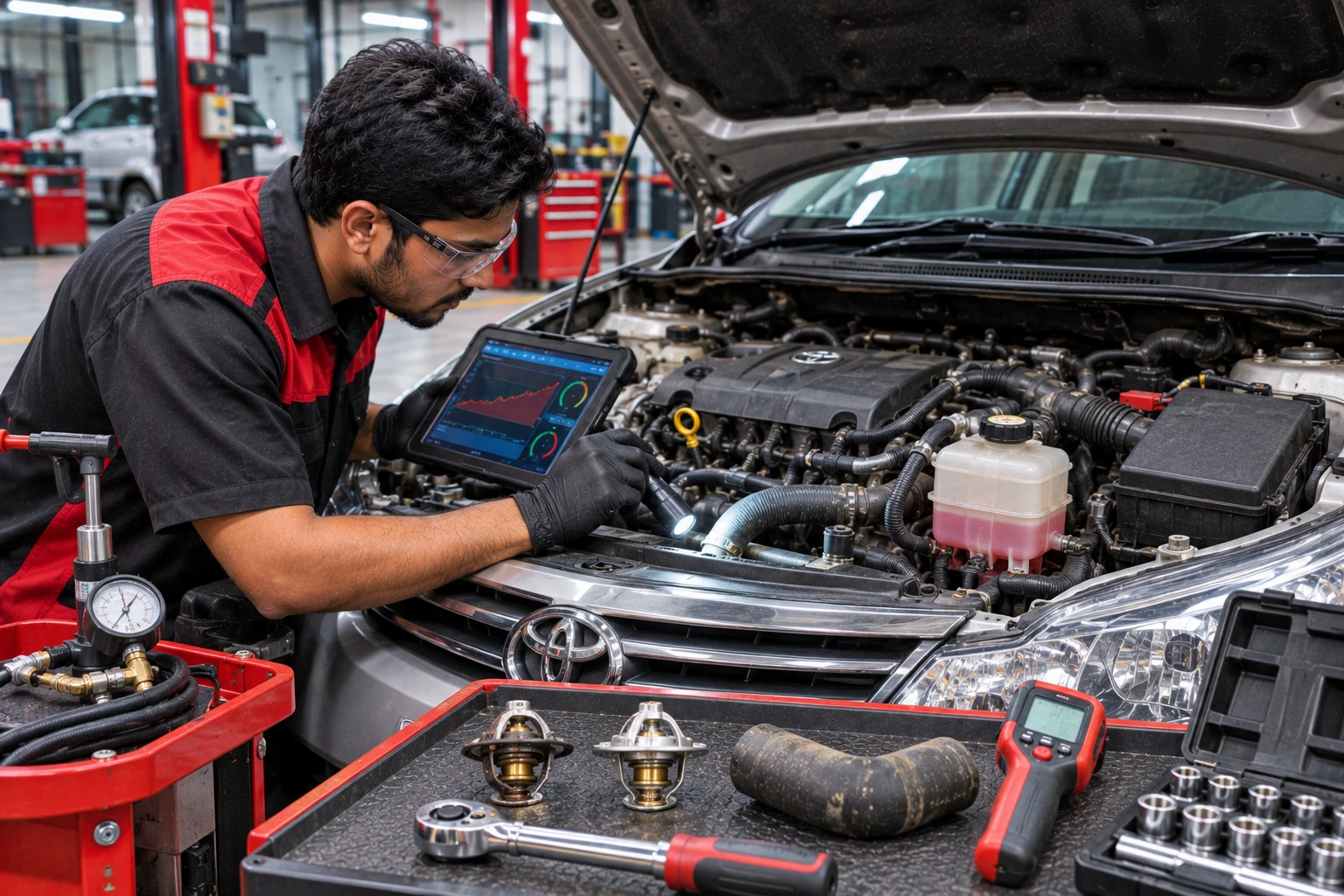
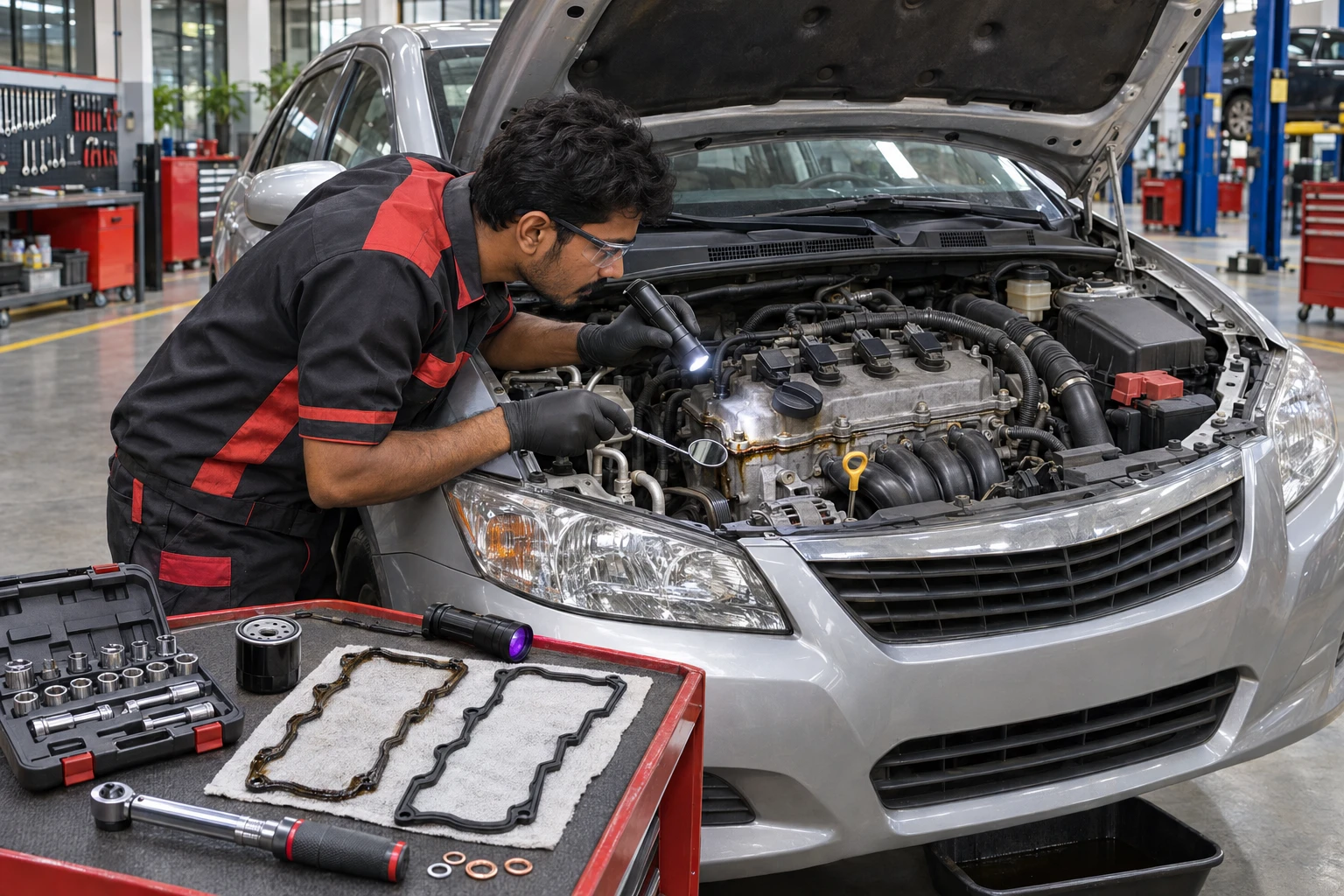
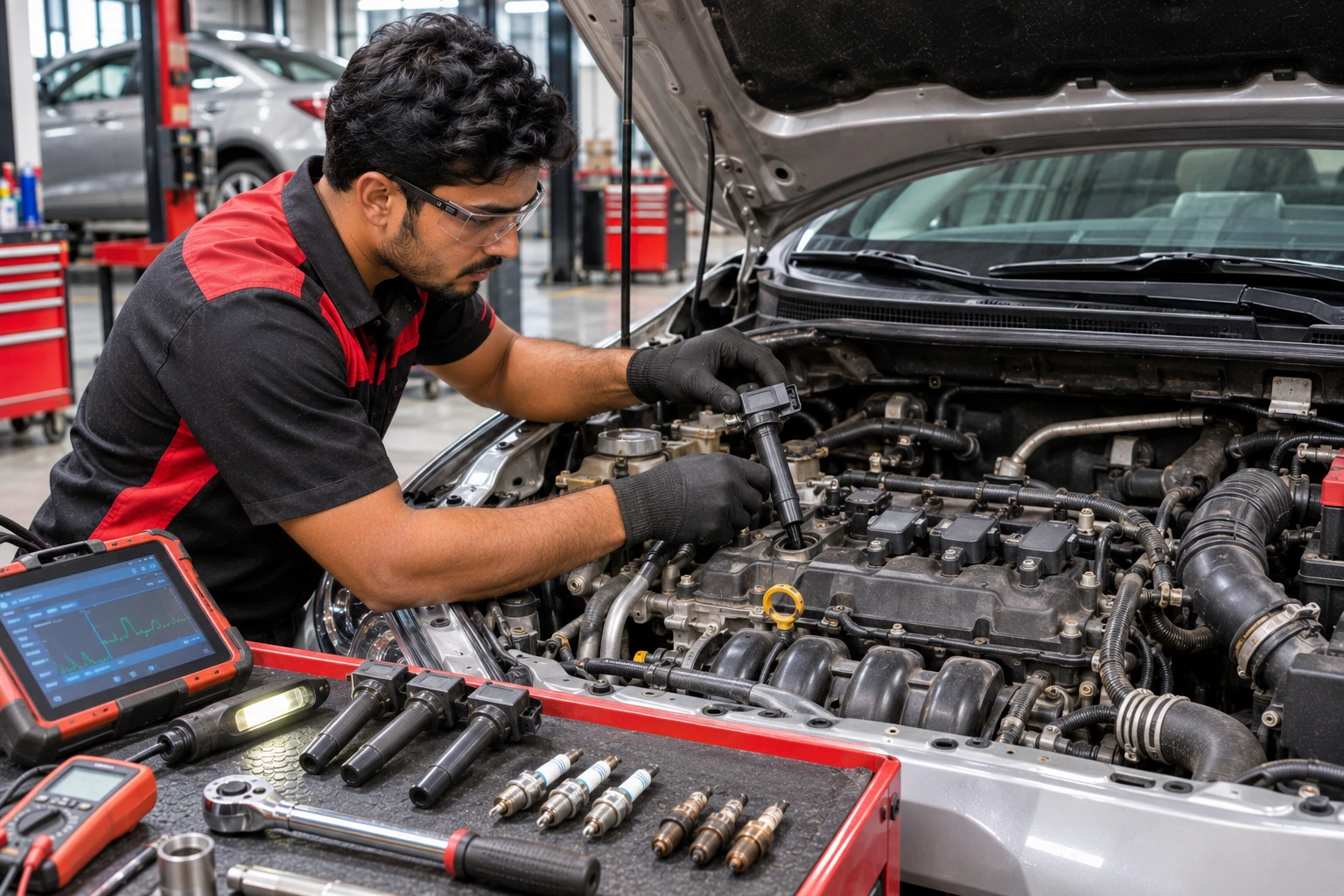
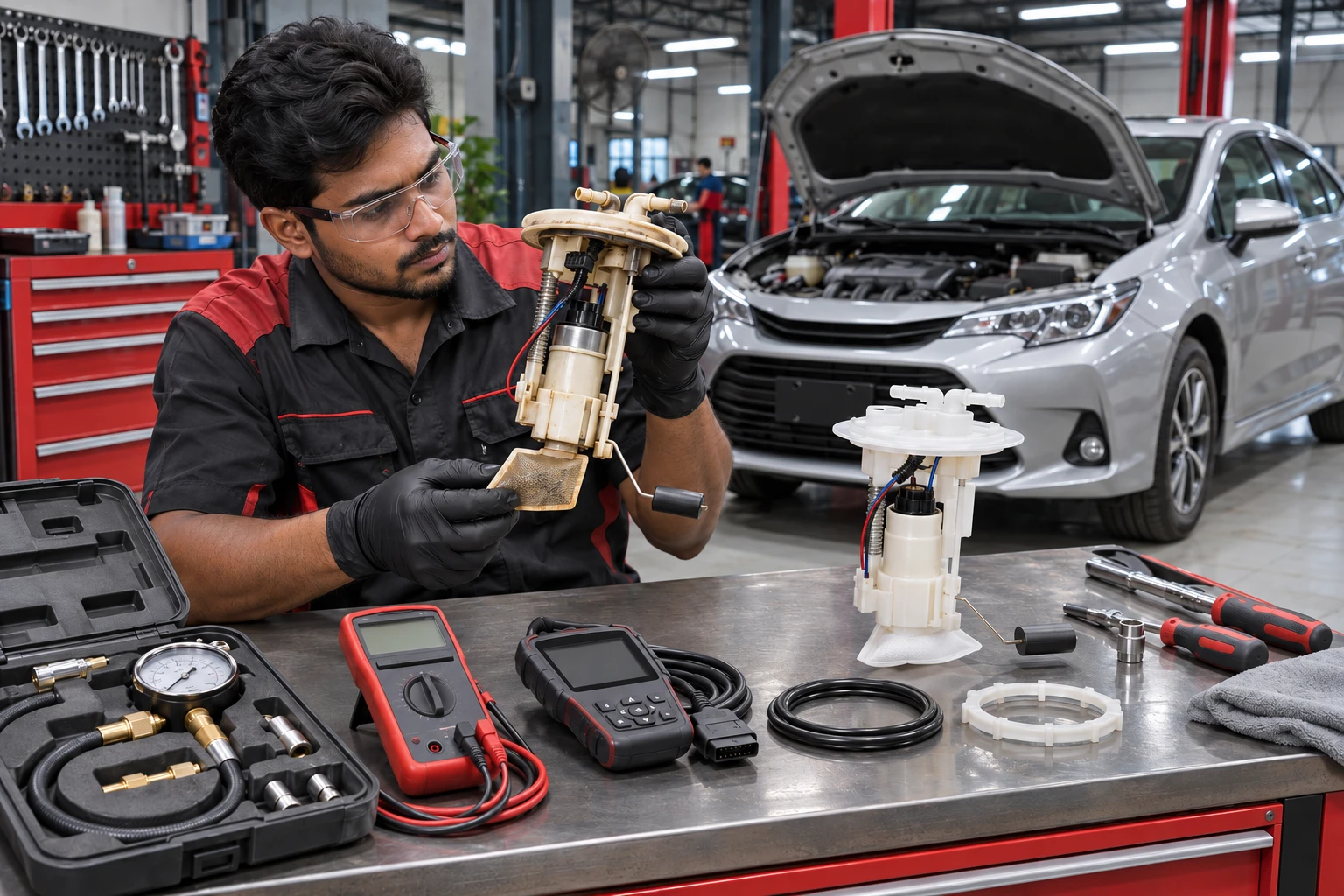
Professional car throttle body cleaning and repair in Bangladesh. Rinors Motors provides electronic throttle body inspection, carbon deposit cleaning, throttle position sensor diagnostics, idle speed troubleshooting, throttle actuator testing, and throttle body replacement for Toyota, Honda, Nissan, hybrid, and other vehicles.
About this service
Professional Car Throttle Body Cleaning and Repair in Bangladesh
Is your car experiencing rough idling, engine hesitation, unstable RPM, reduced acceleration, or an illuminated Check Engine Light?
At Rinors Motors, we provide professional car throttle body inspection, throttle body cleaning, electronic throttle control diagnostics, and throttle body repair or replacement services for Japanese, hybrid, and other commonly driven vehicles in Bangladesh.
The throttle body is an important component of a gasoline engine's air intake system. It controls the amount of air entering the engine according to driver demand and engine management requirements.
Over time, carbon deposits, oil residue, dirt, and other contaminants may accumulate around the throttle plate and throttle body bore.
These deposits can sometimes interfere with precise airflow control, particularly during idling and low-speed operation.
However, throttle-related problems may also result from electronic actuator faults, throttle position sensors, intake air leaks, accelerator pedal sensors, wiring problems, or other engine management issues.
Our approach focuses on identifying the cause of the problem before recommending cleaning, electrical repair, calibration, or replacement.
Our Car Throttle Body Cleaning and Repair Services
1. Complete Throttle Body Inspection
A professional throttle body inspection helps determine whether the assembly is contaminated, damaged, or experiencing mechanical or electronic problems.
Our services include:
Throttle body condition assessment
Throttle plate inspection
Carbon deposit evaluation
Throttle bore contamination checks
Electronic throttle connector inspection
Throttle actuator-related diagnostics
Throttle position data assessment
Air intake connection inspection
Throttle body mounting and sealing checks
Relevant engine fault code scanning
Cleaning should be recommended when inspection findings and vehicle symptoms indicate that it is appropriate.
2. Professional Throttle Body Cleaning
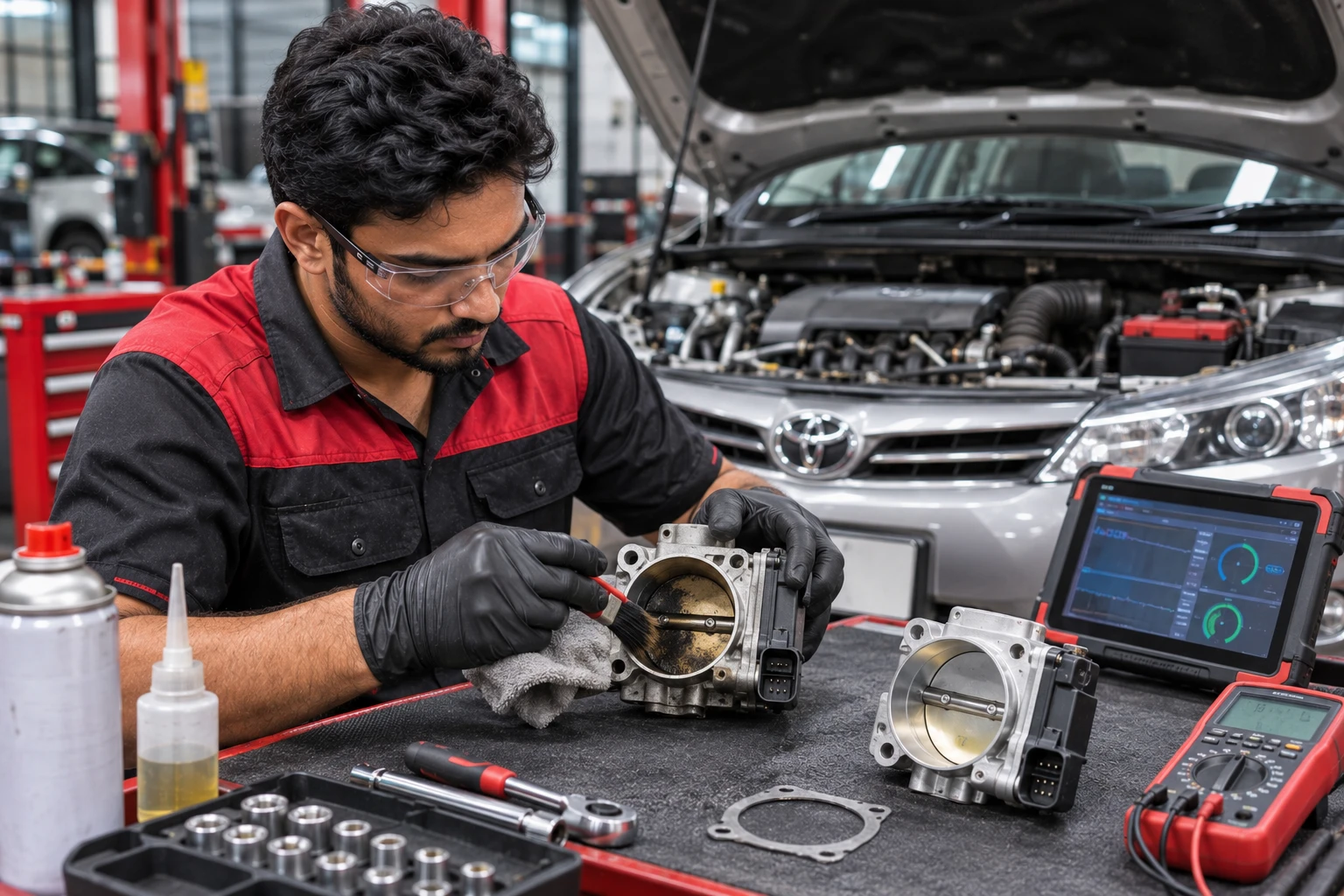
Carbon and oil residue may accumulate around the throttle plate, particularly where it meets the throttle body bore.
Excessive deposits can affect airflow at small throttle openings.
Our applicable services include:
Throttle body carbon deposit inspection
Throttle plate contamination assessment
Throttle bore cleaning
Approved throttle body cleaning procedures
Intake connection inspection
Throttle body gasket condition assessment
Post-cleaning throttle operation verification
Idle performance checks
Cleaning methods depend on the throttle body's design.
Some electronic throttle bodies have protective coatings or sensitive components that can be damaged by unsuitable chemicals or aggressive cleaning.
We recommend following manufacturer-specific cleaning procedures rather than applying the same method to every vehicle.
3. Electronic Throttle Body Diagnostics
Modern vehicles commonly use electronic throttle control systems instead of a traditional accelerator cable.
An electronic throttle body typically contains a motorized actuator and throttle position sensing components.
Our diagnostic support includes:
Electronic throttle control system assessment
Throttle actuator operation checks
Electronic throttle position data analysis
Throttle command and response comparison
Related fault code investigation
Throttle body connector inspection
Electrical circuit troubleshooting
Throttle control malfunction assessment
A malfunctioning electronic throttle system may trigger reduced engine power or other protective operating modes.
4. Throttle Position Sensor Diagnostics
The throttle position sensor provides information about throttle plate position to the engine management system.
In many modern vehicles, throttle position sensors are integrated into the electronic throttle body assembly.
Our applicable services include:
Throttle position sensor-related fault investigation
Sensor data analysis
Throttle position signal checks
Electrical connector inspection
Sensor correlation fault assessment
Throttle position-related Check Engine Light diagnostics
Sensor or throttle assembly replacement evaluation
Depending on vehicle design, the throttle position sensor may not be separately replaceable.
5. Throttle Actuator Motor Inspection
The electronic throttle actuator motor moves the throttle plate according to commands from the engine control system.
A faulty actuator may cause delayed throttle response, unstable engine behavior, or throttle control warning codes.
Our services include:
Throttle actuator motor-related diagnostics
Throttle movement assessment
Electrical supply and control circuit checks
Actuator-related fault code analysis
Throttle plate obstruction investigation
Electronic throttle assembly replacement assessment
A defective actuator may require replacement of the complete throttle body assembly.
6. Rough Idle and Unstable RPM Diagnostics
A contaminated throttle body is one possible cause of unstable idle speed.
However, rough idling can also originate from ignition, fueling, intake, or engine mechanical problems.
Our diagnostic assessment considers:
Throttle plate contamination
Idle airflow control
Air intake leaks
Engine misfires
Fuel injector problems
Airflow or pressure sensor faults
Electronic throttle control behavior
Engine temperature-related control issues
Other relevant engine management conditions
Proper inspection helps avoid unnecessary throttle body cleaning when the actual fault is elsewhere.
7. Engine Hesitation and Poor Throttle Response
A vehicle may hesitate during acceleration due to delayed or incorrect engine response.
Possible causes include:
Electronic throttle control faults
Throttle position sensor problems
Accelerator pedal sensor faults
Air intake restrictions
Ignition system problems
Fuel delivery faults
Engine management issues
Our diagnostics focus on identifying whether the throttle body or another component is responsible.
Throttle body cleaning does not automatically correct every acceleration problem.
8. Throttle Body Replacement
Throttle body replacement may be necessary when the assembly has confirmed electrical, mechanical, or actuator-related damage.
Our applicable replacement services include:
Defective throttle body identification
Compatible replacement component selection
Throttle body part number verification
Intake hose and connection inspection
Existing throttle body removal
Replacement throttle body installation
Suitable gasket and sealing component inspection
Electrical connector verification
Manufacturer-required initialization or adaptation
Post-installation operation checks
Vehicle-specific procedures must be followed to ensure correct throttle operation.
9. Throttle Body Relearn and Idle Calibration
Some vehicles require throttle or idle-related initialization procedures after throttle body cleaning, battery disconnection, or component replacement.
The exact requirements depend on the engine control system.
Our applicable diagnostic support includes:
Idle speed behavior assessment
Throttle adaptation requirement checks
Electronic throttle initialization where supported
Manufacturer-specified idle relearn procedures
Relevant diagnostic scanner functions
Post-service throttle response verification
A relearn procedure is not universally required after every throttle body cleaning.
Likewise, performing an incorrect reset procedure can create unnecessary problems.
10. Throttle Body Wiring and Connector Repair
Electrical wiring and connectors are essential for electronic throttle control.
Damaged wires or loose connectors may interrupt throttle actuator commands or position sensor signals.
Our services include:
Throttle body wiring harness inspection
Electrical connector condition checks
Corrosion and terminal damage assessment
Power and ground circuit diagnostics
Relevant control signal testing
Wiring continuity assessment
Electrical repair recommendations
Throttle systems are safety-critical. Electrical repairs must preserve the correct control and monitoring functions.
11. Air Intake Hose and Throttle Body Gasket Inspection
An air leak near the throttle body may affect engine performance and idle stability.
Our applicable services include:
Throttle body gasket inspection
Air intake hose condition checks
Intake clamp inspection
Cracked intake duct assessment
Unmetered air leak investigation
Throttle body mounting inspection
Suitable gasket replacement assessment
Some vehicles also have coolant passages connected to the throttle body, requiring additional care during removal or replacement.
12. Check Engine Light and Throttle Control Diagnostics
Electronic throttle-related problems can trigger diagnostic trouble codes.
Examples of potentially relevant OBD-II codes include:
P0120: Throttle/Pedal Position Sensor/Switch A Circuit Malfunction
P0121: Throttle/Pedal Position Sensor/Switch A Circuit Range/Performance
P0220: Throttle/Pedal Position Sensor/Switch B Circuit Malfunction
P2101: Throttle Actuator Control Motor Circuit Range/Performance
P2111: Throttle Actuator Control System Stuck Open
P2112: Throttle Actuator Control System Stuck Closed
P2135: Throttle/Pedal Position Sensor/Switch A/B Voltage Correlation
The exact meaning and applicability depend on the vehicle and control system.
These codes do not automatically prove that the throttle body needs cleaning or replacement.
Sensor data, wiring, throttle operation, and manufacturer-specific diagnostic information should also be evaluated.
13. Throttle Body Services for Hybrid Vehicles
Hybrid vehicles equipped with gasoline engines also use throttle bodies and electronic engine management systems.
Their operating behavior may differ from conventional vehicles because the gasoline engine can automatically stop and restart.
Our applicable hybrid throttle body services include:
Hybrid gasoline engine throttle inspection
Electronic throttle control diagnostics
Throttle body contamination assessment
Hybrid engine rough idle investigation
Throttle-related fault code scanning
Cleaning suitability evaluation
Compatible throttle body replacement assessment
Manufacturer-required initialization checks
Common compatible hybrid models include:
Toyota Corolla Axio Hybrid
Toyota Prius
Toyota Aqua
Toyota Noah Hybrid
Toyota Voxy Hybrid
Honda Grace Hybrid
Honda Vezel Hybrid
Hybrid servicing requires appropriate procedures to prevent unintended engine starting and to protect relevant electrical systems.
Common Signs of a Dirty or Faulty Throttle Body
Your vehicle may require throttle body inspection if you experience:
Rough engine idling
Unstable engine RPM
Engine hesitation during acceleration
Delayed throttle response
Engine stalling during idle
Reduced acceleration performance
Check Engine Light illumination
Electronic throttle warning indicators
Increased vibration while idling
Unusual engine speed fluctuations
Difficulty maintaining stable idle speed
Throttle-related diagnostic trouble codes
These symptoms are not exclusive to throttle body problems.
Proper engine diagnostics are necessary to determine the actual cause.
What Is a Car Throttle Body and How Does It Work?
The throttle body is typically installed in the engine's air intake pathway.
Its primary function is to regulate airflow into the engine.
Step 1: Accelerator Input
When the driver presses the accelerator pedal, the vehicle's control system interprets the requested engine response.
Step 2: Throttle Control Command
In an electronic throttle system, the engine control unit determines the appropriate throttle plate position.
Step 3: Throttle Plate Movement
An electric actuator opens or closes the throttle plate.
Step 4: Airflow Regulation
The throttle plate controls how much air flows into the engine.
Step 5: Engine Response
The engine management system coordinates airflow, fuel delivery, and ignition timing to achieve the required operating conditions.
Some engines use alternative or additional airflow control strategies, so the exact process varies by design.
Mechanical Throttle Body vs Electronic Throttle Body
Mechanical Throttle Body
Older vehicles may use a throttle cable mechanically connected to the accelerator pedal.
These systems can have separate idle air control mechanisms.
Electronic Throttle Body
Modern vehicles commonly use electronic throttle control.
Typical components include:
Throttle plate
Electronic actuator motor
Throttle position sensing elements
Electrical connector
Throttle housing
Engine control system connections
Electronic throttle bodies require particular care during inspection, cleaning, and replacement.
What Causes Throttle Body Problems?
Carbon and Oil Deposits
Deposits may build up around the throttle plate and bore, affecting airflow in some operating conditions.
Electrical Actuator Failure
The integrated motor may fail to position the throttle correctly.
Throttle Position Sensor Faults
Incorrect throttle position feedback can affect engine control.
Wiring and Connector Problems
Damaged wiring or loose connections may interrupt electronic control signals.
Mechanical Damage
Internal throttle components may become damaged, worn, or obstructed.
Intake Air Leaks
Air leaks near the throttle body can cause symptoms resembling throttle control problems.
Engine Management Faults
Problems involving related sensors, engine control systems, or power supply circuits may affect throttle operation.
Can a Dirty Throttle Body Cause High RPM or Rough Idle?
Yes, certain throttle body contamination or airflow control problems may contribute to unstable idle speed.
However, high RPM or rough idle may also result from:
Intake air leaks
Accelerator or throttle sensor issues
Engine temperature sensor faults
Electronic idle control problems
Ignition system faults
Fuel delivery problems
Other engine management issues
Cleaning should not replace proper diagnosis.
Throttle Body Cleaning vs Replacement: Which Is Better?
Not every throttle body problem requires replacing the entire assembly.
When Cleaning May Be Suitable
Cleaning may be considered when:
Significant contamination is present.
Deposits are affecting throttle plate movement or idle airflow.
The throttle actuator is functioning correctly.
The electrical system is operating normally.
The manufacturer permits the proposed cleaning method.
The assembly is otherwise serviceable.
When Replacement May Be Necessary
Replacement may be recommended when:
The electronic actuator has failed.
Internal mechanical components are damaged.
Integrated throttle sensors are defective.
Throttle plate movement cannot be restored reliably.
The housing or critical components are damaged.
Cleaning or supported repairs do not resolve a confirmed internal fault.
Replacing the throttle body without investigating related electronic or intake problems can result in unnecessary expense.
Should the Throttle Body Be Removed for Cleaning?
The appropriate cleaning method depends on the vehicle's design and the condition of the assembly.
Some throttle bodies may be cleaned using an approved in-vehicle procedure.
Others may require removal for proper inspection or cleaning.
Removal may provide better access but can also require:
Intake component disassembly
Gasket inspection or replacement
Electrical connector disconnection
Coolant handling on certain designs
Manufacturer-specific initialization procedures
The service method should be selected according to the vehicle's requirements.
Our Throttle Body Cleaning and Repair Process
Step 1: Initial Vehicle Assessment
We review the customer's complaints, including rough idling, unstable RPM, engine hesitation, stalling, and warning lights.
Step 2: Engine Diagnostic Scan
Relevant engine fault codes and available operating data are checked where appropriate.
Step 3: Throttle Body Inspection
The throttle housing, plate, intake connections, and electrical connectors are inspected.
Step 4: Electronic and Mechanical Assessment
The actuator, throttle position signals, and relevant control circuits are evaluated as necessary.
Step 5: Service Recommendation
We explain whether cleaning, electrical repair, throttle body replacement, or additional engine diagnostics are appropriate.
Step 6: Approved Cleaning or Repair
The agreed service is performed using suitable tools, compatible components, and manufacturer-approved procedures.
Step 7: Reassembly and Initialization
Relevant intake connections, seals, electrical connectors, and any required initialization procedures are checked.
Step 8: Final Engine Performance Verification
Idle stability, throttle response, relevant fault codes, and the original symptoms are reassessed after servicing.
Throttle Body Services for Popular Car Brands
We provide applicable throttle body inspection and repair support for vehicles commonly driven in Bangladesh.
Toyota Throttle Body Services
Toyota Corolla
Toyota Corolla Axio
Toyota Premio
Toyota Allion
Toyota Prius
Toyota Aqua
Toyota Noah
Toyota Voxy
Honda Throttle Body Services
Honda Civic
Honda Grace
Honda Fit
Honda Vezel
Honda City
Nissan Throttle Body Services
Nissan X-Trail
Nissan Note
Nissan Serena
Nissan Sunny
Mitsubishi Throttle Body Services
Mitsubishi Outlander
Mitsubishi Lancer
Mitsubishi Pajero
Hyundai Throttle Body Services
Hyundai Tucson
Hyundai Elantra
Hyundai Sonata
Throttle body design, electronic controls, replacement component compatibility, and initialization requirements vary by engine type, vehicle model, and production year.
Why Choose Rinors Motors?
Experience in automotive maintenance and repair
Throttle body diagnostic support
Electronic throttle control troubleshooting
Rough idle and engine hesitation investigation
Throttle body cleaning suitability assessment
Throttle actuator and position sensor diagnostics
Vehicle-specific throttle body replacement assistance
Japanese and hybrid vehicle maintenance support
Inspection-based repair recommendations
Automotive replacement parts and service assistance
How to Maintain Your Car's Throttle Body and Air Intake System
Appropriate maintenance can help reduce unnecessary contamination and identify problems early.
Recommended practices include:
Replace engine air filters according to the manufacturer's schedule.
Inspect damaged or loose air intake connections.
Address persistent engine idle problems.
Investigate Check Engine Light warnings.
Maintain the engine according to manufacturer recommendations.
Avoid using unsuitable throttle body cleaning chemicals.
Do not force electronically controlled throttle plates.
Check for intake air leaks when performance problems occur.
Use compatible replacement parts.
Follow recommended electronic throttle initialization procedures.
Throttle body cleaning does not necessarily need to be performed at every routine service.
The need for cleaning should depend on the vehicle's condition, symptoms, and manufacturer recommendations.
Frequently Asked Questions
What Are the Symptoms of a Dirty Throttle Body?
Possible symptoms include rough idle, unstable RPM, engine hesitation, or stalling.
However, these symptoms can also be caused by unrelated engine problems.
Can Throttle Body Cleaning Improve Engine Performance?
Cleaning may improve operation when excessive deposits are contributing to a confirmed airflow control problem.
It does not guarantee better acceleration or fuel economy when the throttle body is already functioning correctly.
How Often Should a Throttle Body Be Cleaned?
There is no universal cleaning interval for every vehicle.
Cleaning should be based on vehicle condition, manufacturer guidance, and diagnostic findings.
Can a Dirty Throttle Body Cause Engine Stalling?
Yes. In some cases, deposits affecting idle airflow may contribute to unstable operation or stalling.
Other engine and electrical causes should also be evaluated.
Can a Bad Throttle Body Cause Poor Acceleration?
Yes. Electronic throttle actuator, sensor, or mechanical faults can affect engine response.
Fuel delivery, ignition, intake, and other control problems may produce similar symptoms.
Does Throttle Body Cleaning Require a Relearn?
Some vehicles require an idle or electronic throttle initialization procedure after certain services.
Other vehicles may not require a manual relearn.
The correct procedure depends on the model.
Can an Electronic Throttle Body Be Repaired?
Certain wiring or connection problems can be repaired.
However, a failed integrated actuator or sensor may require replacement of the complete throttle body assembly.
Does a P2112 Code Mean the Throttle Body Must Be Replaced?
Not necessarily.
P2112 indicates that the throttle actuator control system is stuck closed.
Possible causes include mechanical obstruction, actuator faults, wiring problems, or other electronic control issues.
Further diagnosis is necessary.
Can a Throttle Body Cause a Check Engine Light?
Yes. Electronic throttle control faults, sensor correlation problems, or actuator malfunctions can trigger the Check Engine Light.
Can a Dirty Throttle Body Increase Fuel Consumption?
Certain airflow or idle control problems may affect engine operating efficiency.
However, fuel consumption is influenced by many factors, and cleaning alone does not guarantee an improvement.
Do Hybrid Cars Need Throttle Body Cleaning?
Hybrid vehicles with gasoline engines may develop throttle body contamination or faults.
Cleaning should be performed when appropriate for the vehicle and supported by inspection findings.
Is It Safe to Clean an Electronic Throttle Body Yourself?
Electronic throttle bodies may contain sensitive actuators, sensors, and protective coatings.
Improper cleaning, incorrect chemicals, or forcing the throttle plate can cause damage.
Professional service using the appropriate procedure is advisable when the design or required method is uncertain.
Book Your Car Throttle Body Cleaning and Repair Service
If your vehicle is experiencing rough idle, unstable engine RPM, throttle hesitation, reduced acceleration, engine stalling, or electronic throttle-related warning lights, contact Rinors Motors for professional throttle body inspection and repair assistance in Bangladesh.
We help assess throttle body contamination, investigate electronic throttle control faults, evaluate actuator and sensor problems, and recommend suitable cleaning or replacement solutions.
Maintain smoother idling, dependable throttle response, and consistent engine operation through appropriate throttle body diagnostics, cleaning, and repair services.